Beach menus in Grenada are short and repetitive for a good reason: they are built around what the fishermen landed that morning and what can be cooked well in a small kitchen with one or two burners and a grill. Learn a dozen words and you can order confidently almost anywhere from Grand Anse to Paradise Beach in Carriacou.
Below is what you are likely to find, what it actually is, and what to watch for. Not every bar serves every dish, and availability depends heavily on the catch and the day of the week, so "what fish do you have today?" is the most useful question you can ask.
The quick bites
Roti. A soft, thin flatbread wrapped around curried filling, usually chicken, sometimes beef, goat, shrimp, lambie or vegetables with potato and chickpeas. It arrived with the Indian indentured labourers of the nineteenth century and is now standard beach food. Ask whether the chicken is boneless; at some places it is not, which matters when eating with your hands on a towel.
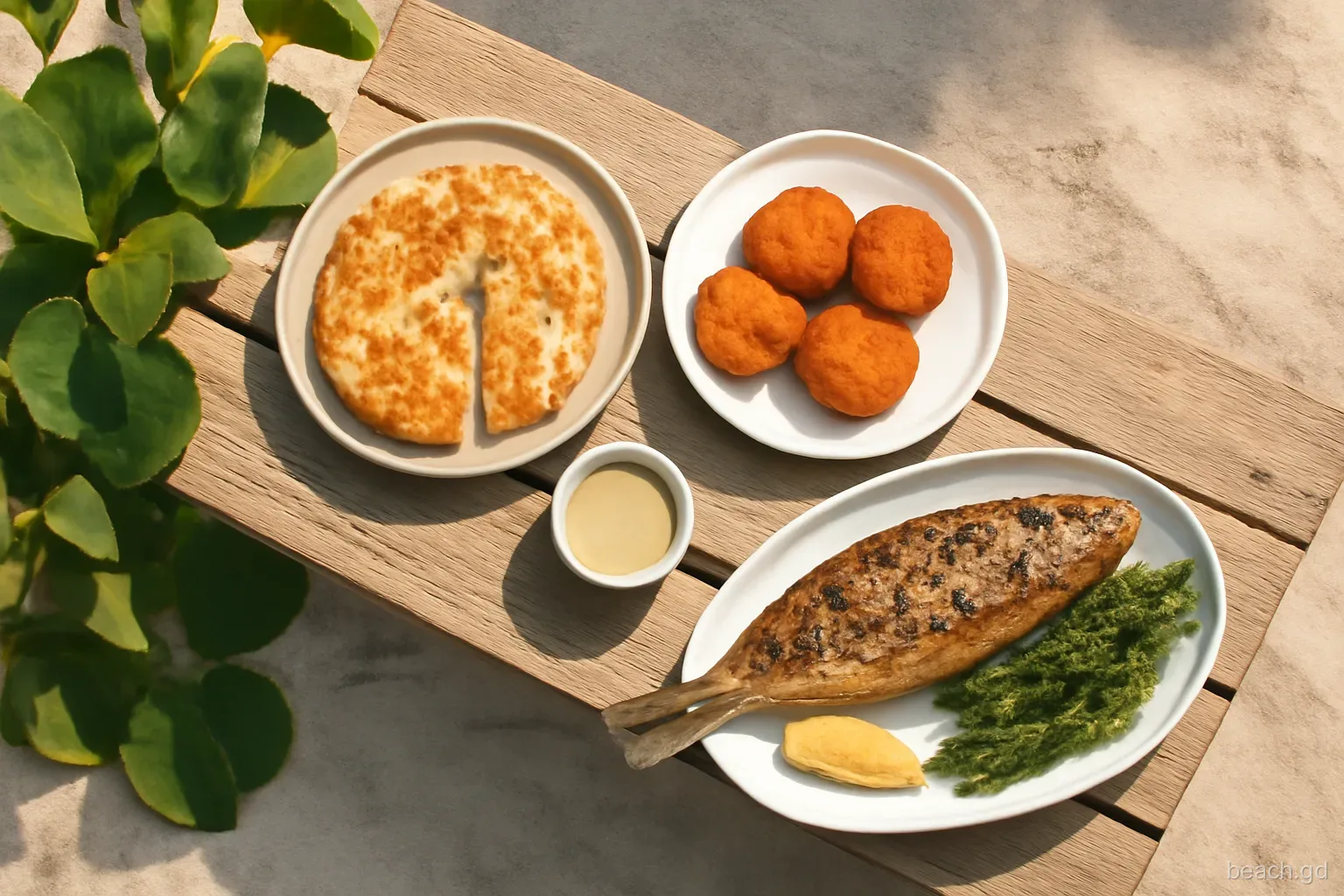
Fish cakes (accra). Fritters of salted fish, flour, herbs and pepper, fried in small balls. Good with a cold beer, sold by the half dozen or dozen at shacks and some vendors. Freshly fried ones are much better than those sitting in a display box since breakfast.
Bake and saltfish. A fried dough "bake" split and filled with sautéed salted cod, onion, tomato and pepper. Traditionally a breakfast food, but many beach shacks keep it on all day.
Corn soup and callaloo soup. Corn soup is a thick, filling soup with dumplings and pieces of corn on the cob, often sold from big pots at weekend events. Callaloo soup is made with dasheen leaves, okra and coconut milk and is a deep green, mild and comforting dish even on a hot day.
The fish and seafood plates
The catch of the day is the backbone of beach lunches. Common species are mahi-mahi, often called dolphin locally (a fish, not the mammal), yellowfin tuna, kingfish, red snapper, jacks and grouper. It comes grilled, pan-fried, or "creole" style in a tomato, onion and pepper sauce. Grilled is usually the safest bet for freshness because there is nowhere for a tired fillet to hide.
Lambie is the Grenadian name for queen conch. It is tough unless tenderised and cooked properly, so it appears stewed, curried, in fritters or in lambie water, a broth some people swear by after a long swim. Good lambie is tender enough to cut with a fork; rubbery lambie means it was rushed.
Lobster appears on many beach menus in the winter months. Grenada has a closed season for lobster from 1 May to 31 August, during which catching and selling it is prohibited, so be wary of fresh lobster offered in summer. Shrimp dishes are widely available year-round, though the shrimp are often imported rather than local.
Sides you will see on every plate
Main dishes typically arrive with two or three sides, and these are where local cooking shows most clearly. At a shack you may be asked which sides you want; at a restaurant they are usually chosen by the kitchen, and a polite request to swap one is normally fine.
- Provisions: boiled ground provisions such as yam, dasheen, sweet potato and green banana (called fig in Grenada).
- Breadfruit: roasted, boiled or fried; roasted breadfruit with butter is a simple local pleasure.
- Rice and peas: rice cooked with pigeon peas or red beans, often with coconut milk.
- Macaroni pie: a firm baked macaroni cheese cut in squares, standard at Sunday lunches.
- Plantain: ripe, fried and sweet.
- Salad: usually lettuce, tomato, cucumber and carrot, sometimes a coleslaw.
- Pepper sauce: homemade versions can be very hot, often made with Scotch bonnet type peppers. Taste a drop first.
The drinks that go with it
Beer means Carib or Stag, both brewed in Grenada at the brewery in Grand Anse; Carib is the lighter lager, Stag stronger and maltier. Most bars also carry imported beers at a higher price.
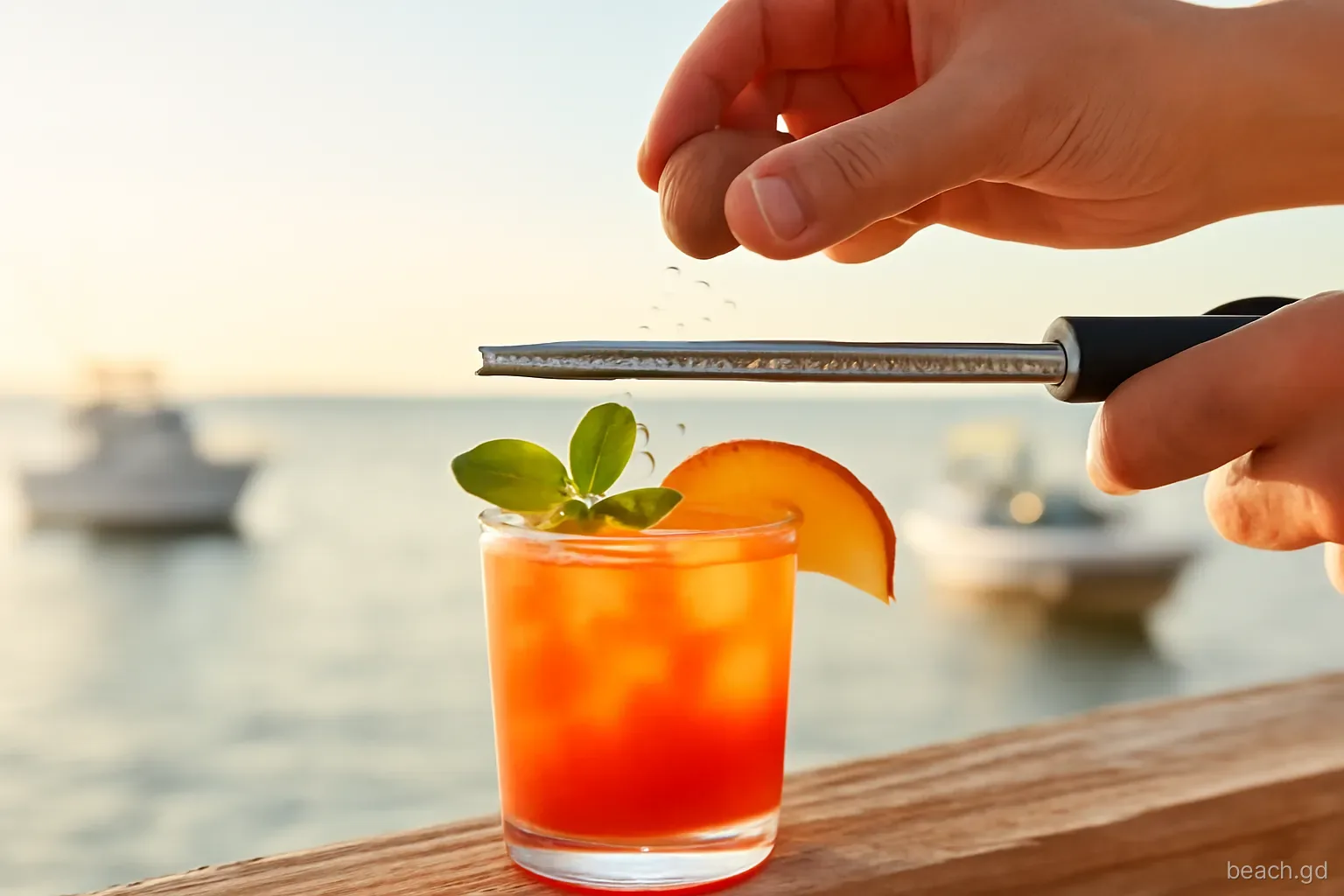
The default cocktail is rum punch, and in Grenada a proper one is finished with freshly grated nutmeg on top. Recipes vary widely in strength, so the first one tells you what kind of afternoon the bar intends you to have. Local rums from Clarke's Court, Westerhall and the River Antoine estate turn up behind most counters.
For something without alcohol, look for fresh juices: soursop, passion fruit, golden apple, tamarind, sorrel around Christmas, and lime juice sweetened with cane syrup. A jelly coconut opened with a cutlass by a vendor gives you the water to drink and the soft flesh to scoop out with a sliver of shell afterwards. Sea moss drinks, thick and milky, are popular with locals and an acquired taste for many visitors.
What is served when: breakfast to sunset
Grenadian food has a daily rhythm, and beach kitchens follow it. Mornings are for bakes, saltfish, fish cakes, cocoa tea and fried jacks, the small fish that are landed in shoals and fried whole. Some beach shacks open early for fishermen and workers before visitors arrive, and breakfast at one of them costs very little.
Lunch, from about noon, is the main meal of the day at the beach: catch of the day with sides, curries, roti and stews. By mid-afternoon the bigger pots are often empty and the menu shrinks to whatever can be fried or grilled quickly, plus snacks.
Weekends change the pattern. Saturday is traditionally the day for souse, black pudding and soups in many villages; Sunday brings baked chicken, macaroni pie, rice and peas and big family lunches, and some beach bars cook a Sunday special. Evening food at the beach is more about barbecue chicken, grilled fish and corn soup sold at events than sit-down dinners, except at restaurants that open for dinner service.
How to order well, and what to avoid
A few habits make the difference between a forgettable plate and a good one.
- Ask what fish came in today, and order that rather than whatever is printed on the board.
- At small places, order lunch before about 14:00; the kitchen may close or run out by mid-afternoon.
- Expect to wait. A grilled fish cooked to order can take 30 to 45 minutes in a one-cook kitchen; order, then swim.
- Check whether the roti or curry chicken has bones before biting down hard.
- Ask for pepper sauce on the side rather than in the dish if you are unsure about heat.
- Turtle meat is legal outside the closed season but is a conservation concern; most visitors and many locals choose not to order it.
- Prices on hotel decks are often in US dollars before tax and service; shacks quote EC dollars, usually final.
Words on the board that confuse visitors
Fig. Green banana, boiled as a side. Not the Mediterranean fruit.
Provisions. Starchy root vegetables and green bananas boiled together: yam, dasheen, tannia, sweet potato, fig. Filling, plain and the base of much home cooking.
Creole. A cooking style rather than a single recipe: fish or meat in a sauce of tomato, onion, sweet pepper, garlic, thyme and a little hot pepper.
Saffron. In Grenadian kitchens this usually means locally grown turmeric, which gives oil down and some rice dishes their yellow colour.
Souse. Pork, often trotters, served cold in a sharp lime, cucumber and pepper brine; a Saturday favourite rather than everyday beach food.
Bakes and floats. Fried dough breads, sometimes slightly sweet, eaten with saltfish, fish or cheese.
Pelau. Rice cooked in one pot with chicken or meat, pigeon peas and browned sugar, popular for beach cooks because it travels well.
Cocoa tea. Grated local cocoa boiled with milk, spice and sugar, more often a breakfast drink than a beach one, but worth trying when offered.
Frequently asked questions
What is the national dish of Grenada?
Oil down is the national dish: breadfruit, salted meat, chicken or fish, dumplings and callaloo leaves cooked slowly in coconut milk with turmeric until the liquid is absorbed. It is rarely on everyday beach bar menus because it is a large pot cooked for groups, but you will find it at weekend events, beach cooks and some local restaurants.
Is dolphin on the menu really dolphin?
No. In Grenada, as in much of the Caribbean, "dolphin" on a menu means the fish known elsewhere as mahi-mahi or dorado. It is a common catch, especially in the first half of the year, and it is excellent grilled. Marine dolphins are not eaten in Grenada.
How much does a beach lunch cost in Grenada?
At a local shack, a roti or a plate of fish with sides typically costs somewhere around EC$20–45 (roughly US$7–17). At beach restaurants and hotel decks expect roughly US$15–35 for a main course before tax and service. Prices change and depend on the catch, so confirm on the day.
Is Grenadian beach food very spicy?
Most dishes are well seasoned rather than fiery. The heat usually comes from pepper sauce added at the table, which can be extremely hot. Curries and creole sauces may carry some pepper, so ask if you are sensitive, and order sauce on the side when in doubt.
Are vegetarian options available at beach bars?
Usually, but choice is narrower. Vegetable roti with potato and chickpeas, callaloo soup, provisions, macaroni pie, plantain and salads are common. Ask whether soups are made with meat stock or salt meat, since callaloo and corn soup sometimes include it. Vegan options are fewer outside the larger restaurants.
What is lambie water?
Lambie water is a broth made from conch, typically seasoned with herbs, pepper and lime. It is served hot in cups at some shacks and events and is widely regarded locally as restorative. It is a niche item, often sold by people who also sell stewed lambie, and not every beach will have it.