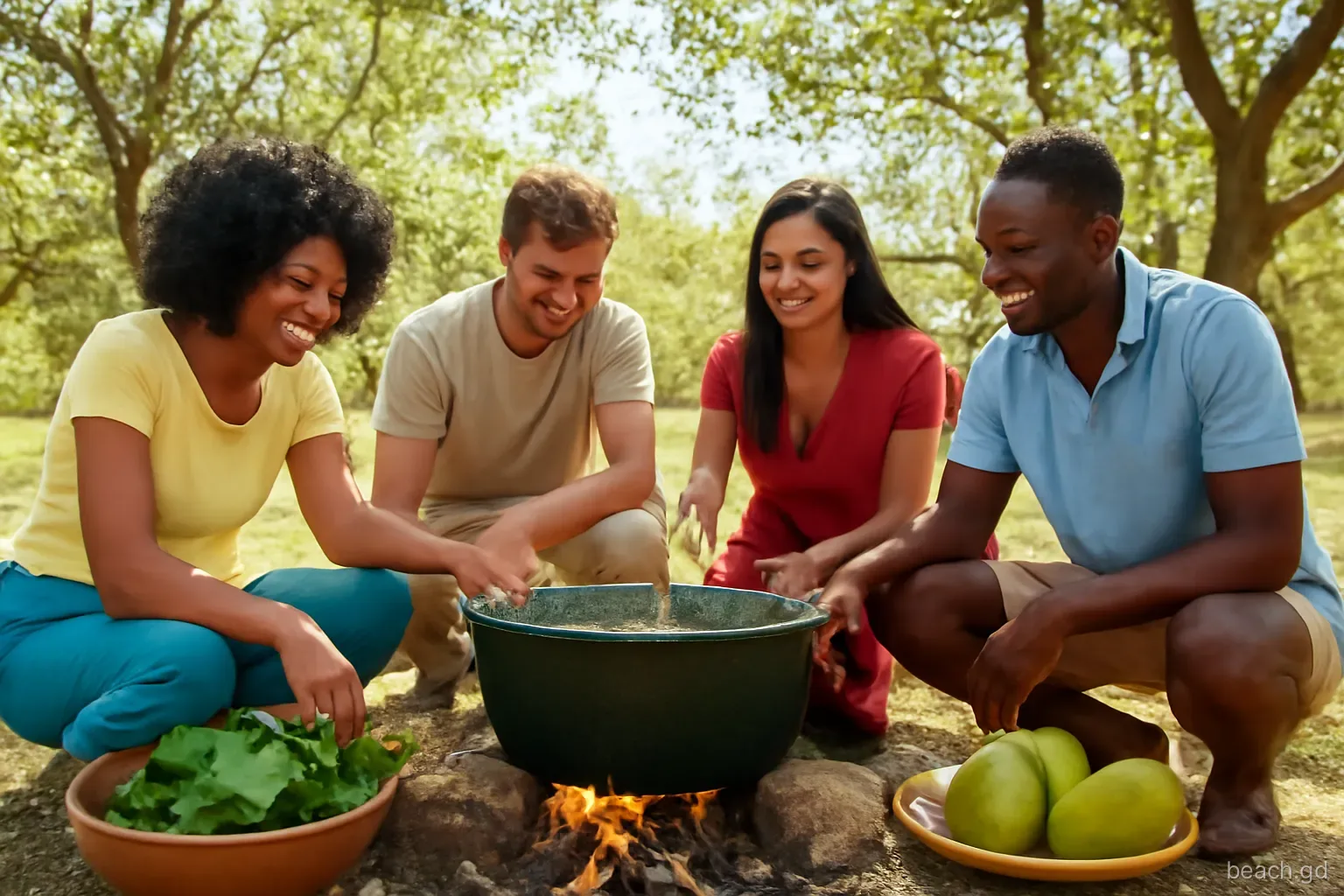
Ask Grenadians about the best meal they have eaten at a beach and many will not name a restaurant at all. They will describe a big iron pot balanced on stones over a wood fire, a few friends peeling breadfruit, someone squeezing coconut for milk, and an afternoon that drifts by while the pot slowly cooks down. That is a beach cook, and the dish at its centre is usually oil down.
Oil down is Grenada's national dish, and it is as much an occasion as a recipe. This guide explains what goes into it, how a beach cook works from start to finish, when you are most likely to see one and how visitors can take part respectfully, either by joining a group or by arranging an organised experience.
What oil down is
Oil down is a one-pot dish of breadfruit, salted meat, often chicken or fish, dumplings and callaloo leaves cooked in coconut milk with turmeric, herbs and whole hot pepper. Everything is layered in the pot and cooked slowly until the coconut milk is absorbed. What remains at the bottom is a little of the coconut oil, which is where the name comes from: the pot has "oiled down".
The salted meat, traditionally pig tail, salt beef or salt fish, carries the deep, savoury flavour, and it is usually soaked or boiled first to draw out excess salt. Turmeric, called saffron in Grenada, gives the yellow colour. Callaloo leaves, from the dasheen plant, are laid on top so they steam, and flour dumplings are tucked in around the breadfruit.
There is no single correct recipe. Some cooks add smoked herring, green banana, carrots or crab; others keep it simple. Families argue happily about whose version is best, and that debate is part of the tradition.
How a beach cook works, start to finish
A beach cook is a group effort and a slow one. This is the usual sequence, which takes most of an afternoon.
- Choose a spot on the public beach with shade, a bit of shelter from the wind and space for a small fire well away from trees and other beach users.
- Set up the fireplace, traditionally three large stones that hold the pot steady, and gather dry wood; many groups bring their own wood rather than relying on what is on the beach.
- Prepare the ingredients: soak and cut the salt meat, peel and cut the breadfruit, make the dumpling dough, wash the callaloo and grate or blend coconut for milk.
- Build the pot in layers: seasonings and salt meat at the bottom, then chicken or fish, breadfruit, dumplings and finally callaloo leaves, with coconut milk poured over.
- Cover tightly and cook over a steady fire, checking occasionally without stirring too much, for roughly one to two hours depending on the fire and the size of the pot.
- When the liquid has been absorbed and a little oil glistens at the bottom, take it off the fire and serve straight from the pot.
- Put the fire out completely with water or sand, take every bit of rubbish home and leave the spot as you found it.
Where the ingredients come from
Breadfruit is the heart of the dish, and Grenada grows plenty of it; the trees are found in yards and along roadsides across the island. Breadfruit was brought to the Caribbean from the Pacific in the late eighteenth century as cheap food for enslaved people, and the way it is cooked in oil down draws on African, Caribbean and plantation-era kitchens together. Today it is simply a staple.
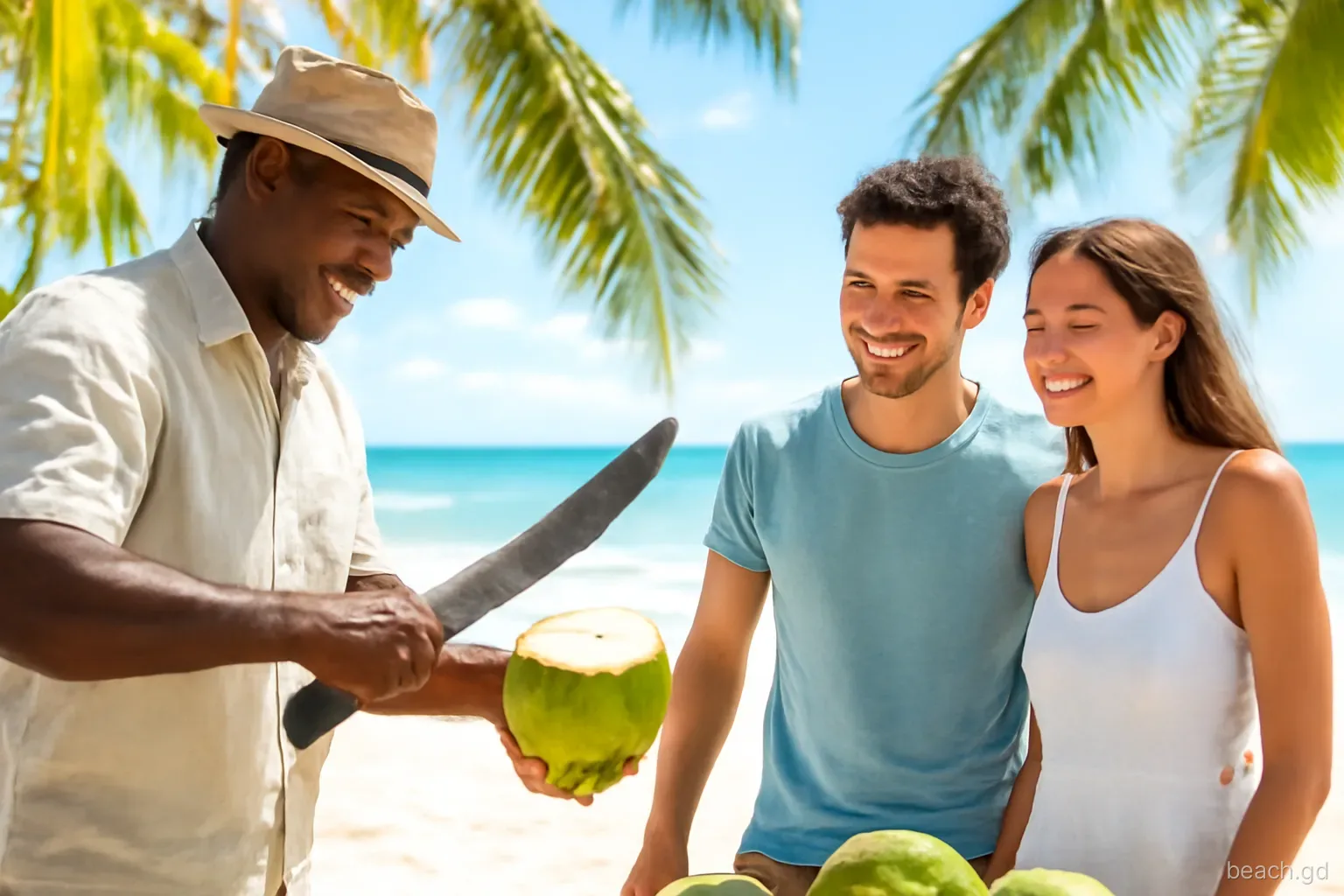
For a beach cook, most groups shop the day before or that morning. The market square in St George's, busiest on Saturday mornings, and roadside stalls in the parishes sell breadfruit, callaloo bundles, dry coconuts, hot peppers, chives, thyme and turmeric. Supermarkets stock salt meat, flour and frozen chicken. Many people still grate coconut and squeeze the milk by hand, though blenders and boxed coconut milk are common shortcuts.
One full pot can feed a large group, which is why oil down is rarely cooked for two. Sharing the cost of ingredients among friends keeps it inexpensive, and leftovers are eaten the next day.
When and where you will see beach cooks
Public holidays are the classic days. Easter Monday, Whit Monday, Emancipation Day in early August and the long weekends around Carnival in August all bring families to the beaches with pots, coolers and music. Sunday afternoons through the year see smaller cooks too.
Beaches with space, shade and parking are favoured: Bathway and Levera in the north-east, La Sagesse and the south coast coves, and long beaches on the west coast. Riverside cooks inland are also common. In Carriacou, beaches such as Paradise Beach see gatherings, especially around holidays and the August regatta period.
On these days, popular beaches become busy and lively, with music and plenty of children. If you want peace, choose a quieter beach or go early. If you want to see Grenadian beach life at its most social, this is the time.
How visitors can join in
Ask your hosts. Guesthouse owners, villa managers and drivers often know of a beach cook at the weekend or can organise one. Offering to contribute ingredients, drinks or money for the pot is good manners.
Book an experience. Some tour operators and local cooks offer oil down cooking sessions or beach cook outings for visitors, where you help prepare the pot and eat together. Check reviews and what is included.
Try it at events. Oil down is sold at some festivals, community events and local restaurants, particularly at weekends. It is not on many daily beach bar menus because it is cooked in large batches.
Do it yourself, carefully. If you are staying longer and want to cook one, shop at a market for breadfruit, callaloo and coconut, ask a local cook for their method, and borrow a proper large pot. Allow a whole afternoon.
Who brings what: organising a group cook
A beach cook runs on shared effort. When friends organise one, jobs are divided in advance so nobody arrives empty-handed and nothing essential is forgotten.
- The cook brings the pot, the knowledge and usually the seasonings, and has the final word on timing.
- One person handles the breadfruit and provisions, chosen firm and mature from the market or a neighbour's tree.
- Another handles meat: salt meat soaked overnight, chicken cleaned and seasoned.
- Someone brings coconuts and a grater, or ready-made coconut milk if time is short.
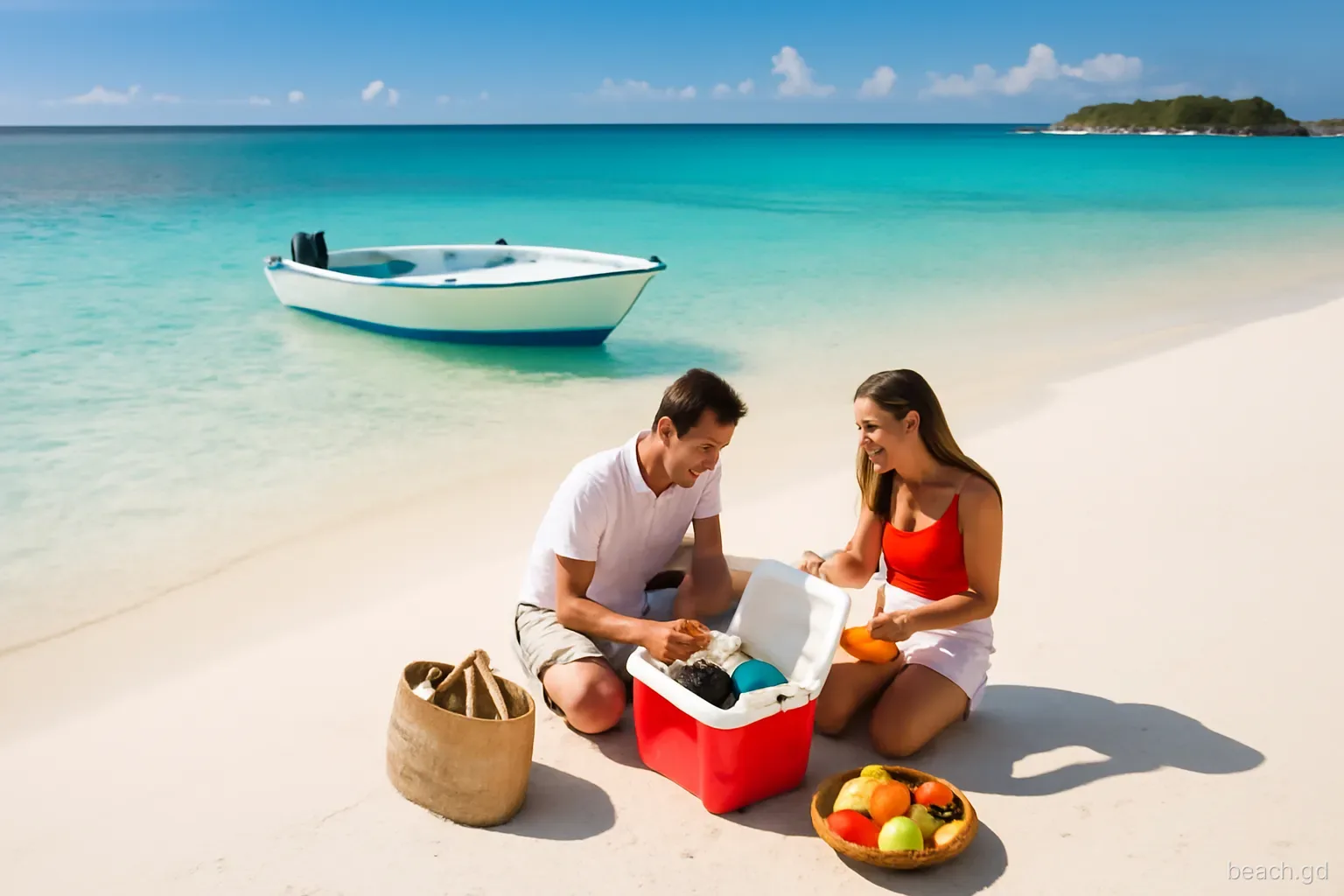
- Drinks and ice go in coolers, with plenty of water for the cook, who stands by the fire for hours.
- Wood, matches, a bucket for water and bags for rubbish are easy to forget and hard to replace at a remote beach.
- Bowls, spoons and a ladle, ideally reusable, since single-use containers end up on the sand.
Etiquette and mistakes to avoid
A beach cook is relaxed, but there are unwritten rules, and most of them are about respect for the beach and for the people cooking.
- Do not cut live branches or palm fronds for firewood; bring dry wood or buy it.
- Keep fires small, contained and away from tree roots, dry grass and turtle nesting areas, especially at Levera and Bathway during the nesting season.
- Never leave a fire smouldering; pour water over it and cover with sand until cold.
- Take all rubbish home, including food scraps, which attract dogs and rats.
- If you are a guest, help with the work: peeling, fetching water, washing up.
- Ask before photographing people, especially children.
- Do not lift the lid every few minutes; it lets out the steam the dish relies on, and the cook will notice.
Frequently asked questions
Why is it called oil down?
The name describes the end of the cooking. The coconut milk is gradually absorbed by the breadfruit and dumplings until only a thin layer of coconut oil remains at the bottom of the pot. When that happens, the dish has "oiled down" and is ready to serve.
Where can visitors eat oil down in Grenada?
Look for it at local restaurants and cookshops that advertise it on certain days, at festivals and community events, and at beach cooks during holidays. Some tour operators and local cooks offer hands-on oil down experiences. Availability changes, so ask your accommodation where it is being cooked that week.
Is oil down spicy?
Usually not very. A whole hot pepper is often cooked in the pot for aroma and is not broken, which keeps the heat gentle. Pepper sauce may be served on the side. If the pepper bursts during cooking the dish can become much hotter, so ask the cook if you are sensitive.
Can vegetarians eat oil down?
Traditional oil down contains salted meat and often chicken or fish, so it is not vegetarian. Some cooks make vegetable versions with breadfruit, dumplings, callaloo, carrots and coconut milk, seasoned with herbs. If you are joining a beach cook, ask in advance whether a meat-free pot is possible.
Are fires allowed on Grenada beaches?
Small cooking fires are a long-standing part of beach life in Grenada and are commonly seen on public holidays. Use common sense: keep fires small and away from vegetation and nesting areas, and put them out completely. Rules can differ in protected areas, so ask locally before lighting one.