In Grenada the drink in your hand at the beach says a lot about the kind of afternoon you are having. A sweating bottle of Carib at a rum shop in St Patrick, a nutmeg-dusted rum punch on a hotel deck at Grand Anse and a jelly coconut hacked open by a vendor are all part of the same beach culture, and each comes with its own etiquette and pitfalls.
This guide covers what you will be offered, what the local brands are, how strong things really are, and the non-alcoholic options that locals actually drink. It also covers the part visitors tend to skip: heat, sun and rum are a poor mix when the sea is part of the plan.
Rum punch, the Grenadian way
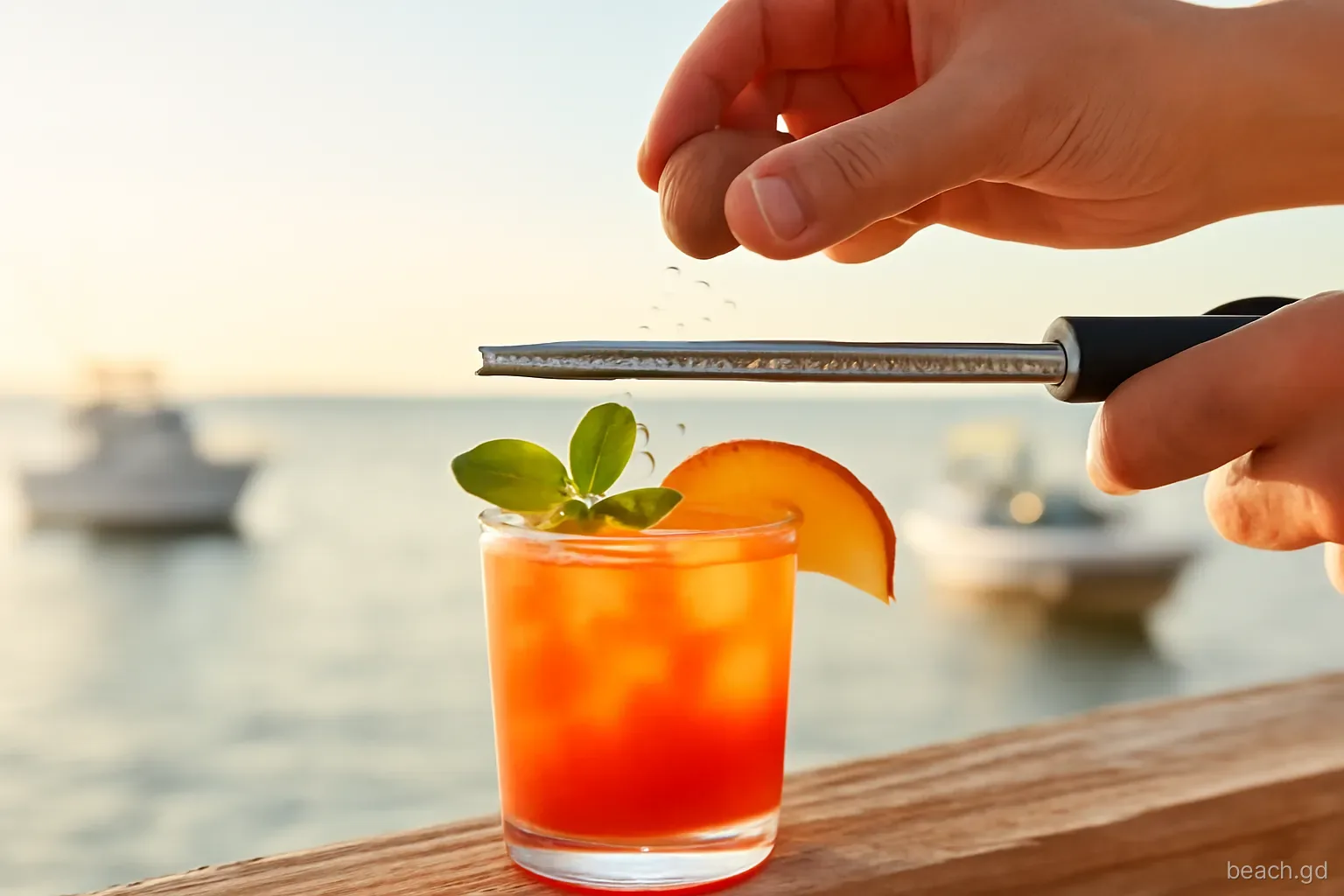
Almost every bar serves rum punch, and almost every bar makes it differently. The traditional formula is remembered as a rhyme: one of sour, two of sweet, three of strong, four of weak. In practice that means lime juice, sugar syrup or grenadine, rum, and water or fruit juice, often with a dash of Angostura bitters. What makes a Grenadian punch Grenadian is the finish: freshly grated nutmeg on top, from the spice the island is famous for.
Strength varies enormously. Some bars use a standard rum and plenty of juice; others build their punch on overproof white rum, and two glasses can affect you more than four beers. There is no polite way to know in advance except to ask, and asking is entirely normal. Bartenders are used to the question "is it strong?" and will usually tell you honestly.
Hotel bars often serve a sweeter, fruitier version for visitors, while rum shops may offer a homemade punch from an unlabelled bottle in the fridge. Both are legitimate. If you want to taste local rum properly, order it neat or with ice and water alongside your punch.
The local labels behind the counter
Clarke's Court. Produced by Grenada Distillers at Woodlands in St George, and the most widely available local rum. Its range runs from overproof white rum to aged dark rums and spiced versions used in many cocktails.
Westerhall. A long-established estate in St David known for its rums, including aged blends often sipped neat.
Rivers. Made at the River Antoine estate in St Patrick, one of the oldest working distilleries in the Caribbean, where a water wheel still powers the cane crushing. The white rum is extremely strong, and the strongest versions are at or above the 70% alcohol limit airlines generally apply, so they cannot go in your luggage.
Jack Iron. An overproof white rum closely associated with Carriacou, where it is part of social and ceremonial life. Local lore says ice sinks in it; whether or not that is true, treat it with respect.
Beer. Carib and Stag are brewed in Grenada at the brewery in Grand Anse. Carib is a light lager; Stag is stronger and fuller. Both are the default order at any beach shack.
How a rum shop works
Rum shops are small neighbourhood bars, often painted in bright colours and sometimes doubling as a grocery, found in every village and near many beaches. They are social centres as much as bars: places to catch up, watch cricket, play dominoes and argue about politics. Visitors are welcome, and a polite greeting when you walk in matters more than anything you order.
The standard order is a beer or a small bottle of rum shared among a group, with a jug of water, ice and a soft drink or juice as chasers. Glasses are small, and rum is poured by the drinker rather than measured by the barman. That is part of the fun and part of the risk, because local white rum is often overproof.
Rum shops rarely serve food beyond snacks, though some have a cook outside at weekends. They are cash-only, prices are in EC dollars and usually lower than anywhere else. Keep the volume of your own conversation in step with the room and you will be made to feel at home.
Without alcohol: what locals drink
Some of the best beach drinks in Grenada contain no alcohol at all, and they are often cheaper and more refreshing in the midday heat.
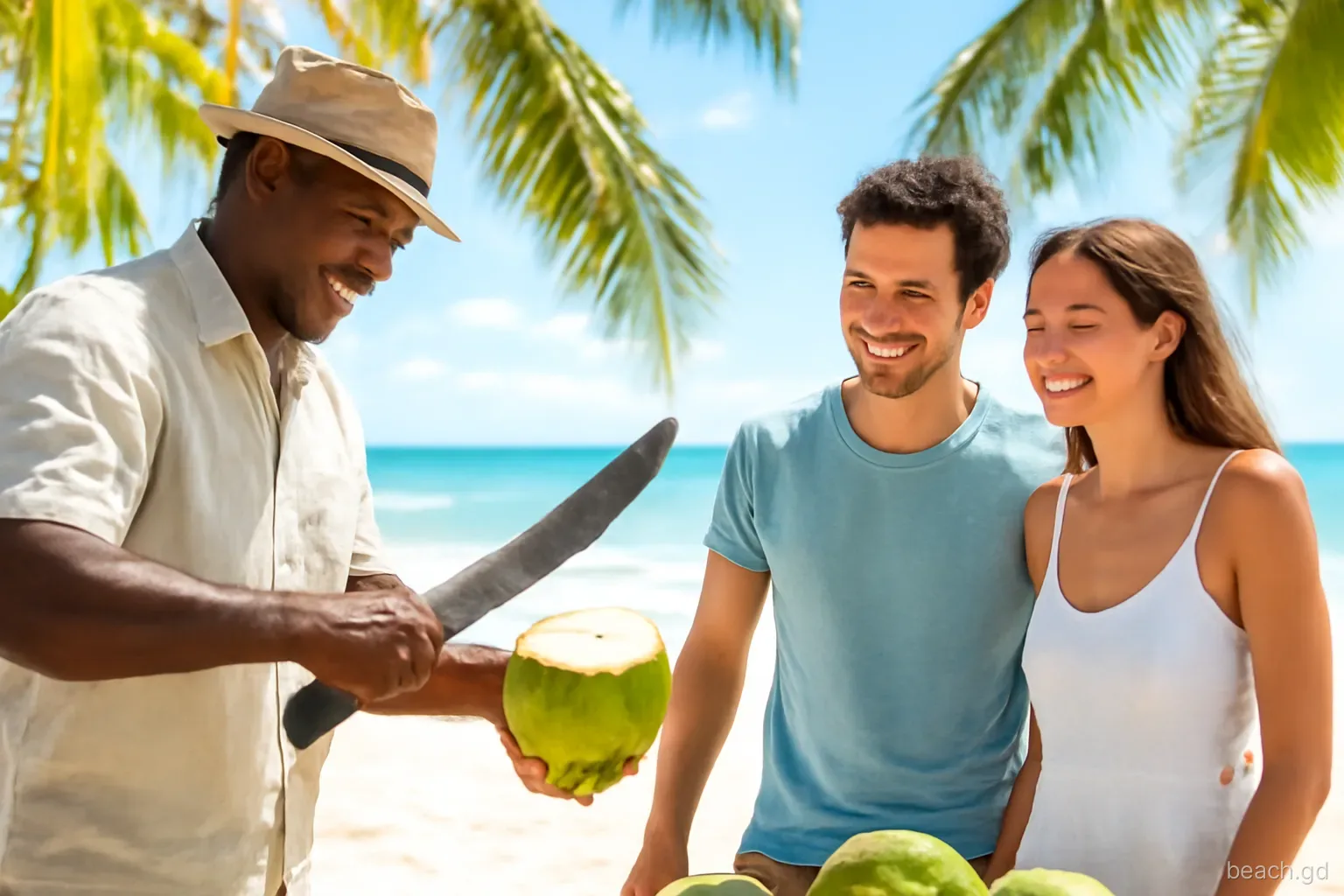
- Jelly coconut. Young green coconut opened with a cutlass; drink the water, then eat the soft flesh. Ask the vendor to split it for you.
- Fresh juices. Soursop, passion fruit, golden apple, guava, tamarind and lime are common; quality depends on whether they are made fresh that day.
- Sorrel. A deep red drink made from the sepals of a hibiscus flower, spiced with ginger, cloves and cinnamon. It is most associated with Christmas, when it is everywhere.
- Mauby. A bittersweet drink made from tree bark, an acquired taste for many visitors.
- Sea moss. Thick, creamy and lightly sweet, made from seaweed with milk and spice; popular with locals and often sold by the bottle.
- Ginger beer. Homemade versions, especially around Christmas, can be fiery.
- Malt drinks and soft drinks. Non-alcoholic malt beverages and familiar soft drinks are sold at almost every shack.
What things cost, and where the price jumps
Prices depend more on the type of bar than on the drink. At a village rum shop or local beach shack, a local beer usually costs somewhere around EC$5–8 and a rum and soft drink is similarly modest. At beach restaurants on the south coast, beer and cocktails cost more, and at hotel bars a rum punch can run to roughly US$8–14 before VAT and any service charge. Treat these as broad ranges that change over time and confirm on the menu.
Happy hours are common at hotel and restaurant bars around sunset, often with discounted rum punch or local beer. Coconuts from vendors are generally cheap, a few EC dollars each, and bottled water is easy to buy almost everywhere.
Buying a bottle of local rum at a supermarket is far cheaper than drinking the same rum at a bar, which is why many visitors keep a bottle at their accommodation and use bars for the experience rather than the volume. If you plan to take rum home, check your airline and customs allowances first.
Distillery visits are a cheaper and more interesting way to taste local rum than a long bar session. River Antoine in St Patrick, Westerhall in St David and Clarke's Court near Woodlands have welcomed visitors for tours and tastings, though arrangements change, so check opening times before driving out.
Heat, sea and rum: the pitfalls
Most beach-day trouble in Grenada involving drinks is predictable, and it usually comes from treating a tropical afternoon like a bar night at home.
- Dehydration comes on fast. Alternate every alcoholic drink with water or coconut water, especially between 11:00 and 15:00.
- Do not swim drunk. Currents at some beaches, including parts of the Atlantic coast, can be strong, and alcohol slows reactions. Drowning is a real risk.
- Overproof is overproof. A small shot of Rivers or Jack Iron is not the same as a measure of standard rum.
- Glass and bare feet do not mix. Return bottles to the bar rather than leaving them in the sand.
- Drink driving is dangerous on Grenada's roads. Narrow lanes, sharp bends and steep hills leave little margin; take a taxi after a long afternoon.
- Sun and alcohol together increase sunburn risk because you notice the heat less. Reapply sunscreen and move into the shade at midday.
Frequently asked questions
What is the most popular drink in Grenada?
Among locals, a cold Carib or Stag beer and local rum are the everyday choices, with rum often drunk with water or a soft drink. Among visitors, rum punch topped with grated nutmeg is the signature order. Fresh coconut water from beach vendors is a close rival on hot afternoons.
Can you take Rivers rum on a plane?
The strongest versions of Rivers rum are at or above the 70% alcohol limit that airlines generally apply to alcohol in luggage, so they are not permitted. Check the strength on the bottle and your airline rules before buying. Lower-strength rums from Grenadian distilleries usually travel within normal allowances.
Is tap water safe to drink in Grenada?
Mains water in much of Grenada is treated, and many residents drink it, but supply and quality can vary by area, particularly after heavy rain or storms. Many visitors prefer bottled or filtered water. At the beach, carry a refillable bottle and buy water at shops or bars to stay hydrated.
What is in a Grenadian rum punch?
Usually lime juice, sugar syrup or grenadine, local rum and water or fruit juice, often with Angostura bitters, finished with freshly grated nutmeg. The traditional rhyme "one of sour, two of sweet, three of strong, four of weak" describes the ratio, but every bar adjusts it.
What is Jack Iron rum?
Jack Iron is a very strong white rum closely associated with Carriacou, where it features at celebrations, boat launches and traditional ceremonies. It is drunk in small amounts, often with water. Visitors should treat it like any overproof spirit and pace themselves carefully.