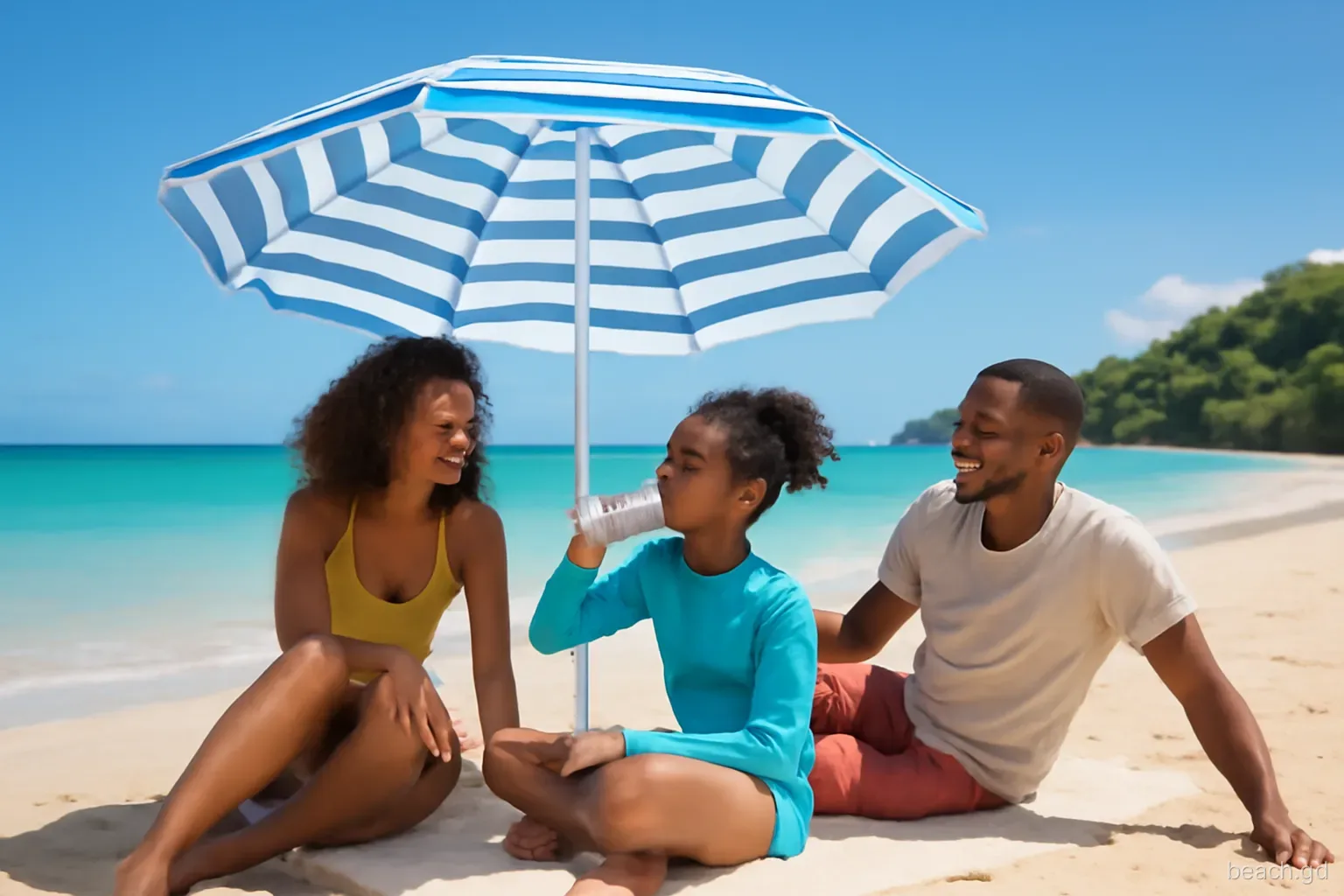
The injury that ruins the most Grenada holidays is not a sting or a current. It is sunburn on the first afternoon, picked up while lying on Grand Anse with a breeze that made the heat feel gentle. At 12 degrees north the sun is close to overhead for much of the year, and on a clear day the UV index here commonly reaches levels classed as extreme. Fair skin can burn in fifteen to twenty minutes in the middle of the day.
Heat is the quieter partner. Air temperatures on the coast typically sit around 28 to 32°C, humidity is high, and a long beach day with rum punch and little water can tip into heat exhaustion, especially for children and older relatives. The fixes are simple and cheap, and most of them involve doing what Grenadians already do: using shade, timing, and plenty to drink.
Why the sun here is stronger than it feels
Three things combine. The first is latitude: the closer to the equator, the more directly the sun strikes and the less atmosphere its ultraviolet light passes through. In Grenada the sun rises high at noon in every month, so there is no winter break from strong UV. The second is reflection. Pale sand and bright, shallow water bounce extra UV back at you, so sitting under an umbrella cuts exposure but does not remove it.
The third is the trade wind. The steady breeze on Grenada's beaches keeps skin feeling cool, so people do not notice they are burning until the evening. Cloud is no protection either: a thin, bright overcast lets much of the UV through, and the scattered cumulus that drift over the island in the afternoon do little more than give you a few minutes of rest.
Water adds its own trap. Snorkellers floating face-down for an hour expose the backs of their legs, shoulders and necks to direct sun, and the cooling sea hides the burn completely. Long snorkel sessions in particular need a shirt.
Timing your beach day
Early morning is the best of it. From around 7 to 10am the light is soft, the sand is cool, the sea is often at its calmest and the beaches are at their emptiest. Many residents swim before work for exactly these reasons.
Midday is for shade. Between roughly 10am and 3pm UV is at its strongest. Plan lunch, a nap or a shaded beach bar for the middle of the day, especially with children.
Late afternoon is golden. After 3 or 4pm the heat eases and the light turns warm. On the west-facing beaches, Grand Anse, Morne Rouge and the leeward coast, you can stay in the water until the sun drops behind the horizon.
Sunset comes early and fast. Grenada is near the equator, so daylight hours vary little across the year and dusk is short. Sunset falls roughly between 5.30 and 6.30pm depending on the season, and it is dark soon after.
Check the forecast UV. Weather apps give a daily UV index. Treat anything of 8 or above as high-protection territory, which in Grenada is most days.
What actually protects you
Sunscreen is the last line of defence, not the first. Protection in order of usefulness:
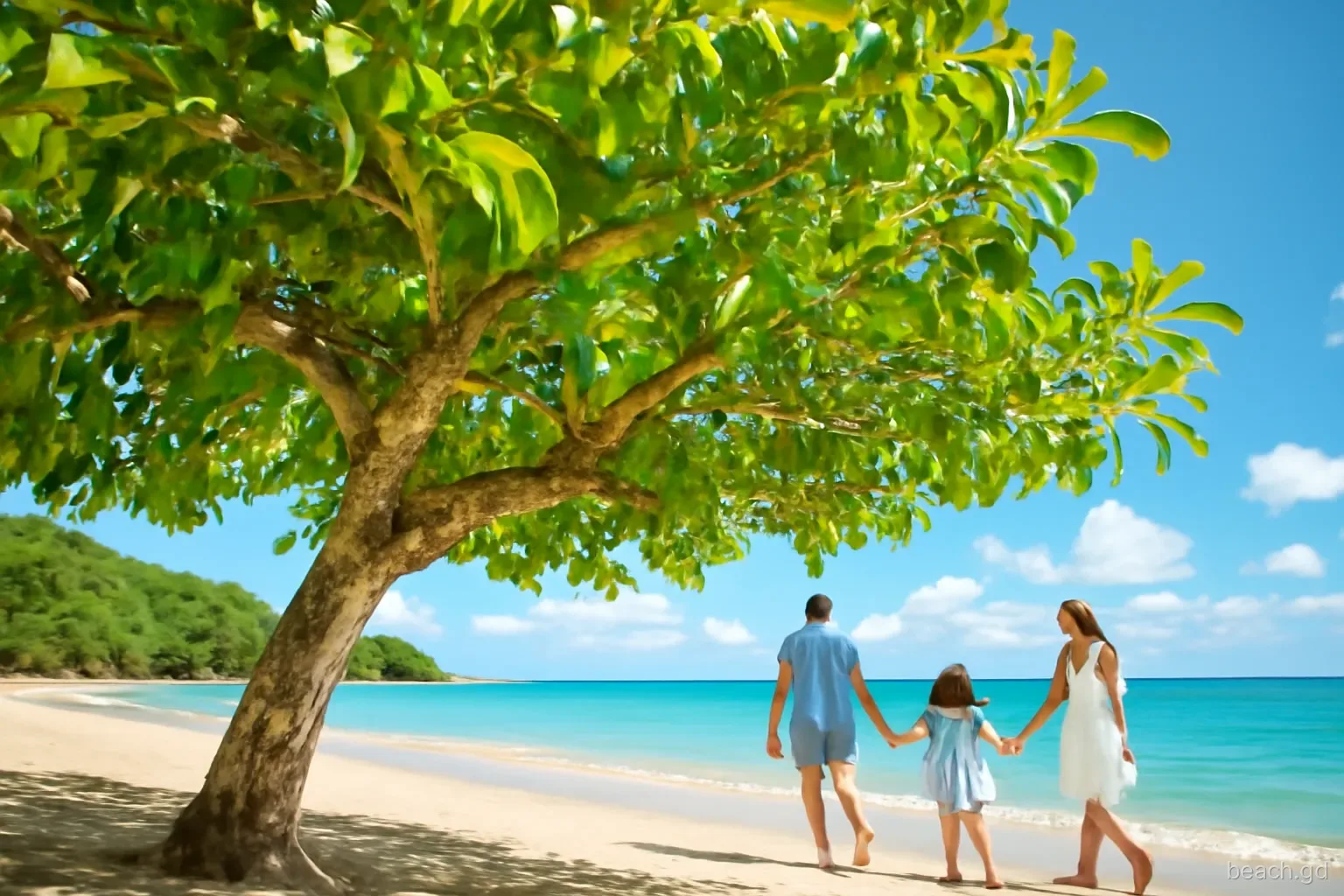
- Shade. Umbrellas, almond trees and sea grapes, beach bar canopies. Bring your own umbrella or pop-up shelter for beaches without much natural shade, and check you are not sitting under a manchineel.
- Clothing. A long-sleeved rash vest or UV shirt, a wide-brimmed hat and sunglasses. For children, a UV swimsuit with sleeves saves endless reapplication battles.
- Sunscreen. Broad-spectrum SPF 30 or higher, applied generously 15 to 20 minutes before going out, and reapplied every two hours and after swimming or towelling.
- Reef-friendly choice. Choose mineral formulas based on zinc oxide or titanium dioxide and avoid oxybenzone and octinoxate, which are linked to coral damage. Grenada's reefs, including those in the marine protected areas off Molinière and around Carriacou, benefit.
- Easily missed spots. Ears, the back of the neck, the tops of feet, the parting in your hair and the backs of knees.
Dehydration and heat illness: signs to watch
In the heat and humidity, people sweat more than they realise and drink less than they need. A good rule is to drink water before you feel thirsty and keep a bottle in the shade. Coconut water, sold fresh by vendors who cut the top off a green nut with a cutlass, is a Grenadian classic and helps replace fluids and minerals. Alcohol and lots of sugary drinks do the opposite, so alternate a rum punch with a glass of water.
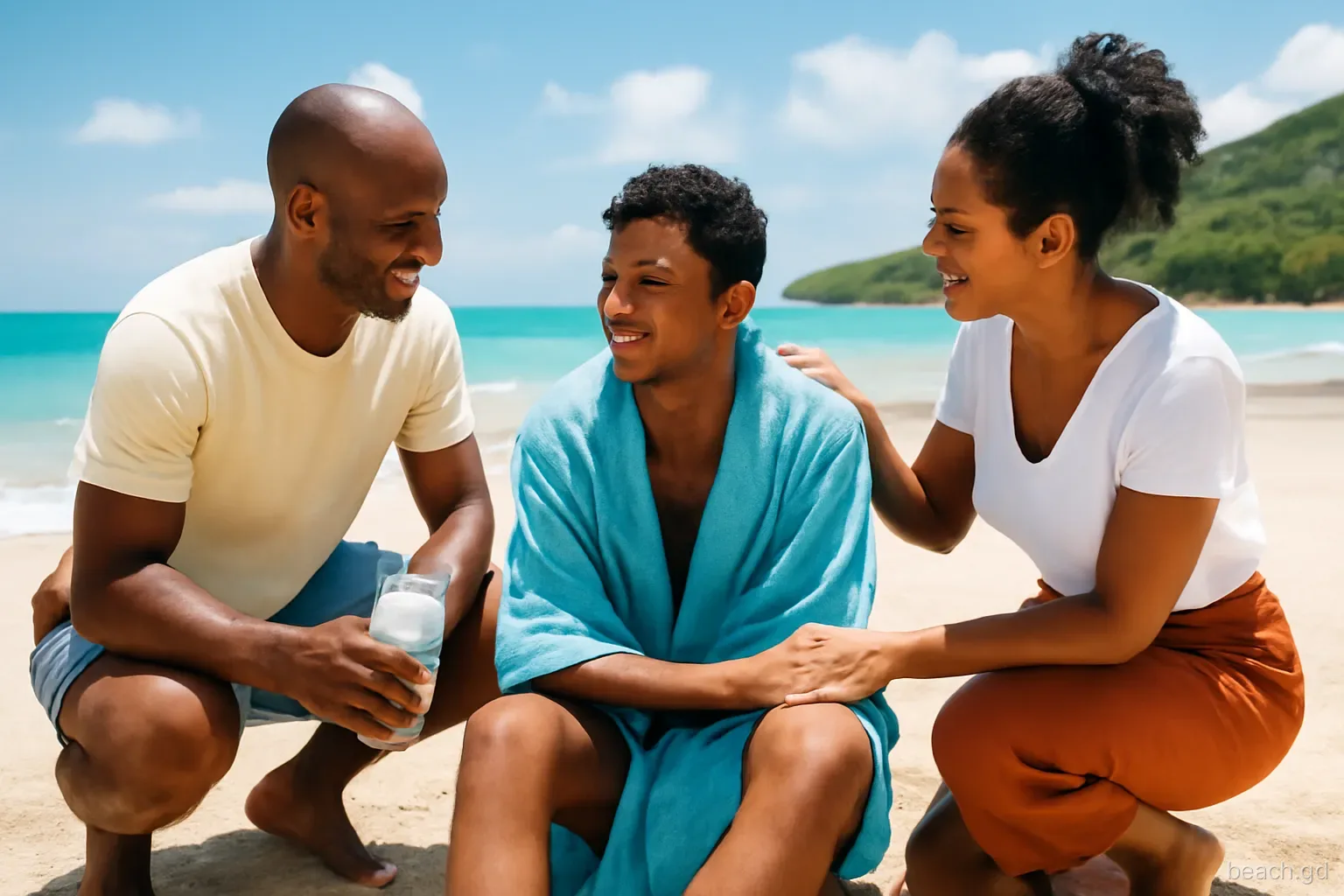
Heat exhaustion shows up as heavy sweating, headache, nausea, dizziness, cramps, pale and clammy skin, and unusual tiredness or irritability. In children, look for a sudden drop in energy, unusual crankiness or refusing to play. Move the person into shade, have them lie down with legs raised, loosen clothing, sponge them with cool water and give sips of water or an oral rehydration drink. They should improve within half an hour.
Heatstroke is an emergency. Hot, dry or flushed skin, confusion, slurred speech, fainting, seizures or a very high temperature mean the body has lost control of its own cooling. Call 911, move the person to shade and cool them aggressively with water and fanning while you wait.
Mistakes visitors make in the first few days
Going all day on day one. The first full beach day after a winter flight is when most bad burns happen. Build up over two or three days.
Trusting the breeze. Feeling cool is not the same as being protected. If the sun is up and the sky is bright, UV is high.
Applying sunscreen once. One coat at breakfast is gone by lunch, especially after swimming. Set a two-hourly reminder.
Ignoring the feet. Midday sand on Grenada's beaches can be hot enough to burn soles, particularly darker sand on parts of the east and north coasts. Bring sandals for everyone.
Forgetting older relatives. Grandparents on certain medications, including some blood-pressure and diuretic drugs, dehydrate faster and feel heat differently. Keep them in shade and keep drinks coming.
Treating a bad burn lightly. Blistering, chills, fever or a burn across a large area deserve a pharmacist's or doctor's advice, not just aloe from the market.
On the water: boats, kayaks and long snorkels
Time on the water multiplies exposure. A half-day boat trip along the coast, a catamaran sail or a water taxi to a snorkelling spot puts you in full sun with reflection coming off the sea from every direction, and often with no shade on deck. A day trip from Carriacou to Sandy Island or from the south coast to Hog Island can mean five or six hours outdoors with only a small bimini or a palm tree for cover.
Pack for it as you would for a hike. Wear a long-sleeved UV shirt and a hat with a strap so it does not blow away, put on sunscreen before you board and again after every swim, and carry more water than you think you will need, as many small boats have limited supplies on board. Polarised sunglasses reduce the glare that causes headaches by mid-afternoon.
Kayakers and paddleboarders burn the tops of their thighs and feet, places that rarely see sun on land. Snorkellers burn the backs of their legs and necks. A thin pair of leggings and a rash vest solve both problems, and they also protect against minor stings, which is why many regular snorkellers in Grenada wear them as a matter of course.
Frequently asked questions
What is the UV index in Grenada?
On clear days the UV index in Grenada frequently reaches 10 to 12 or higher around midday, which is classed as very high to extreme. Because the island lies close to the equator, high UV occurs in every month, not only in summer. Check a weather app for the daily figure.
Can you buy reef-safe sunscreen in Grenada?
Pharmacies and supermarkets in St George's and Grand Anse stock a range of sunscreens, and some carry mineral formulas, but choice and prices vary and imported brands cost more than at home. Bringing your preferred reef-friendly sunscreen with you is the reliable option.
What time is sunset in Grenada?
Sunset varies only modestly through the year because Grenada is close to the equator, falling roughly between about 5.30pm in late autumn and around 6.30pm in early summer. Twilight is short, so plan to leave remote beaches before dark.
How much water should you drink on a beach day?
Needs vary with size and activity, but adults spending several hours in the heat often need two to three litres or more. Drink regularly before thirst, give children frequent small drinks, and use coconut water or rehydration salts if anyone has been sweating heavily.
What should you do about a bad sunburn?
Get out of the sun, cool the skin with cool showers or damp cloths, drink extra water and use a gentle moisturiser or aloe vera. Do not pop blisters. Seek medical advice for widespread blistering, fever, chills or a burn on a baby or young child.