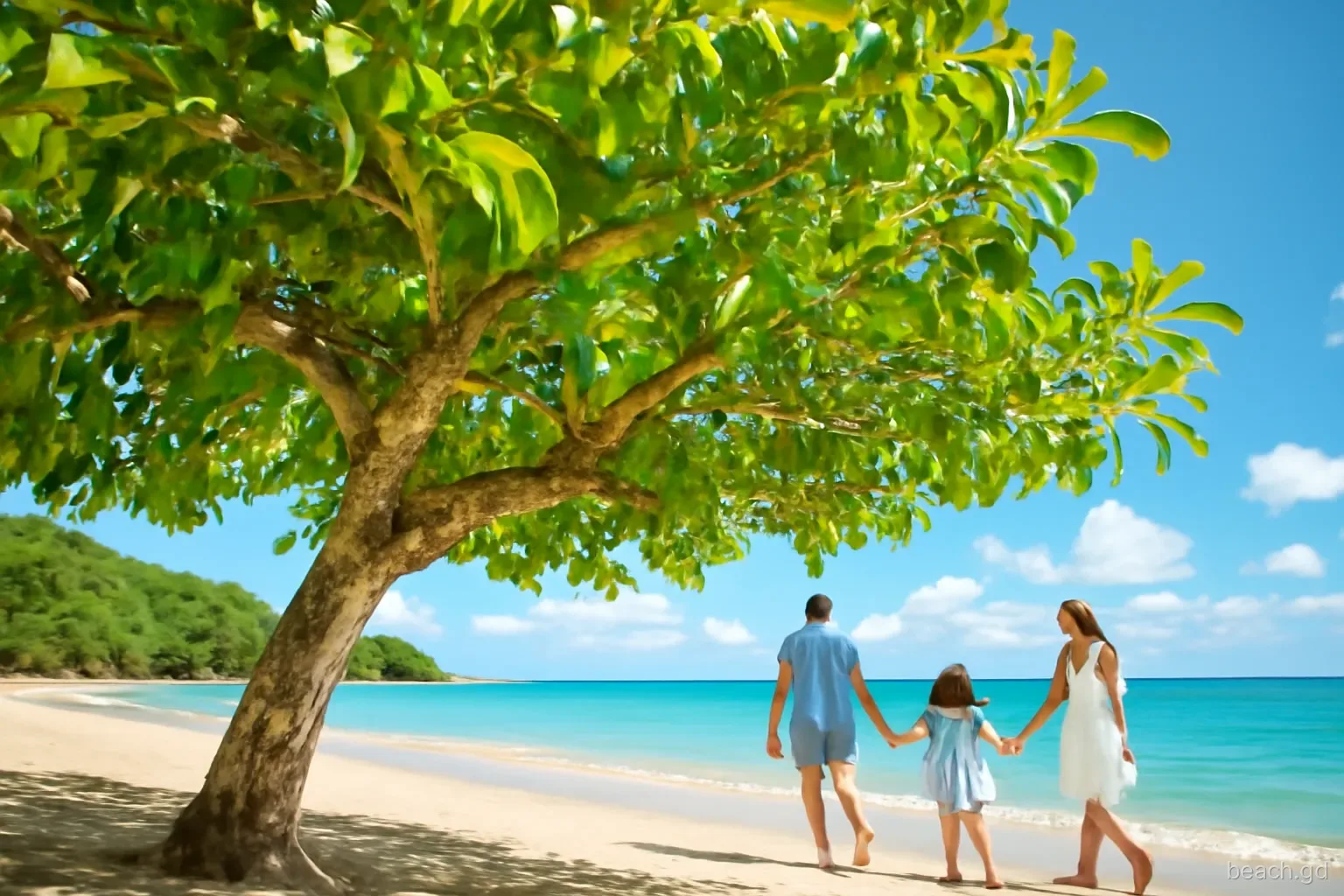
On a hot afternoon the obvious move is to drag your towel into the deepest shade at the back of the beach. On many Caribbean shores, Grenada's included, that shade may come from a manchineel, one of the most toxic trees in the Americas. Its milky sap blisters skin, its small apple-like fruit causes severe burning of the mouth and throat, and rain dripping through its leaves can carry enough sap to irritate skin and eyes.
The tree is native, ecologically useful and protected in many places because its roots hold the sand against erosion. Nobody is going to cut them all down, and you do not need to fear every beach. You just need to recognise one at a glance, know where it tends to grow, and keep children well away from the fruit.
How to recognise a manchineel
Shape. A spreading, rounded tree, usually several metres tall, with a short trunk and a dense crown that casts deep, tempting shade. It often leans out over the sand at the back of the beach.
Leaves. Shiny, bright green, oval to slightly pointed, about 5 to 10 centimetres long, with finely toothed edges and a long yellowish stalk. Look closely where the leaf joins its stalk and you may see a tiny raised gland.
Fruit. The giveaway. Small, round, green to yellowish fruit the size of a crab apple or golf ball, often lying on the sand beneath. Its sweet smell and pleasant first taste are what make it dangerous; the burning starts shortly after.
Bark and sap. Greyish-brown bark. Any broken twig or leaf oozes white, milky sap, which is the main irritant.
Markings. On some Caribbean beaches manchineels are marked with a painted red band around the trunk or a warning notice. Many trees in Grenada carry no marking at all, so treat markings as a bonus rather than a guarantee.
Where it grows and how it differs from harmless trees
Manchineel grows in the coastal strip where sand meets scrub, alongside sea grape, almond trees and coconut palms. Busy, well-kept beaches in front of hotels have often had manchineels removed or marked, but quieter coves, the backs of Atlantic beaches and undeveloped stretches of the south and east coasts can have plenty. They also grow at the edges of mangroves and salt ponds.
Two harmless trees cause most of the confusion. The sea grape has big, round, leathery leaves the size of a dinner plate, with red veins, and hangs bunches of small purple grapes; it is safe to sit under and the fruit is edible. The West Indian almond, common on Grenada's beaches, has large broad leaves that turn red before falling and almond-shaped green or reddish fruit. Neither has the glossy, toothed, mid-sized leaves and small round apples of the manchineel.
If you cannot tell, do not sit under it. There is almost always another patch of shade, and a beach umbrella removes the dilemma entirely. Coconut palms, which shed heavy nuts, are a separate hazard: avoid setting up directly beneath a palm loaded with fruit, especially on a windy day.
Rules that keep you out of trouble
Manchineel injuries are nearly always the result of not knowing what the tree is. These rules cover the ways people get hurt:
- Never eat any fruit you find on the beach unless you are completely certain what it is. Teach children this rule before you arrive.
- Do not shelter under a manchineel when it rains. Water running off the leaves can carry sap onto skin and into eyes.
- Do not pick leaves, snap twigs or use branches to hang towels and bags.
- Do not burn the wood. Smoke from burning manchineel can irritate the eyes and lungs badly, which matters for anyone building a beach fire or a coal pot for a cook-up.
- Keep cars from parking directly under manchineels where possible; sap and rain drip can damage paintwork.
- Check the ground under your chosen spot for small green apples before spreading a blanket. Fruit on the sand is a reliable sign the tree above is a manchineel.
If someone has touched the sap or eaten the fruit
Act quickly; the sooner sap is washed off, the milder the reaction. These are first-aid steps, not a substitute for medical care:
- Skin contact: wash the area thoroughly with plenty of soap and fresh water as soon as possible. Avoid touching the eyes or face until hands are clean.
- Eye contact: rinse the eye continuously with clean water for at least 15 minutes and seek medical attention promptly. Sap in the eyes can cause painful inflammation and temporary loss of vision.
- Fruit eaten: rinse the mouth with water and spit, do not induce vomiting, and get to a hospital or doctor. Swelling of the mouth and throat can make swallowing and breathing difficult.
- Severe symptoms: difficulty breathing, swelling of the throat or face, or a child who has eaten fruit and seems unwell means calling 911 straight away.
- Afterwards: blisters should be kept clean and covered. Wash any towels, clothes or bags that touched the tree before using them again.
Why the tree is still there
Visitors sometimes ask why such a hazardous tree is left on public beaches. The answer is coastal protection. Manchineel thrives in salty, sandy, windswept ground where few trees survive, and its dense roots help anchor the back of the beach against erosion from waves and storm surge. On low-lying coasts that are losing sand, removing the vegetation that holds it in place can do more harm than the tree itself.
The tree also has a long history in the region. Accounts from the colonial era describe Indigenous Caribbean peoples using its sap on arrow tips, and Spanish sailors called its fruit the little apple of death. Its reputation is old and deserved, but contact is rare among people who simply know what it looks like.
If you notice an unmarked manchineel overhanging a popular spot, mention it to the beach bar owner, hotel or vendor nearby. Local people are usually well aware of the trees and can tell you which ones have caught out visitors before.
Teaching children to spot it
Children are the group most at risk, because the fruit looks exactly like something they would be given as a snack. Small green apples lying on warm sand under a shady tree are an irresistible find for a four-year-old, and the pleasant first taste means a child may take a second bite before the burning starts. The single most useful thing a parent can do is turn the tree into a game on the first beach day.
Walk along the back of the beach together and play spot-the-tree: glossy leaves, little apples underneath, no sitting, no touching, no tasting. Make the rule absolute and simple for younger children, such as never eating anything that grows on the beach unless a grown-up has said yes. Older children can learn to tell the manchineel from the sea grape and the almond, which turns it into a bit of field biology rather than a list of prohibitions.
Check your chosen spot before children start digging, since toddlers pick up and mouth everything around them in the sand. If a fruit has been bitten or a child has sap on their hands, wash hands and face straight away with soap and water and get medical advice, even if the child seems fine at first, because symptoms can build over the following hour.
Frequently asked questions
Are there manchineel trees on Grand Anse?
Busy, maintained beaches like Grand Anse have fewer manchineels than wild coves, and many trees near hotels have been removed or marked. That said, coastal vegetation varies along the beach. Check any tree before sitting under it and look for small green apples on the sand.
Can you get hurt just standing under a manchineel?
Standing briefly under a dry tree is unlikely to cause harm. The risks come from touching leaves or sap, eating the fruit, sheltering underneath in rain when sap can drip onto you, or breathing smoke from burning wood. It is simplest to choose other shade.
What does a manchineel burn look like?
Sap contact causes redness, a burning sensation and blisters that can appear within hours, similar to a chemical burn. Eye exposure causes pain, tearing, swelling and blurred vision. Wash immediately with soap and water and seek medical care for eyes or widespread blistering.
Is the manchineel the same as the beach almond?
No. The West Indian almond is harmless and has large, broad leaves that turn red, with oval almond-like fruit. The manchineel has smaller, glossy, finely toothed leaves and round green apples. Children are often told the almond is safe, so make the difference clear to them.
Why do some trees have a red band painted on them?
On several Caribbean islands, authorities or hotels paint a red ring around manchineel trunks, or post a notice, to warn beachgoers. It is a helpful sign where used, but not every tree in Grenada is marked, so learn the leaves and fruit as well.