Ask a Grenadian doctor about beach injuries and you will hear more about feet than about sharks. The animals that actually hurt people here are slow, small and mostly sitting still: black sea urchins tucked into rocks, mustard-coloured fire coral on reef edges, stingrays buried in the sand and the occasional lionfish hovering under a ledge. None of them attacks. Almost every injury comes from a person stepping on, kneeling on or grabbing something.
That makes these hazards highly avoidable once you know where each one lives and how to move around it. It also means it pays to know the first aid, because when contact happens it tends to happen far from a pharmacy, at the rocky end of a cove with the car parked up a dirt track.
Know the culprits
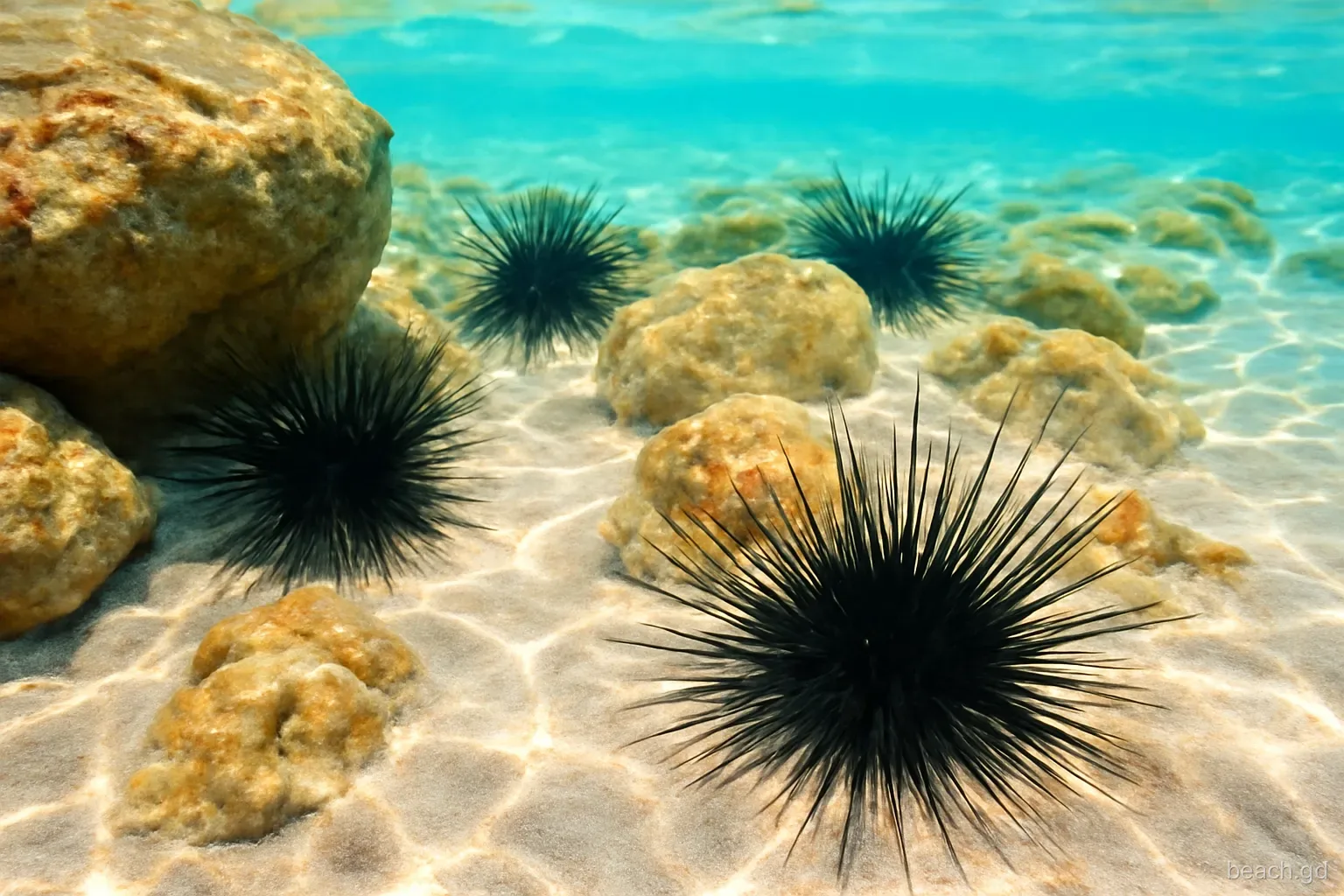
Long-spined black sea urchin. Diadema antillarum, a black ball of needle-thin spines that can be 20 centimetres or more across. Spines break off in skin and are brittle and barbed. Urchins live on rocks, reef rubble and seagrass edges, often in water only knee-deep. Their numbers across the Caribbean were hit by a die-off in 2022, but they remain common enough on rocky stretches to take seriously.
Fire coral. Not a true coral but a hydrozoan, usually mustard-yellow to brown with white tips, forming branching or plate-like growths on reefs, wrecks and pilings. Touching it produces an instant burning sting and red welts.
Southern stingray. Common on sandy bottoms in calm bays, often half-buried and nearly invisible. Stingrays are placid and avoid people, but a ray that is stepped on whips its tail barb upward in defence, usually into the foot or ankle.
Lionfish. An invasive Indo-Pacific species now established throughout the Caribbean, including Grenada. Striped red and white with long fan-like fins, it hovers under ledges and in crevices. Its spines carry venom that causes intense pain. It does not attack, but snorkellers who reach into holes get stung.
Scorpionfish. A well-camouflaged bottom fish that looks like a lump of weedy rock. Venomous spines, same first aid as lionfish.
Where these hazards are on Grenada's beaches
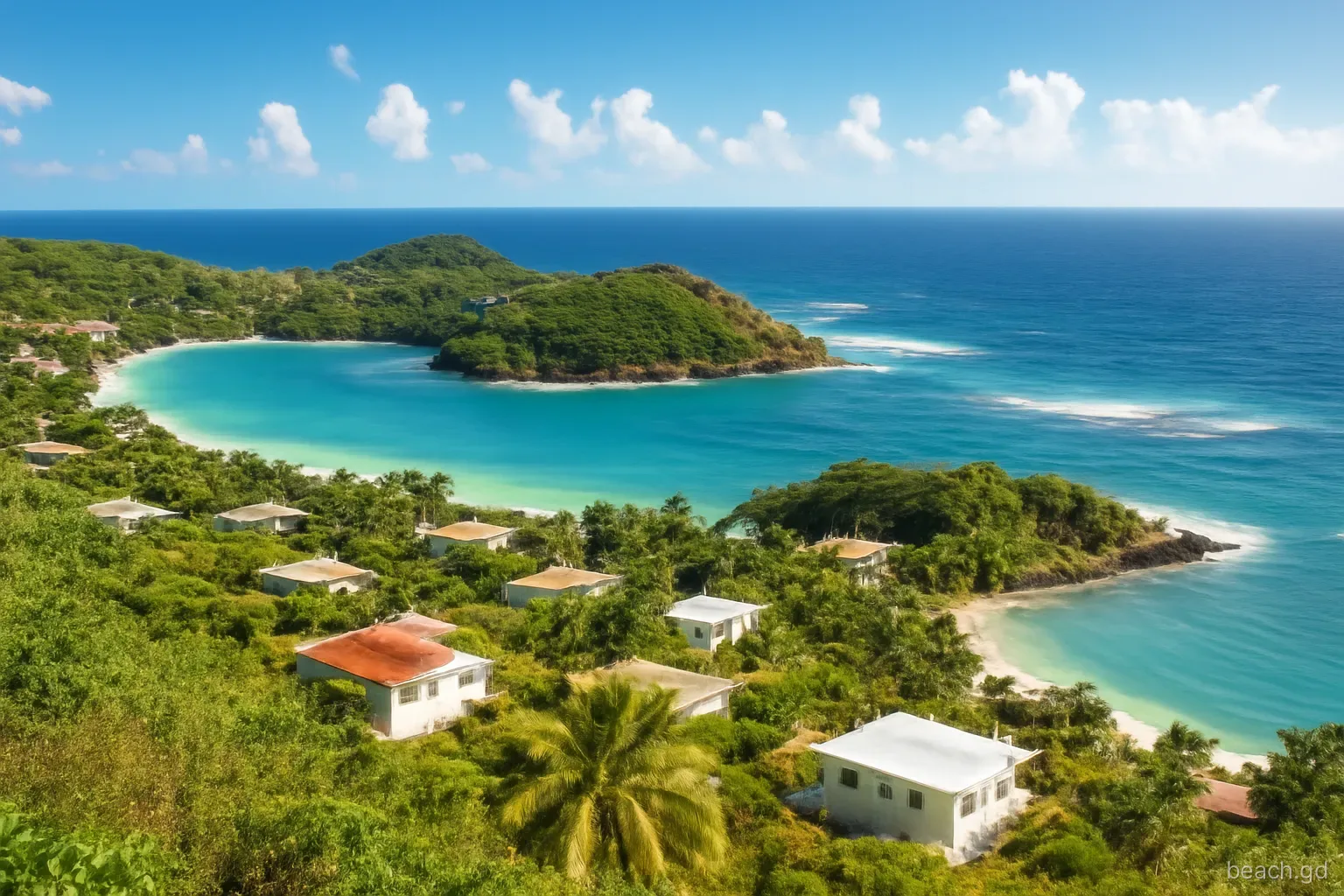
The long sandy middles of beaches such as Grand Anse, Morne Rouge and Paradise Beach in Carriacou are mostly clear underfoot. The risk rises at the edges: the rocky points at either end of a bay, patches of reef close to shore, and the zone where sand gives way to rubble or seagrass. That is exactly where snorkellers head, because the fish are there too.
Small rocky coves along the south coast and around the Lance aux Epines and Calivigny peninsulas tend to have urchins on the rocks near the waterline. Fishing beaches on the west coast can have debris, old moorings and ropes coated with stinging growth. Seagrass beds in calm bays are prime stingray habitat, and rays also rest on the sand beside swimmers on quiet mornings, which is part of the pleasure of snorkelling here as long as you see them first.
Visibility is the other factor. After heavy rain, runoff clouds the water near river mouths and drains, and on choppy days the light breaks up on the surface. In murky or bright, glinting water you simply cannot see what is underfoot, so slow down and keep your feet off the bottom.
Simple habits that prevent almost every injury
None of these spoil a beach day, and together they remove most of the risk:
- Wear water shoes or reef booties when walking in over rocks or rubble, and for children exploring rock pools.
- Do the stingray shuffle: slide your feet along the sand rather than stepping, so rays feel you coming and glide away.
- Enter and exit the sea over sand, not rocks, even if it means a longer walk.
- Snorkel with a float or keep fins kicking gently on the surface instead of standing up on reef.
- Never put hands into holes, under ledges or on the bottom to steady yourself. Learn to hover.
- Use a mask to look before you put your feet down when you are tired and want to stand.
- Avoid touching ropes, mooring lines and pilings, which are often coated in stinging hydroids.
First aid when contact happens
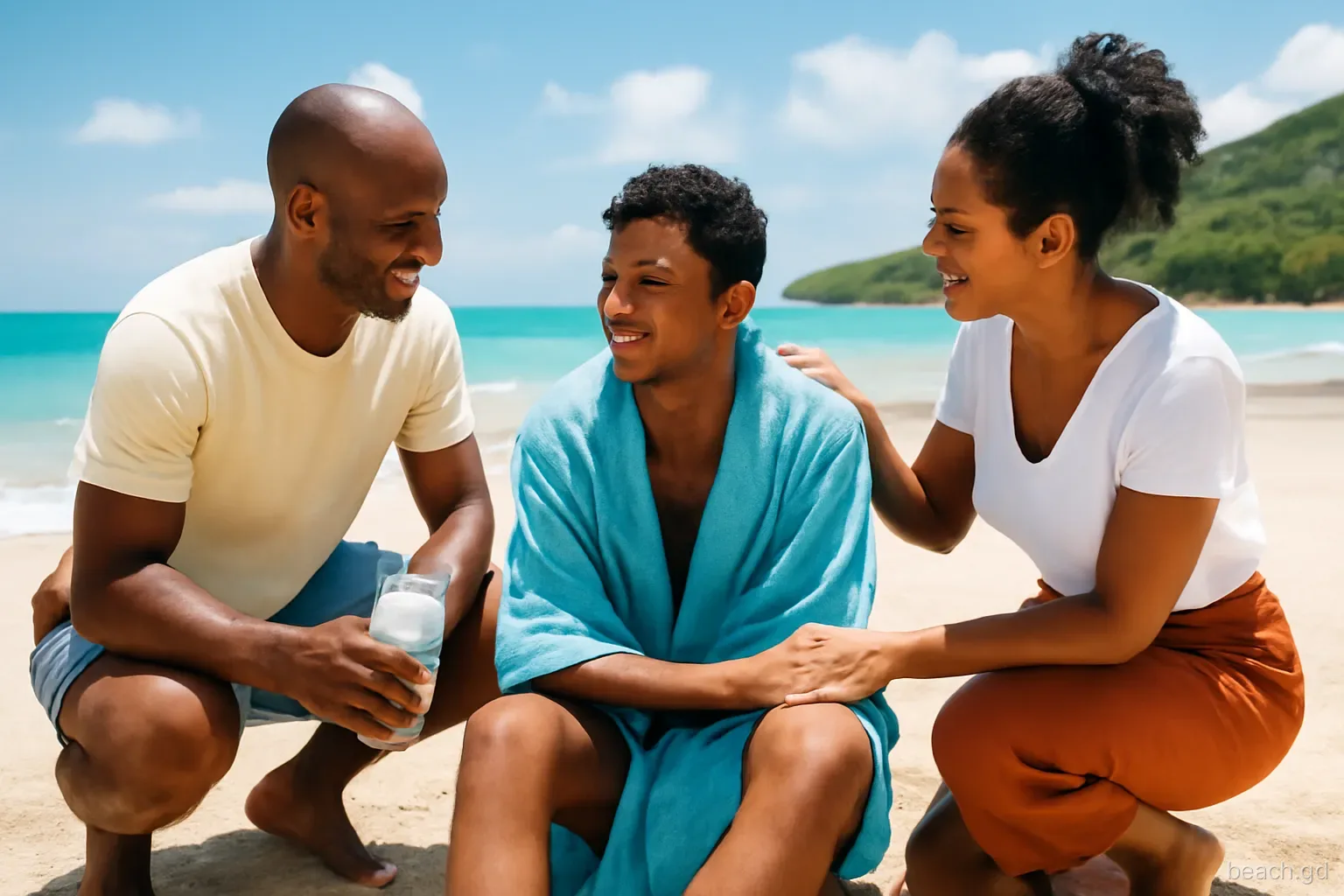
Most injuries can be handled on the beach, then checked properly later. Work through the injury that matches:
- Urchin spines: pull out any spines sticking out of the skin with tweezers. Do not dig for spines broken off below the surface, which often makes things worse; many dissolve or work their way out over days. Soaking in hot water eases pain, and some people soak in vinegar to soften small fragments. Local remedies such as lime juice are widely used, but keep the wound clean either way.
- Fire coral: rinse with seawater, then vinegar if available, and avoid rubbing. Pain usually settles within an hour or two; a hydrocortisone cream helps the itch.
- Stingray: rinse the wound, control bleeding, then immerse the foot in water as hot as tolerable for 30 to 90 minutes. Heat breaks down the venom and relieves the severe pain. Always get a stingray wound checked at a health centre or hospital, because barb fragments and infection are common.
- Lionfish or scorpionfish: hot-water immersion as for stingrays, then medical review if pain is severe, swelling spreads or the person feels unwell.
- Any injury: clean wounds carefully with fresh water and soap once ashore. Coral and urchin wounds infect easily in heat and seawater.
When to see a doctor, and the mistakes to avoid
Go to a doctor or the hospital for spines in or near a joint, especially fingers, knuckles or the sole near the toes; for a stingray barb wound; for spreading redness, warmth or pus in the days after; and for any sign of an allergic reaction. The General Hospital in St George's, the Princess Alice Hospital at Mirabeau in St Andrew and the Princess Royal Hospital in Carriacou all have emergency departments, and parish health centres can manage minor wounds. Keep your tetanus vaccination up to date before travel.
The mistakes are predictable. People dig at urchin spines with a pin until the wound is raw and infected. Snorkellers stand up on reef to clear a mask and kneel on fire coral or urchins. Children turn over rocks in pools to look for crabs and grab whatever is underneath. And visitors catch or prod a lionfish because they have heard it is good to eat, which it is, prepared by someone who knows how to handle the spines.
Rock pools and reef flats with children
Rock pools are where children and these animals most often meet. Low tide exposes pools on the rocky ends of many beaches, full of small fish, crabs and anemones, and children want to put their hands in everything. Exploring them is one of the best parts of a Grenada beach day, so set rules rather than banning it.
Give every child water shoes before they go near the rocks. Teach them to look with their eyes first and touch only with a stick, and never to turn rocks over, since urchins and small scorpionfish often shelter underneath. Point out what an urchin looks like before you start, and agree that anything black and spiky is left alone. On reef flats, keep children on the sand patches between coral heads rather than walking on the coral itself, which also protects the reef.
Rock pools heat up and the rocks get slippery with weed, so falls are as much of a risk as stings. Keep visits short in the midday sun and go back when the tide starts to rise, because incoming water can cut off the route back to the sand on some points. A single adult watching from a dry rock can see the whole group and the sea at once.
Frequently asked questions
Do you need to remove every sea urchin spine?
No. Remove spines that protrude and can be gripped with tweezers, but leave fragments embedded deep in the skin rather than digging. Many dissolve or work out within days. See a doctor if a spine sits in a joint, if pain persists for more than a few days or if signs of infection appear.
Are stingrays dangerous in Grenada?
Stingrays are calm and avoid people, and they are a pleasure to watch while snorkelling. Injuries happen almost only when someone steps on a ray buried in sand. Shuffle your feet in sandy shallows, give rays space, and seek medical care if you are stung.
Is it safe to eat lionfish in Grenada?
Yes. The flesh is not venomous, only the spines, and eating lionfish helps control an invasive species that damages reefs. Leave catching and cleaning to fishermen and cooks who know how to handle the spines, and order it when you see it offered.
What do water shoes protect against?
They protect the soles from urchin spines on rocks, sharp coral rubble, broken shells and hot sand. They do not stop a stingray barb, so still shuffle your feet over sand, and choose a pair with a firm sole rather than thin fabric socks.
How do you recognise fire coral?
Look for mustard-yellow to tan growths, often with paler or white tips, forming branches, blades or crusts over rocks and dead coral. It looks smoother than most true corals. The safest rule is simply not to touch anything on the reef with bare skin.