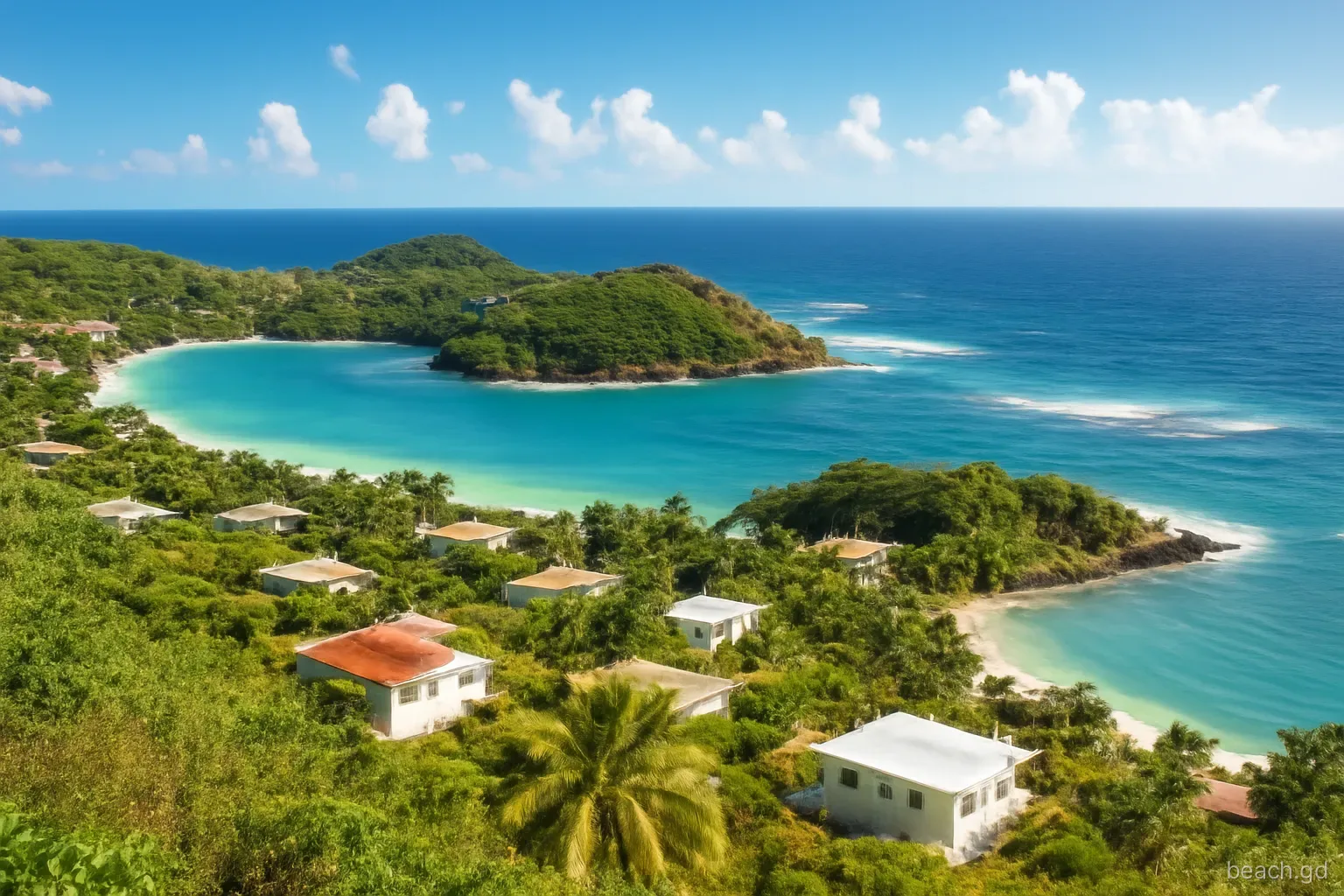
Most swimmers in Grenada never meet a rip current, and the reason is geography rather than luck. The island's busiest beaches, Grand Anse, Morne Rouge and the south-coast coves, face the Caribbean Sea on the sheltered side, where the north-east trade winds blow offshore and the water is usually flat enough for toddlers. Drive forty minutes north-east to the Atlantic shore and the picture changes completely.
On the windward side the trades push open-ocean swell straight onto the sand, and wherever that water piles up it has to find a way back out. That return flow is a rip: a narrow, fast channel running away from the beach. Rips do not pull you under, but they can carry a strong swimmer out faster than any freestyle can bring them back. Knowing where they form, what they look like and how to respond turns a frightening situation into a manageable one.
Why the two coasts behave so differently
Grenada sits at roughly 12 degrees north, squarely in the trade-wind belt. For most of the year the wind comes from the east or north-east, and it has crossed thousands of kilometres of Atlantic before it reaches the island. The east coast, from Levera and Bathway in St Patrick down through Grenville and the St Andrew shoreline, takes the full energy of that fetch.
The west and south-west coasts sit in the island's wind shadow. Grand Anse, BBC Beach at Morne Rouge, Grand Mal and the bays around Lance aux Epines usually see small, gentle waves, and on those beaches true rips are uncommon in normal weather. The south-east corner around La Sagesse and the Calivigny peninsula is in between: headlands and reefs shelter some bays, while exposed stretches can run surprisingly hard when the wind swings south of east.
The practical rule is simple. On the Caribbean side, check the conditions; on the Atlantic side, assume a current exists until you have good reason to believe otherwise.
Where rips tend to form on Grenada's beaches
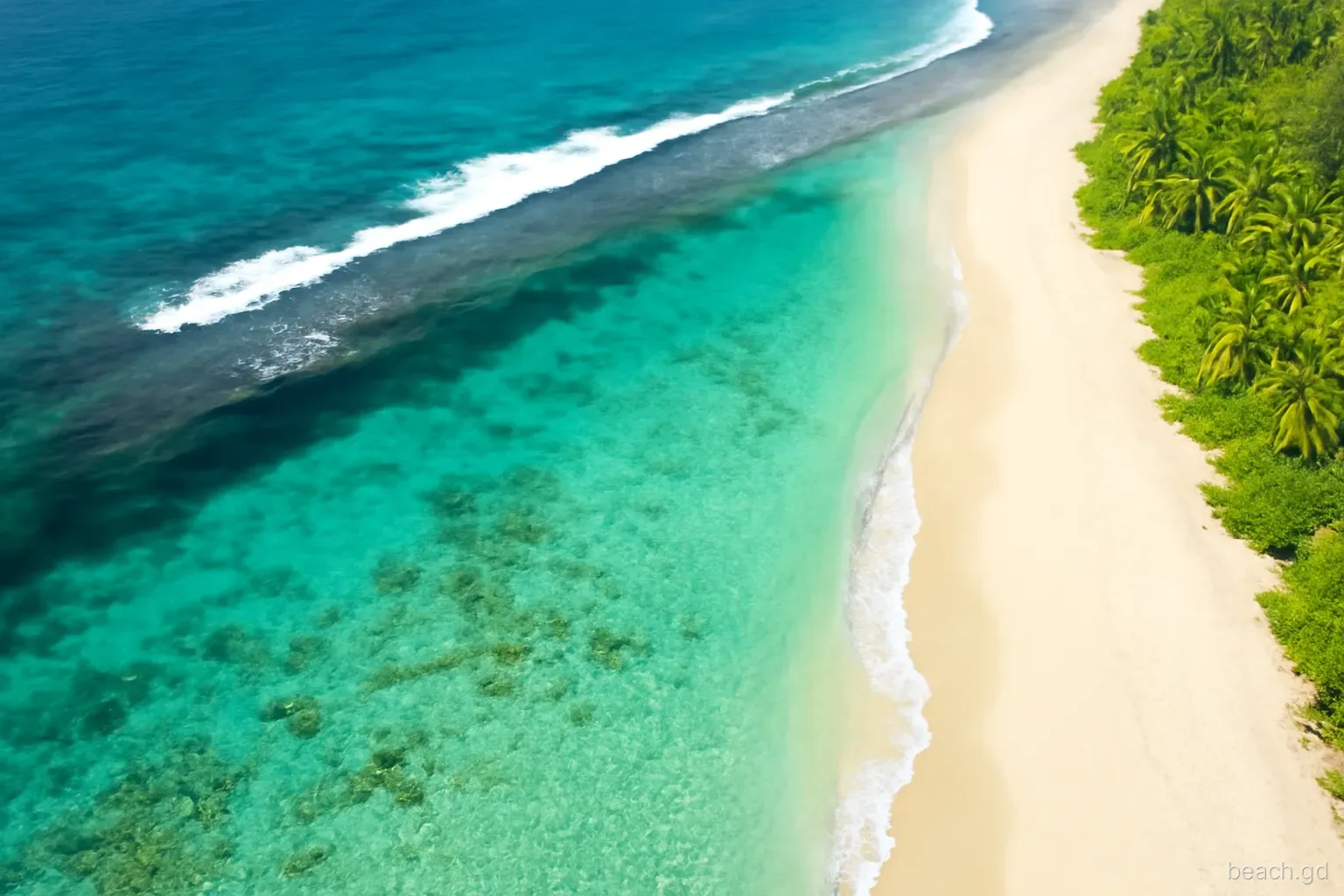
Gaps in the reef. Bathway is the classic example. A long reef runs parallel to the beach and creates a sheltered pool close to shore, but where breaks in that reef let water drain out, the flow is concentrated and fast. Staying inside the reef line is the whole point of swimming there.
Beside headlands and rocks. Water deflected along a rocky point often turns seaward at the edge of the beach. The ends of a bay are frequently where the current runs strongest, which matters because the ends are also where snorkellers like to go.
River and drain mouths. After heavy rain, rivers such as those that reach the sea along the St Andrew coast push brown water out through the surf. The outflow carves a channel and keeps it open, and the murky water hides how fast it is moving.
Wide, exposed sand with no reef. Stretches such as Levera and parts of the Grenville coastline have long open beaches where rips appear, move and disappear with the tide and swell. A spot that was calm yesterday can pull today.
Unusual swell days on the sheltered coast. Winter north swells and passing tropical systems occasionally send waves into normally calm bays. On those days the leeward beaches can develop currents that regular visitors have never seen.
How to spot a rip from the beach
Spend five minutes watching the water before anyone goes in, ideally from a slightly raised spot such as the top of the beach or a seawall. Rips are easier to see from above than from water level. Look for these signs:
- A gap in the line of breaking waves, where the sea looks deceptively calmer than on either side. Many people choose exactly this spot to swim because it looks the quietest.
- A strip of darker or deeper-coloured water cutting through the lighter turquoise of the sandbank or reef flat.
- Foam, seaweed, sargassum or debris drifting steadily away from shore rather than washing in.
- Choppy, rippled water in a narrow lane while the surrounding surface is smoother, or sand-stained water spreading beyond the surf line.
- Local swimmers and fishermen avoiding one section of the beach. If the people who use a beach daily are not swimming in a particular place, there is usually a reason.
If a rip takes you: what to do, in order
The danger in a rip is panic and exhaustion, not the current itself. Most rips weaken a short distance beyond the breaking waves. These steps follow the advice used by lifesaving organisations worldwide:
- Stay calm and float. Lie back, keep your airway clear and let the current carry you while you get your breath. Fighting it head-on is how strong swimmers tire.
- Raise one arm and wave to signal for help if anyone is on the beach.
- Swim parallel to the shore, not towards it. Rips are usually narrow, so a short swim sideways often takes you out of the channel.
- Once out of the pull, swim back at an angle, using the breaking waves to carry you in.
- If you cannot get out, keep floating. Many rips circulate back towards the surf zone, and staying afloat buys time for help to arrive.
- Once ashore, rest and tell someone. People who have swallowed water or been in the sea a long time should be checked over, even if they feel fine.
Helping someone else, and the mistakes that cost lives
Worldwide, a share of rip-current drownings are would-be rescuers who swam out to help. If you see someone caught, call 911 and keep your eyes on them so you can direct responders. Throw anything that floats, such as a cooler lid, body board or empty plastic bottle, and shout to them to swim sideways. Only enter the water with flotation and real lifesaving training.
The common mistakes on Grenada's Atlantic beaches repeat themselves. Visitors arrive at Bathway, see the calm pool and drift towards the reef edge while snorkelling. Groups at a holiday beach lime have a few drinks, the tide rises and someone decides to swim beyond the reef. Families let children use inflatables on an onshore day, and the wind and current combine to carry them out. People swim alone at an empty Atlantic beach where nobody would notice they were in trouble.
Lifeguard cover on the island is limited, and most beaches have none. Treat every Atlantic beach as unpatrolled, swim with a companion, keep within your depth and leave the reef gaps alone.
Days when the risk rises, even on familiar beaches
Rip risk is not fixed to a beach; it follows the swell. From roughly December to March, winter storms far to the north in the Atlantic send long-period swell south. Grenada's north coast around Sauteurs and Levera takes it first, and in bigger events it wraps around into bays that are flat for the rest of the year. Locals call these episodes ground seas, and they can arrive on a sunny day with almost no wind.
Hurricane season, officially 1 June to 30 November, brings a second pattern. A storm passing well north of the island can still push heavy swell onto the coast for a day or two before and after, long before any rain arrives. The so-called Christmas winds, a spell of stronger trades around December and January, also roughen the Atlantic side and make the reef gaps at Bathway pull harder.
Heavy rain matters too. A night of downpours swells the rivers, and the outflows open channels through the surf on the St Andrew and St Patrick coasts. If the sea looks brown and lumpy and the waves are breaking further out than usual, that is a day for the sheltered Caribbean side, or for a swim in the shallows only.
Frequently asked questions
Does Grand Anse have rip currents?
In normal trade-wind conditions Grand Anse is sheltered and rips are uncommon. During winter north swells or when a tropical system passes, waves can reach the beach and create currents near the ends of the bay. Check the water on the day rather than relying on its calm reputation.
Is Bathway Beach safe for swimming?
Inside the reef, Bathway is one of the safer Atlantic beaches because the reef breaks the swell and creates a shallow pool. The danger lies at the reef gaps and beyond the reef, where currents are strong. Stay well inside and keep children close.
Can a rip current pull you underwater?
No. A rip pulls you away from the shore along the surface, not downward. People drown in rips mainly through panic and exhaustion while trying to swim straight back against the flow. Floating and swimming parallel to the beach are the answers.
What time of day are rips strongest?
Rips often strengthen around low tide, when water draining off reefs and sandbanks is concentrated into channels, though this varies by beach. Swell size and wind direction matter more than the clock, so look at the sea each time you arrive.
Who do you call for a water emergency in Grenada?
Dial 911 for police, fire and ambulance. Tell the operator the beach name, the parish and the nearest landmark, and keep watching the person in the water so you can guide the responders when they arrive.