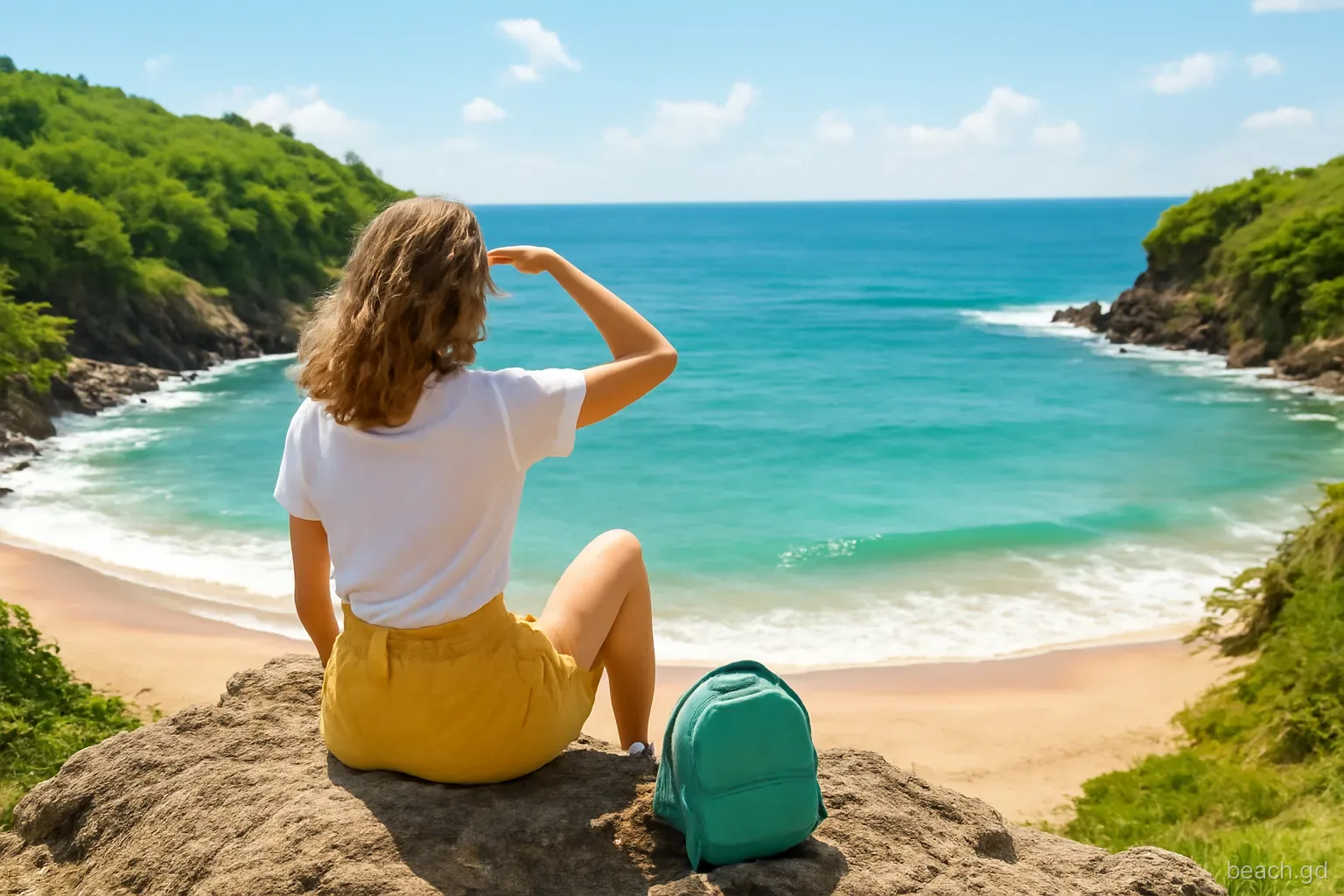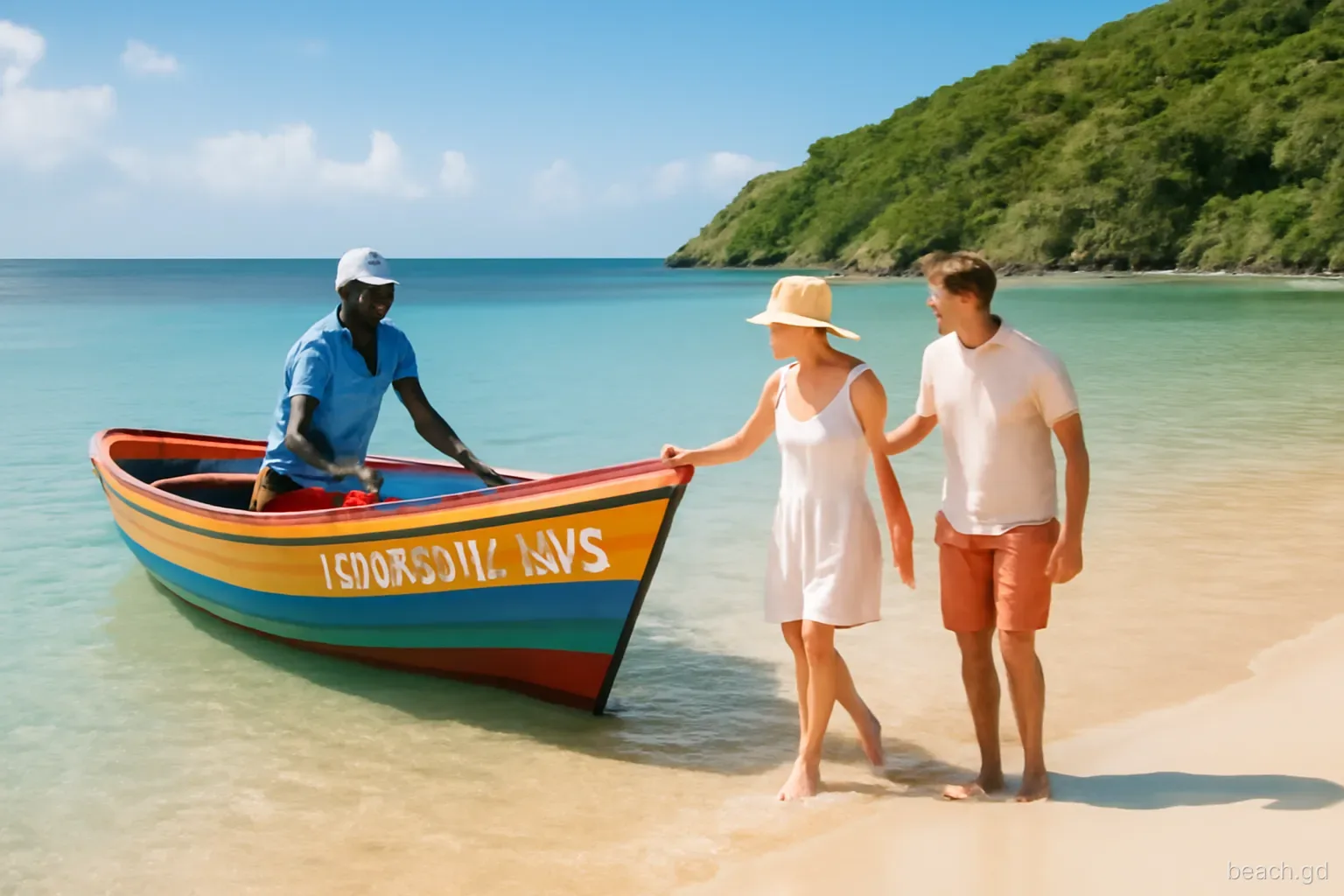
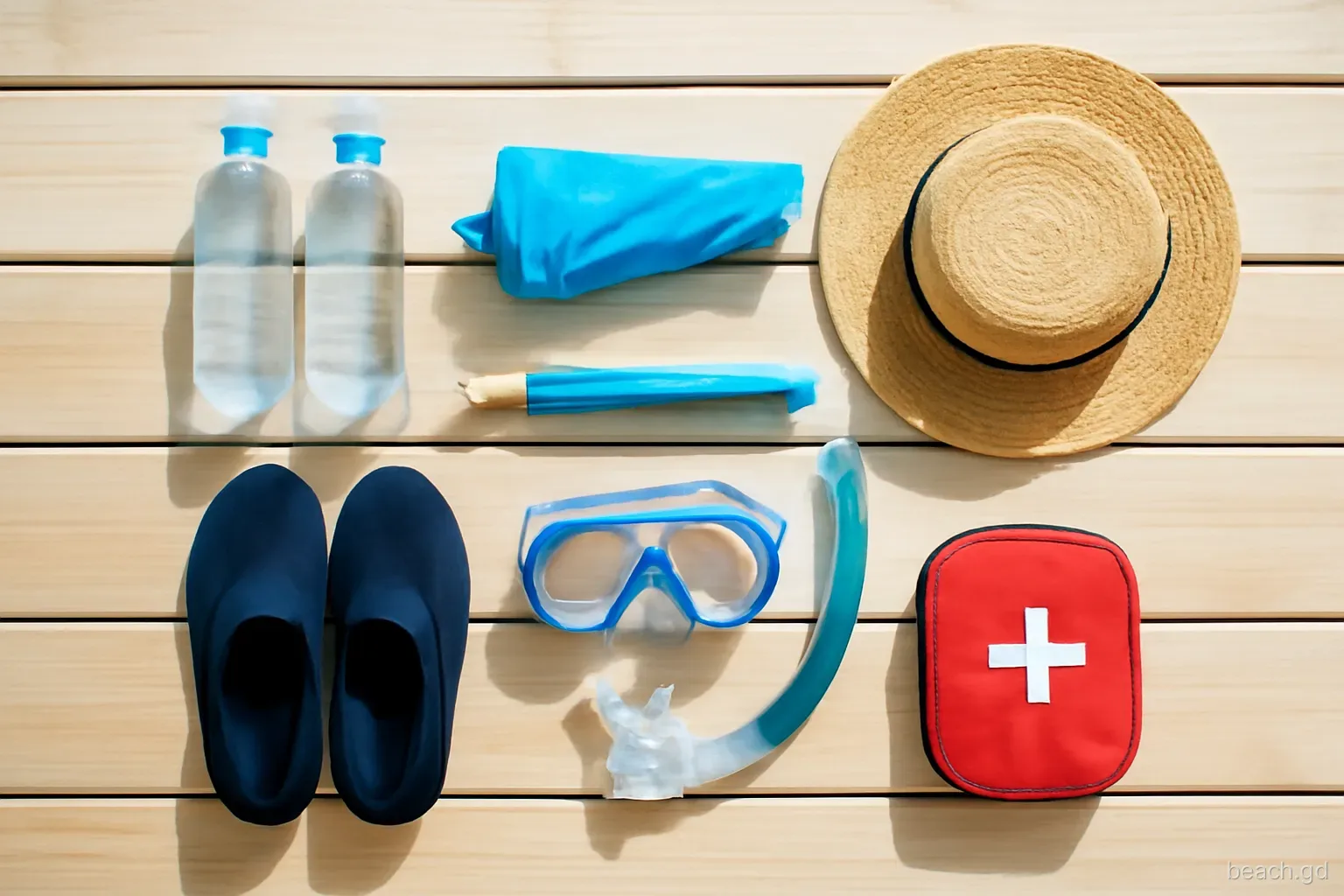
At Grand Anse you can forget almost anything and buy it within a few steps: water, a hat, a chair, lunch. At a cove reached by a 20-minute walk down a goat track or a water taxi that drops you and leaves, you have exactly what you carried. Most of the things that go wrong on remote beaches in Grenada, from dehydration to a sliced foot to missing the boat back, trace back to what was or was not in the bag.
This checklist is built for that kind of beach: no bar, no toilets, no shade structures, possibly no phone signal. It is organised by priority, with notes on weight, because everything you bring has to go up the hill again at the end of the day.
The non-negotiables
If you take nothing else, take these. Each one addresses a problem that happens every week on Grenada's quiet beaches:
- Water. At least 1.5 litres per person for a half day, more for a full day or in the dry season from February to May. Freeze one bottle overnight; it stays cold for hours and doubles as an ice pack.
- Shade. A light beach umbrella or a pop-up shelter. Many coves have little natural shade, and Hurricane Beryl in 2024 stripped trees from beaches on Carriacou and Petite Martinique.
- Sun protection. Hat, sunglasses, a long-sleeved rash vest or shirt and reef-safe sunscreen. The trade-wind breeze hides how quickly you burn.
- Proper footwear. Trail shoes or strapped sandals for the path, reef shoes for rocky entries. Flip-flops on a steep, loose descent cause more twisted ankles than anything else.
- A charged phone in a waterproof pouch. Even where signal is patchy, it holds your photos, a torch and the boatman's details.
- A rubbish bag. There are no bins. Everything comes back with you.
Snorkel and swim gear
Your own mask. A mask that fits properly matters more than any other piece of kit. Remote coves have nowhere to hire one, and a leaking mask ends a snorkel early.
Fins, if the path allows. Short travel fins fit in a day pack. Full-length fins are worth carrying only on boat trips or easy paths.
A buoyancy aid. For weaker swimmers and children, a snorkel vest or float adds confidence at beaches with no lifeguard.
A towel that dries fast. Microfibre towels weigh little and dry before the walk back.
A bright swim cap or tow float. Useful anywhere boats might pass, and makes you visible to companions on the beach.
Anti-fog for the mask. A drop of baby shampoo or a commercial anti-fog solution rinsed lightly keeps the lens clear. Spitting works too, less elegantly.
A mesh bag. Wet gear in a mesh bag drains and dries on the walk back instead of soaking everything else in your pack.
First aid for a beach with no help nearby
A small kit, kept in a sealed bag, covers most cove injuries. Serious help may be an hour or more away by road or boat, so build the kit around the problems that actually occur on Grenada's rocky shores rather than buying a generic box:
- Plasters and wound dressings for cuts from rocks, coral and barnacles.
- Antiseptic wipes or solution; coral cuts infect easily in the heat.
- Tweezers, for splinters and the small spines that sea urchins leave in feet.
- White vinegar in a small bottle, which some guides suggest for jellyfish stings, and a pair of gloves.
- Oral rehydration sachets and a few painkillers.
- An antihistamine for insect bites and mild allergic reactions.
- Any personal medication, including an inhaler or allergy pen, kept in the shade.
- Insect repellent for sandflies and mosquitoes near mangroves and vegetation at dawn and dusk.
Food, cash and the small things that save the day
Food that survives heat. Fruit, nuts, bread and things that do not spoil quickly. A small cool box is worth it on a boat trip; on foot, an insulated bag with the frozen bottle does the job.
Cash in EC dollars. For water taxis, a cold drink from a roadside shop on the way, or a fisherman selling coconuts. Small notes avoid change problems.
A dry bag. For boat transfers, rain showers and keeping sand out of electronics.
A light cover-up. For walking through villages to and from the beach, where swimwear alone is not the norm.
A whistle. Small, cheap and audible far further than a shout if you need to attract attention.
Toilet tissue and a sealable bag. There are no facilities. Carry used tissue out rather than leaving it under a bush.
What to leave behind
Some things add weight, risk or damage without adding anything useful. Leaving them at your accommodation makes the walk easier and the beach better for whoever comes next:
- Glass bottles. They break on rocks and sand and stay there.
- Valuables you do not need: passports, spare cards, jewellery. Leave them in a safe at your accommodation.
- Loud speakers. Quiet coves are often near homes or used by wildlife.
- Balloons, confetti and anything that will blow away.
- Soap and shampoo for washing in the sea or in streams.
- Single-use plastics you can avoid; take reusable bottles and containers instead.
- Disposable barbecues. Fires on beaches cause scrub fires in the dry season and harm turtle nesting areas.
- Camouflage-pattern clothing, which is illegal for civilians in Grenada, including visitors and children.
- Drones, unless you have checked the current rules; some coastal and protected areas restrict them.
Packing for the path, not just the beach
Everything above has to travel down a path and back up again, often in heat. Pack a day bag with two shoulder straps rather than a tote that leaves one hand busy; you will want both hands free on steep sections. Put the heaviest items, water mainly, close to your back. Carry the umbrella strapped to the bag rather than in your hand.
Share the load in a group. One person carries the shade, another the cool box, another the first-aid kit and rubbish bag. Agree before you leave who has the phone with the boatman's details and who has the car keys, and keep both in a zipped pocket. Losing car keys in the sand at a remote cove turns a pleasant afternoon into a very long evening.
Finally, pack an exit plan: the time of the boat pick-up or the time you intend to start walking back, and someone at your accommodation who knows where you went.
Adjusting the list to the trip
On foot down a steep path. Cut weight hard. Two shoulder straps, water first, short fins or none, a light umbrella only if it straps on. Skip the cool box.
By water taxi or boat. Weight matters less, but everything must survive spray. Use a dry bag, bring the cool box and full fins, and add seasickness tablets. Carry the boatman's details and the agreed pick-up time.
With young children. Double the water, add a pop-up shelter rather than an umbrella, spare clothes, more snacks than seems reasonable and a buoyancy aid for each child. Choose a cove with a gentle slope and a short approach.
Full day rather than half day. Add a proper lunch, a second layer of sun protection for the afternoon, and a plan for the hottest hours, such as a shady rock or a rest under the shelter.
In the rainy season. Add a light rain jacket and a plastic bag for the phone. Showers pass quickly, but paths turn slippery and rivers rise briefly after heavy rain.
Frequently asked questions
How much water should you take to a remote beach in Grenada?
Plan on at least 1.5 litres per person for a half day and more for a full day, especially in the dry season or if the walk is steep. There is rarely anywhere to buy water at a remote cove, and dehydration creeps up quickly in heat and wind.
Do you need reef shoes in Grenada?
At many quiet coves, yes. Rocky entries, coral rubble and occasional sea urchins make reef shoes worthwhile, and they protect feet on hot dark sand. On soft sandy beaches such as Grand Anse they are less necessary.
What should be in a beach first-aid kit?
Plasters, wound dressings and antiseptic for cuts, tweezers for spines and splinters, oral rehydration sachets, painkillers, an antihistamine, insect repellent and any personal medication. Keep it small, sealed and in the shade.
Is it worth bringing a beach umbrella?
For remote coves, yes. Many have little natural shade, and some lost trees in recent storms. A light umbrella or pop-up shelter makes a half day comfortable and reduces the risk of sunburn and heat exhaustion.
What should you never bring to a quiet beach?
Glass bottles, unnecessary valuables, loud speakers, balloons and disposable barbecues. All of them either cause damage, attract trouble or disturb people and wildlife. Bring a rubbish bag and take everything home again.