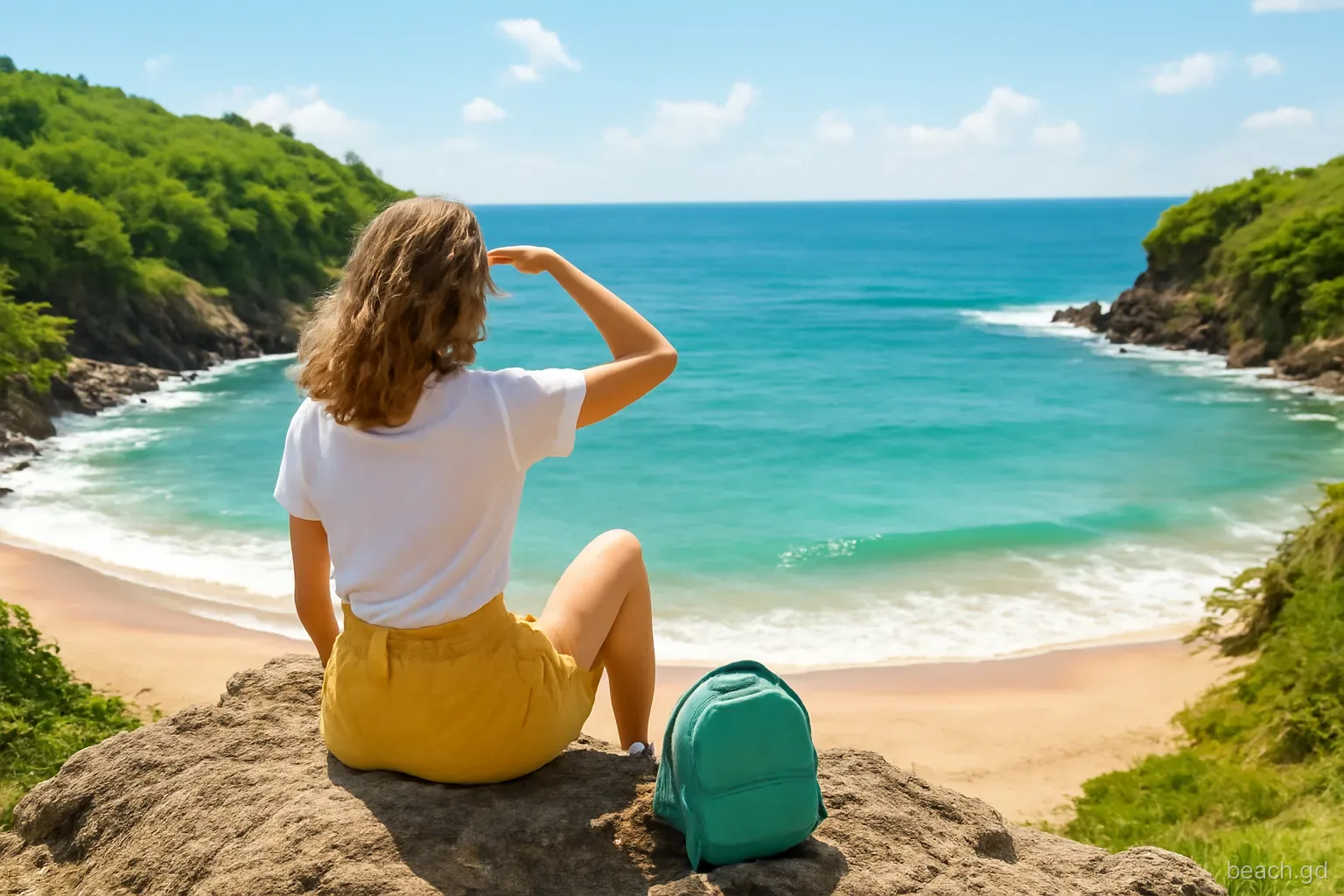
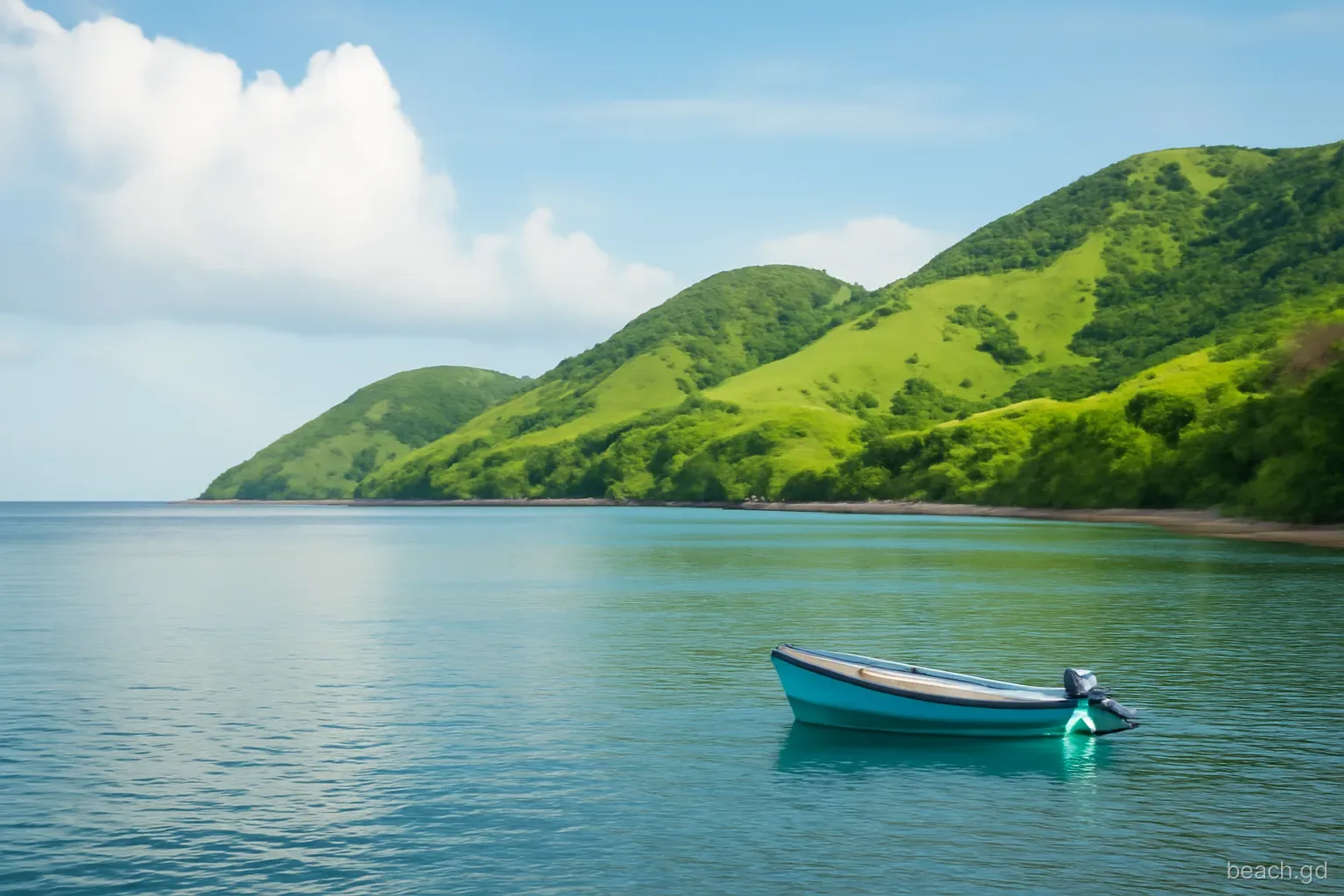
A cove that is perfect in March can be unswimmable in January and covered in seaweed in June. Grenada's weather is warm all year, but the wind, the swell and the rain shift through the seasons, and because quiet coves are small, exposed and unsupervised, those shifts matter more than they do at a big managed beach.
This piece takes a cove-by-type approach rather than a list of beaches. It explains how each season affects leeward coves on the Caribbean side, windward coves facing the Atlantic, and north-facing coves exposed to winter swell, and how to pick the right kind of cove for the month you are travelling. Use it alongside local advice on the day, which always trumps a seasonal pattern.
Three kinds of cove
Grenada's quiet beaches fall broadly into three groups. Leeward coves face west or south-west into the Caribbean Sea, sheltered from the prevailing trade winds by the island's mountains. They include the small bays of the west coast north of St George's, the dark-sand coves of St John and St Mark, and on Carriacou the west-facing bays around Hillsborough and L'Esterre. Most of the year their water is calm.
Windward coves face east or north-east into the Atlantic and the trade wind. On the main island they line the coast of St Andrew and St David; on Carriacou they include bays such as Petite Carenage. They are breezier, wilder, more often choppy and the first to receive drifting seaweed.
North-facing coves, at the northern tips of Grenada and Carriacou, sit between the two. They are sheltered from the trade wind in some seasons but exposed to the long swells that roll down from the North Atlantic in winter.
Knowing which group a cove belongs to is the single most useful thing you can learn before visiting it. A quick look at which way the beach faces, using the position of the sunset or the direction of the island's mountains, tells you most of what the season will do to it. A west-facing beach watches the sun go down over the sea; an east-facing one watches it come up. Everything else in this piece follows from that orientation.
December to April: trade winds and winter swell
Leeward coves. This is their best period overall, with dry weather, clear water and steady shelter from the wind. The exception is the occasional ground swell: when a big storm far to the north sends long-period waves down the island chain, even west-facing coves can see waves breaking on the shore for a day or two.
Windward coves. The trade winds are often at their strongest early in the year. Expect choppy seas, onshore wind and white caps. These are days for walking the beach rather than swimming far out.
North-facing coves. The most affected by winter swell. Beaches that are calm in summer can see powerful waves and strong backwash on swell days. Check with local fishermen or boatmen before going.
Overall. Choose leeward coves, swim in the morning, and keep an eye on swell forecasts if you plan a north-coast trip.
May and June: the calm before the rains
Late in the dry season, the island is at its driest and hottest. The trade winds often ease, and on calm days the windward coves become far more inviting, with gentle surf and clear water. Leeward coves remain calm and clear, and the swell season has usually passed, which makes this a good window for the more exposed north-facing beaches as well.
The trade-off is heat. Dark-sand coves on the leeward coast become painfully hot underfoot by late morning, and walks to remote beaches are best done early. Dry vegetation means real fire risk; no barbecues or fires on or behind beaches.
Sargassum can begin arriving on windward shores in these months in some years. Arrivals are irregular and hard to predict far ahead, so ask locally before driving to an east-coast cove specifically to swim.
July to November: rains, heat and the hurricane season
Leeward coves. Still generally calm, but heavy showers wash sediment from the hills into the bays. After a big downpour, water near river mouths and gullies can stay cloudy for a day or two. Pick coves without a stream entering them, or wait for the water to clear.
Windward coves. The trade wind often lightens in parts of this season, which can give calm, beautiful days on the Atlantic side. Sargassum is more likely in some years, with mats accumulating on east-facing beaches.
North-facing coves. Usually calmer than in winter, making this a good time for them when the weather is settled.
Storms. The hurricane season runs from June to November. Tropical systems passing nearby, even without a direct hit, can bring strong winds, heavy rain and big seas from unusual directions. Follow NaDMA and the Grenada Meteorological Service, and stay off remote beaches when a system is near.
Sargassum in more detail
Since about 2011, large quantities of sargassum seaweed have drifted into the eastern Caribbean from the Atlantic in many years. For quiet coves, it matters more than for managed beaches, because nobody clears it:
- It arrives mainly on east- and north-east-facing shores, carried by currents and the trade wind.
- The heaviest arrivals have tended to come between spring and late summer, though timing varies from year to year.
- Fresh floating seaweed is harmless, but mats rotting on the shore release hydrogen sulphide, with a rotten-egg smell that can irritate eyes and breathing, especially for people with asthma.
- Leeward coves are usually unaffected even when windward beaches are covered.
- Regional monitoring services publish sargassum outlooks, and local residents know quickly when a bay is affected.
Carriacou and Petite Martinique through the year
The same principles apply on the sister islands, compressed into a smaller space. Carriacou's west coast, from Hillsborough down past Paradise Beach to Tyrrel Bay, plays the leeward role and stays calm in most conditions. The north-west, around Anse La Roche, is the part most exposed to winter swell; between November and March, boatmen may refuse to land there on swell days. The north-east, including Petite Carenage, takes the trade wind and any sargassum first.
The islets matter too. Sandy Island and White Island are only reached by small boat, so wind strength decides whether a trip happens at all. The breezy early months of the year bring more cancellations; calmer spells in late spring and parts of summer bring more opportunities. On Petite Martinique, the leeward side near the jetty offers the sheltered swimming, whatever the month. If your Carriacou stay is short, put the boat-dependent beaches at the start of it.
Choosing a cove for your month, step by step
Seasonal patterns tell you what is likely, not what is happening. Turn them into a decision on the day with a short routine that takes a few minutes over breakfast:
- Check the wind direction and strength. Strong east or north-east wind points you to leeward coves.
- Check for swell, especially from November to March. If a northern swell is forecast, avoid north-facing and exposed west-facing coves.
- Think about the last 24 hours of rain. Heavy rain means avoiding coves fed by rivers and gullies.
- In spring and summer, ask about sargassum before driving to a windward cove.
- Look at the sea when you arrive. Waves dumping on the shore, strong backwash or murky water are reasons to choose another beach.
- Ask someone local. Fishermen, boatmen and people living above the beach know its moods far better than any app.
Frequently asked questions
What is the best time of year for quiet beaches in Grenada?
For calm leeward coves, the dry season from about January to May is most reliable, though occasional winter swells occur until March. May and June often bring calmer windward beaches. The rainy season is quieter for crowds but brings showers, run-off and hurricane risk.
Does Grenada get big waves in winter?
Occasionally. Between roughly November and March, storms far to the north can send long-period swell down the Caribbean. It mostly affects north- and west-facing beaches and usually lasts a day or two. Ask locally or check a swell forecast before visiting exposed coves.
When is sargassum worst in Grenada?
Arrivals vary from year to year, but the heaviest have tended to come between spring and late summer, mainly on east-facing beaches. Leeward beaches on the Caribbean side are usually clear. Ask locally before heading to a windward cove to swim.
Is it safe to visit remote beaches in the rainy season?
Yes, with care. Showers are usually short, but paths become slippery and rivers can rise quickly after heavy rain. Avoid swimming near river mouths after downpours, and stay off remote beaches entirely when a tropical storm or hurricane is nearby.
Which side of Grenada is calmer?
The west and south-west, on the Caribbean side, are usually calmer because the island's mountains shelter them from the trade winds. The east coast faces the Atlantic and is breezier and rougher, though on calm days it can be lovely.