Grenada is a safe place to explore, and empty beaches are among its greatest pleasures. But an empty beach has no lifeguard, no bar staff who notice when someone has been in the water too long and often no phone signal. The risks are rarely about crime. They are about a strong current with nobody to see you, a cut foot an hour's walk from the car, a boat that does not come back, or a car window smashed while you swim.
This piece is a practical safety plan for solo travellers, couples and small groups heading to isolated coves on Grenada, Carriacou and Petite Martinique. It covers the plan you leave behind, signal and communication, the swim itself, car and belongings, injuries far from help and the moments when the right decision is to leave.
Before you go: the plan you leave behind
The most effective safety measure costs nothing and takes two minutes. Before heading to a remote beach:
- Tell someone where you are going: your host, a friend or the hotel desk. Name the beach, the route and whether you are walking or going by boat.
- Give a return time, and agree what they should do if you are not back by then, such as calling you, then your boatman, then the police.
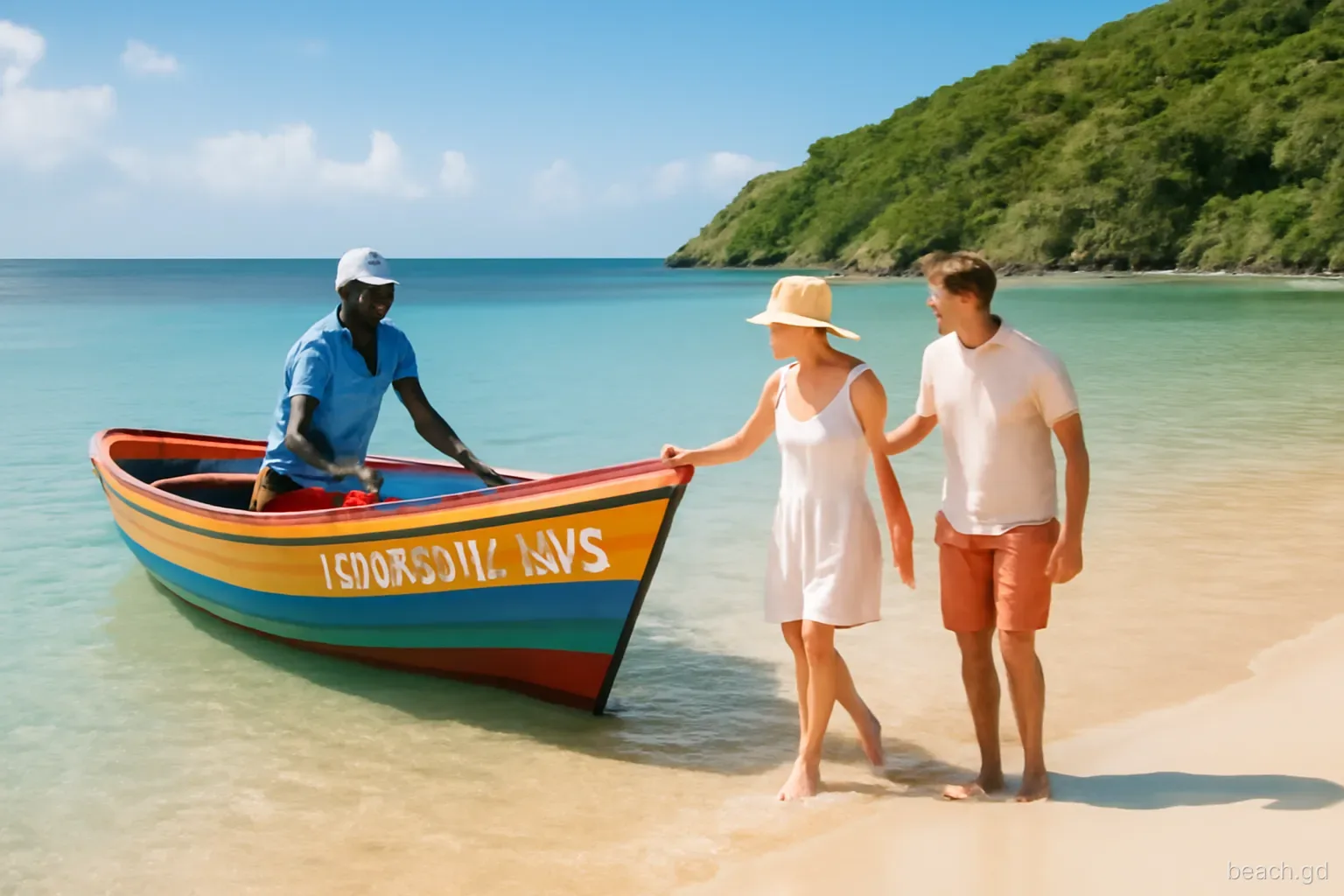
- Share the boatman's name and contact details if you are using a water taxi.
- Check the weather and sea conditions for the day, including any swell forecast.
- Charge your phone fully and carry a small power bank.
- Check in when you get back. A plan only works if the other person knows when to stop worrying.
Signal and communication
Grenada's two mobile networks, Digicel and Flow, cover most populated areas well, and both have rebuilt networks on Carriacou and Petite Martinique since Hurricane Beryl. Coverage still drops in the folds of the coastline, at the bottom of steep cliffs and on parts of the north and east coasts. A cove that sits below a headland can be a dead zone even if the road above had full bars.
Test before you commit. Check signal when you reach the beach, and if there is none, note where along the path you last had it. Text messages often get through when calls fail, so a short text to your contact on arrival is a good habit.
For emergencies, the number is 911, which connects to police, fire and ambulance services. Know roughly where you are in words a dispatcher will understand: the parish, the nearest village and the name locals use for the beach. A whistle carries much further than a voice if you need to attract attention from a passing boat or someone on the cliff.
Swimming when nobody is watching
Read the water first. Spend five minutes watching before you swim. Look for waves dumping on the shore, water rushing back out, a gap in the breaking waves where the sea looks calmer but darker, or debris moving steadily out to sea. Any of these is a reason to stay on the sand.
Stay within your depth. On an empty beach, swim parallel to the shore in water where you can stand, rather than heading out. Many leeward coves shelve steeply, so the bottom disappears quickly.
If you are caught in a current. Do not fight it head-on. Float, stay calm, and swim parallel to the beach until you are out of the pull, then make your way back to shore. Raise an arm and call if anyone is near.
Avoid swimming alone. If you are travelling solo, keep to shallow water and short swims, or save the snorkelling for a beach with other people. Tell yourself the swim is over before you feel tired.
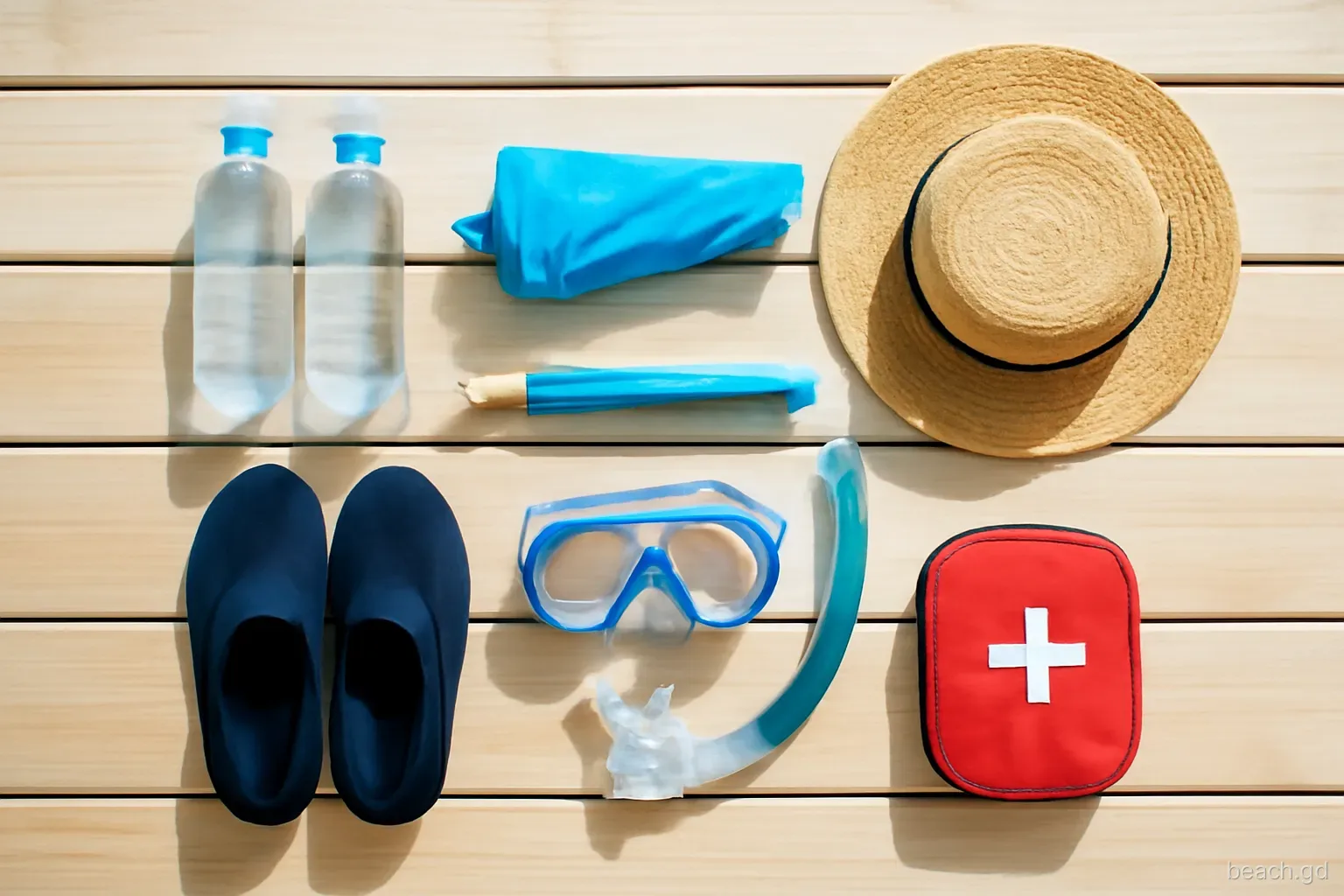
Check for hazards underfoot. Sea urchins on rocks, sharp coral and slippery algae cause most injuries. Reef shoes help.
Car and belongings
Most problems visitors encounter at quiet beaches involve property rather than people. Opportunistic theft from cars and unattended bags is the main risk at isolated spots:
- Leave nothing visible in the car: no bags, phones, chargers or jackets on the seats. Put things away before you arrive, not in the car park.
- Take passports, spare cards and valuables you do not need out of the car altogether, and leave them in the safe at your accommodation.
- Park where the car can be seen from a house or road if possible, and ask at the nearest home whether it is fine to leave it there.
- Carry keys, a phone and a little cash in a waterproof pouch while you swim.
- In a group, take turns swimming so someone stays with the bags.
- If the car has been tampered with, do not confront anyone; report it to the Royal Grenada Police Force and your hire company.
Injuries far from help
On a remote beach, a minor injury becomes a bigger problem simply because of distance. A deep coral cut, a twisted ankle on a steep path, a jellyfish sting or heat exhaustion can turn a pleasant outing into a long, difficult walk out. Carry a small first-aid kit with plasters, dressings, antiseptic, tweezers, rehydration sachets and any personal medication.
Heat is the most underestimated risk. Wind and sea spray make the sun feel gentle, and people stay out longer than they should. Signs of heat exhaustion include headache, dizziness, nausea and heavy sweating. Stop, move to shade, drink water and cool the skin. If someone becomes confused or stops sweating, treat it as an emergency and call 911.
On Carriacou and Petite Martinique, medical facilities are more limited than on the main island, and serious cases may need transfer to Grenada. That is one more reason to be cautious on remote beaches there and to make sure travel insurance includes medical evacuation.
Extra precautions on boat-drop beaches
Confirm the pick-up twice. Agree the time when you are dropped off and repeat it back. If there is any doubt, ask the boatman to pass by at a midpoint to check on you.
Keep the boatman's details with two people. One phone can die or get wet. Make sure your contact ashore has the details too.
Pack for delay. Take more water and food than the planned stay needs, plus shade. If the boat is late, you will be glad of it.
Stay where you were dropped. Wandering round a headland or onto rocks makes you harder to find when the boat returns.
Signal passing boats if needed. A raised arm waved slowly, a bright towel or a whistle are recognised signals. Most fishermen will come over if they see someone in difficulty.
Knowing when to leave
The best safety decision at an empty beach is often the decision to go. Nobody is there to tell you, so set your own triggers in advance and act on them without debate. Pack up and leave when:
- The sea is building, waves are getting bigger or the backwash is strengthening.
- Dark clouds are moving in from the sea or the hills; squalls bring strong wind and lightning.
- Someone in the group is unwell, overheated or injured, even slightly.
- You feel uneasy about a situation or person. Trust the instinct, pack up calmly and go.
- The light is fading and the path out is steep or unfamiliar.
- Your return boat is due and the sea is changing; be ready rather than making the boatman wait in worsening conditions.
Frequently asked questions
Is it safe to go to remote beaches in Grenada alone?
Generally yes, with precautions. Tell someone your plan and return time, check sea conditions, keep swims short and shallow, and leave nothing visible in your car. The main risks are the sea, injuries and theft from cars rather than personal attacks.
What is the emergency number in Grenada?
The emergency number is 911, for police, fire and ambulance. Be ready to give your location in local terms: the parish, the nearest village and the name residents use for the beach. Text messages often get through when calls fail in weak-signal areas.
Do remote beaches in Grenada have phone signal?
Many do, but coverage drops in coves below cliffs and on parts of the north and east coasts. Check signal on arrival and note where you last had it on the path. Carry a power bank and tell someone your plan before you go.
How do you avoid car break-ins at quiet beaches?
Leave nothing visible in the car, take valuables out before you set off, park where the car can be seen from a road or house, and ask nearby residents whether it is fine to park there. Carry keys and phone in a waterproof pouch.
What should you do if caught in a rip current?
Stay calm and do not swim directly against it. Float to conserve energy, then swim parallel to the beach until you are out of the pull, and make your way back to shore. Raise an arm and call for help if anyone is nearby.