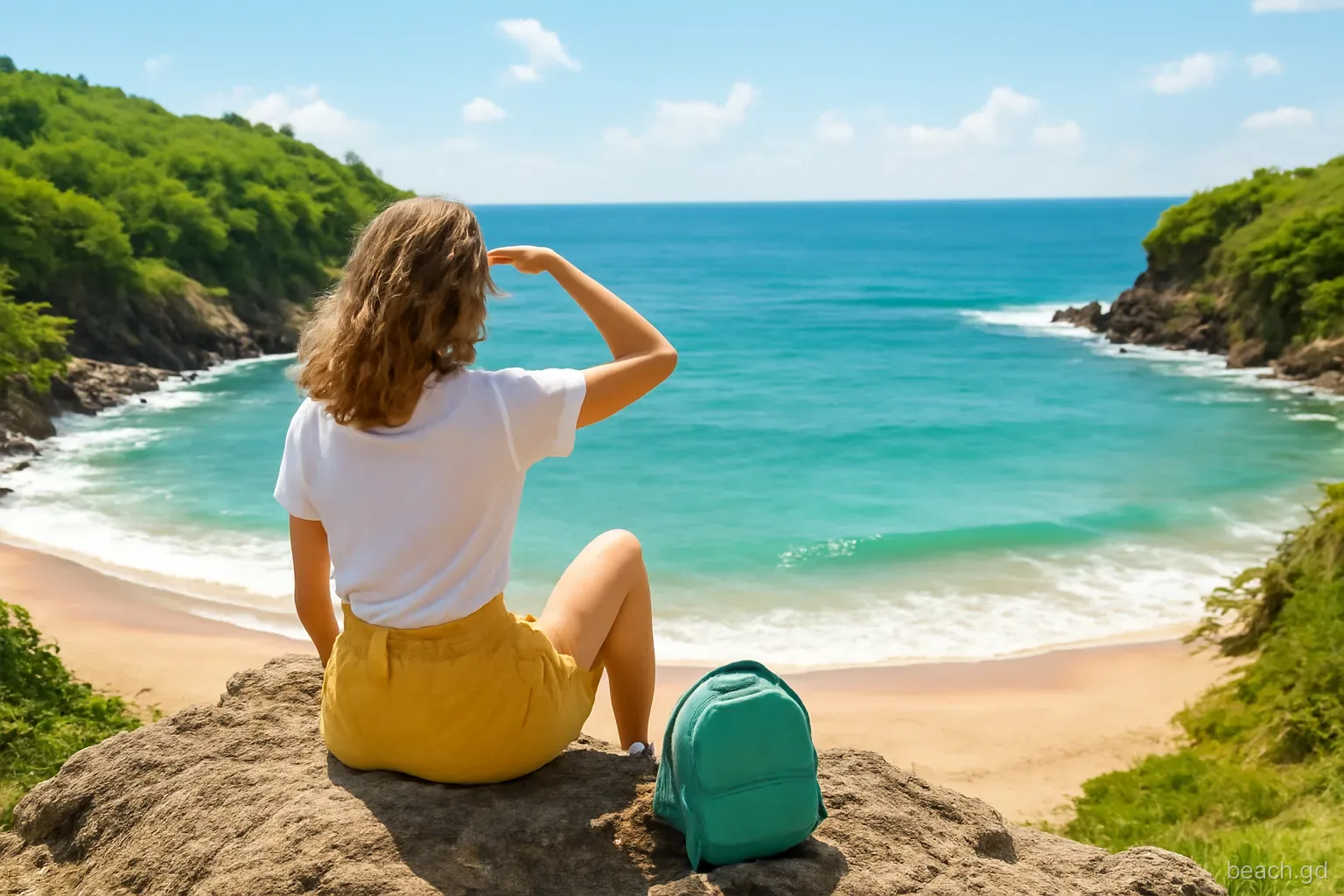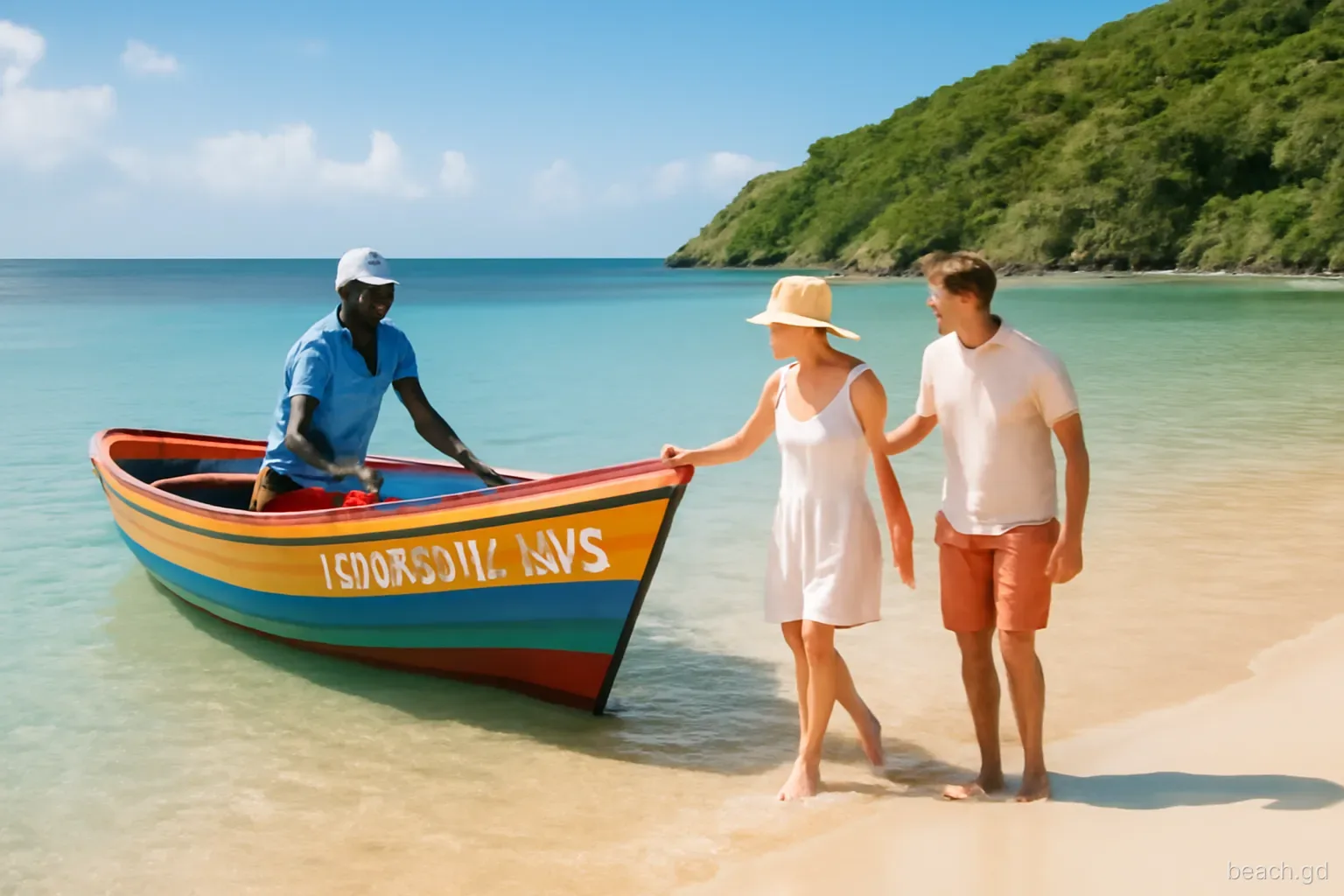
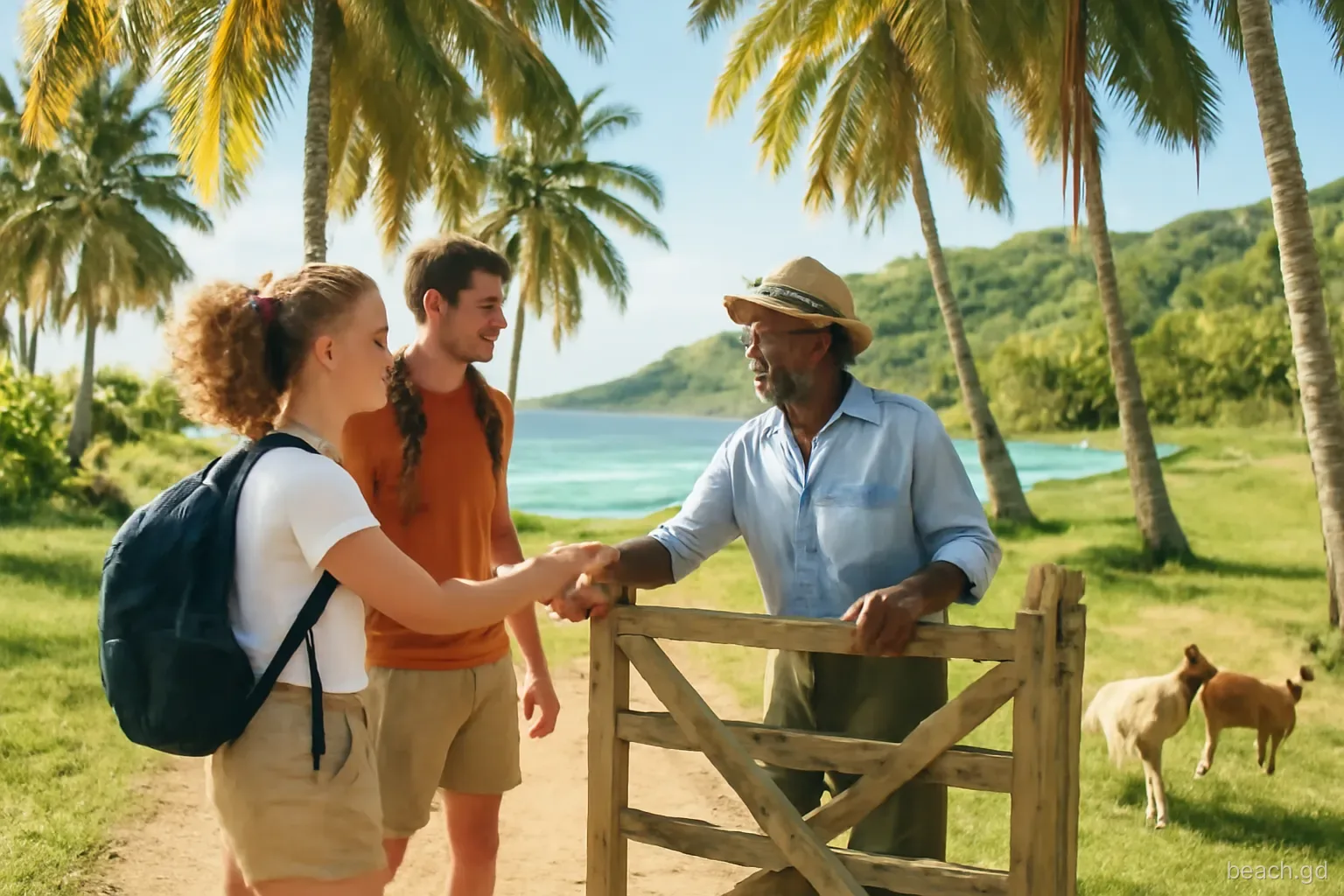
The quiet coves of Grenada are rarely signposted. You reach them by a dirt track off the main road, a footpath past someone's yard, a gap in a fence beside a cattle pasture or a lane through an estate. For residents this is ordinary: the path to the sea has been used for generations and everybody knows whose land it crosses. For a visitor it raises a fair question. Is it all right to walk here?
The short answer is that the beach is usually open, but the way to it is not always yours to take. This piece is about the practical side of that gap: how coastal paths work in practice, when to ask and whom, how to behave on working land, where to park, and what to do if someone tells you not to come through. It is not legal advice; for formal questions about rights of way, the Physical Planning Unit and a Grenadian lawyer are the right sources.
How access works in practice
Grenada's shoreline is generally treated as open to the public, and the country has a long culture of people using the sea for fishing, bathing and recreation. What lies between the road and the shore is a different matter. Much of the coastal land is privately owned: family plots, farmland, former estates, holiday homes and development sites. Some land is Crown land, and some paths have become customary routes simply through decades of use.
Formal public rights of way exist in places, but there is no comprehensive public map of them, and the situation on the ground can change when land is sold or developed. A path that was open last year may now pass through a building site or a fenced garden. The safest assumption is that any route across land that looks cultivated, fenced, gated or lived on is used with the owner's tolerance rather than by right.
Most landowners are relaxed about respectful walkers using a long-standing path. Problems tend to arise from the behaviour of visitors rather than their presence.
When in doubt, ask: how to do it well
Asking permission takes a minute and usually earns you directions and local advice as well. A reliable approach:
- Look for someone nearby: a person in the yard, at the nearest house, a shop or a farmer in the field. Greet them first, with a good morning or good afternoon, before asking anything.
- Ask simply whether it is all right to walk down to the beach this way, and whether there is a better path.
- Listen for local advice about the sea, the path and where to park. People often volunteer useful warnings.
- If the answer is no, thank them and go. Do not argue about rights or point to a map.
- If nobody is around and the path is clearly used, walk through quietly, close any gates and keep to the track.
- On your way back, if you see the person again, thank them. That goodwill helps the next visitor.
On working land: gates, animals and crops
Gates. Leave every gate as you found it. A gate left open can let cattle, goats or sheep onto the road, which is dangerous for animals and drivers and costly for the owner.
Livestock. Cattle and goats are often tethered or grazing beside coastal paths. Give them room, do not walk between a cow and its calf, and never untie or move a tethered animal.
Crops and trees. Fruit trees along a path belong to someone. Do not pick mangoes, coconuts or other fruit unless offered. Keep off planted ground, even if it looks bare.
Dogs. Many yards have guard dogs. If a dog approaches, stop, keep calm and wait for the owner to call it. Do not bring your own dog onto someone else's land without asking.
Fires and litter. No fires, no rubbish left behind and no cutting of vegetation to clear a path.
Parking without causing trouble
Cars cause more friction than walkers. Many coastal tracks end at a house or a yard, and a badly parked hire car can block a family's only way out. Before leaving a vehicle:
- Pull completely off the road. Bends on Grenada's coastal roads are often blind, and buses travel quickly.
- Do not park in front of gates, driveways, standpipes or bus stops.
- Do not drive down a private track to the beach unless invited. Walk the last stretch.
- If you are unsure, ask at the nearest house whether it is fine to leave the car where it is.
- Leave nothing visible inside. Quiet parking spots are where break-ins happen.
- Note landmarks so you can find your way back to the car up an unfamiliar path.
Hotels, villas and developments
Some of Grenada's quiet beaches sit in front of hotels, villa estates or development land. The beach in front of a hotel is not closed to the public, and walking along the shore is normal. What is not normal is cutting through the grounds, using the loungers, pool or toilets, or parking in a guest car park unless you are a customer.
Where a public path to the beach exists beside a property, use it. Where security staff ask you to use a different route, follow their direction calmly; they are usually doing what their employer told them, not making a legal ruling. If you believe a long-established public access has been blocked, that is a matter for the Physical Planning Unit or your elected representative, not something to settle with a guard at the gate.
New developments sometimes change paths entirely. If older guidebooks describe a route that now ends at a fence, ask locally for the current way down.
Mistakes that close paths for everyone
Landowners rarely close a path because of one visitor. They close it after a pattern of small annoyances builds up over months, and then everyone loses access, including the neighbours who have used it all their lives. The behaviours that cause it:
- Groups arriving with loud music and staying into the evening.
- Rubbish, bottles and food waste left on the path or beach.
- Cars blocking a driveway while the owners wait to get out.
- Picking fruit, cutting branches or trampling crops.
- Using the bushes beside someone's house as a toilet.
- Photographing homes, people or children without asking.
- Ignoring a polite request not to come through.
- Swimming or sunbathing naked on a beach overlooked by homes, which is not part of local beach culture.
Walking in along the shore instead
Sometimes the easiest way to a quiet cove is not across land at all but along the shore from a neighbouring public beach. On calm days, rocky points between bays can be scrambled round at the water's edge, and some coves can be reached by swimming or paddling from the next beach along. It avoids private property entirely, which is its appeal.
It has risks of its own. Rocks are slippery with algae and sharp with barnacles, waves that look small from a distance surge further up the rocks than expected, and a route that was easy on the way out can be cut off when the sea picks up in the afternoon. Wear reef shoes, carry nothing you cannot afford to soak, and turn back if a section needs you to time the waves. Never attempt a shoreline scramble in swell, after dark or alone.
Swimming or paddling round a headland is safer with a float, a companion and a boat-free stretch of water. Check with people on the beach first; they know where the current runs.
Frequently asked questions
Are all beaches in Grenada public?
The shoreline itself is generally treated as open to the public, but the land behind it is often private. That means you can usually use the beach, but the path to reach it may cross someone's property. When a path passes close to homes or crops, ask before using it.
What should you do if a landowner asks you not to cross?
Thank them and turn back. Do not argue about rights or show maps. Ask whether there is another way down, as there often is. If you believe a long-established public access has been blocked, raise it with the Physical Planning Unit rather than on the spot.
Can you walk through a hotel to reach the beach?
Not through the grounds unless you are a guest or customer. Use the public path beside the property if one exists, or walk along the shore from a neighbouring public access point. Hotel loungers, pools and toilets are for guests and paying customers.
Is it safe to park at a quiet beach track?
Usually, if you park legally and sensibly. Pull fully off the road, do not block gates or driveways and leave nothing visible in the car. Asking at the nearest house whether it is fine to park there is courteous and adds an informal watch.
Can you bring a dog to a quiet cove in Grenada?
Dogs can be taken to many beaches, but keep them on a lead when crossing private or working land, near livestock and on turtle nesting beaches in season. Clean up after them and ask before bringing a dog onto someone's property.