Spend an hour on Grand Anse and someone will offer you a coconut, a basket of nutmeg and cinnamon, a hair braid, a necklace, a water taxi to the sculpture park or a jet ski ride. For some visitors this is part of the beach's charm; for others it feels like pressure. Both reactions are understandable, and a little knowledge makes the whole thing easy.
Vendors on Grand Anse are mostly local people making a living from the beach, many of them for years. This guide explains who you are likely to meet, what is worth buying, roughly what to pay, and how to decline without causing offence.
Who sells what on the sand
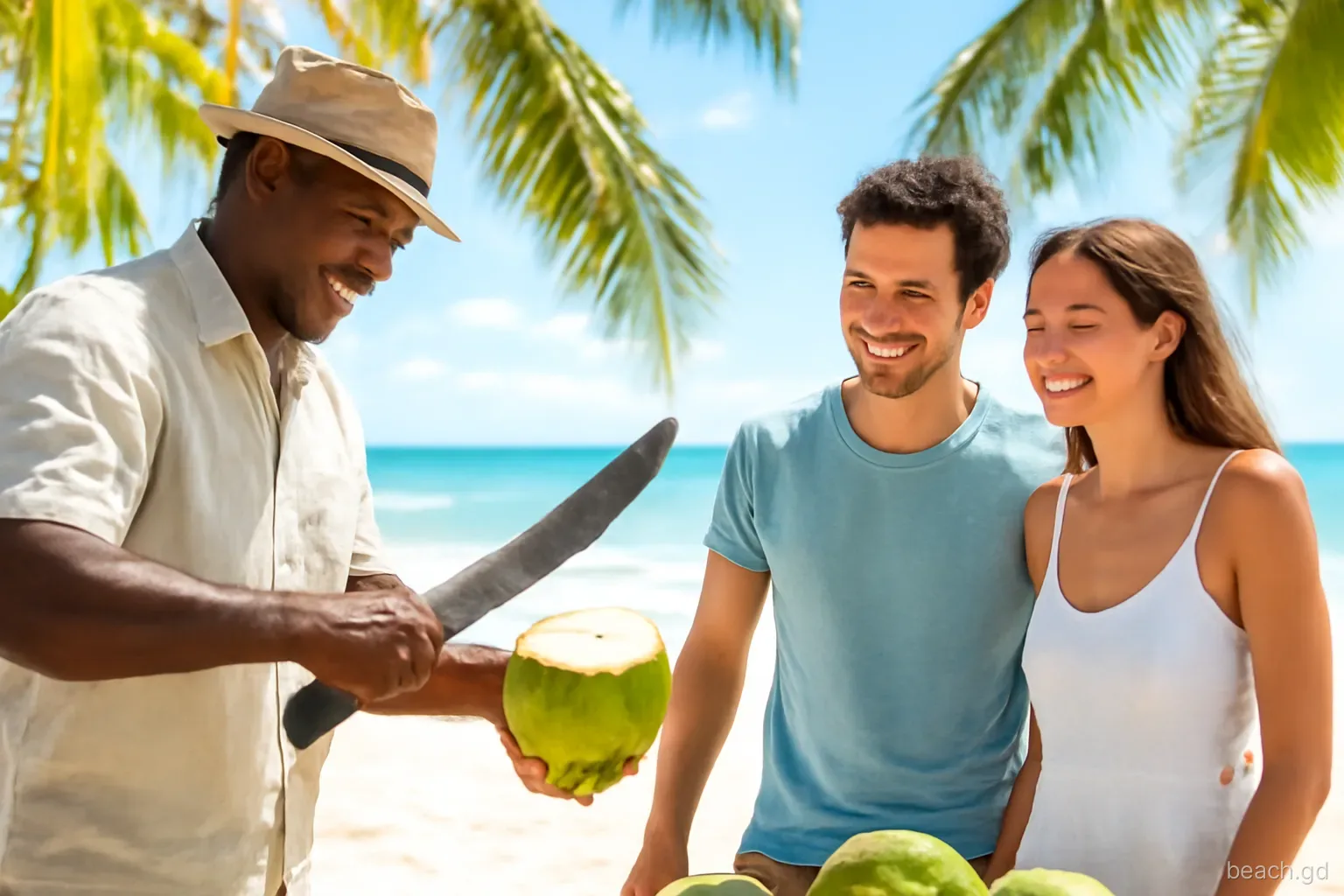
The most common sight is the coconut vendor, often with a cart or a pile of green "jelly" coconuts and a cutlass. They will chop the top off so you can drink the water, then split it and cut a sliver of shell as a spoon so you can eat the soft jelly inside. It is one of the best value refreshments on the beach and a small piece of island theatre.
Spice sellers carry baskets and bags of nutmeg, mace, cinnamon sticks, cloves, bay leaf, cocoa balls and sometimes vanilla. Grenada's identity as the Spice Isle is real, and a woven basket of spices is a classic gift. Others sell jewellery made from seeds, shells and calabash, sarongs and T-shirts, and some offer hair braiding on the spot.
Then there are the service sellers: water taxi captains offering runs to the Underwater Sculpture Park or to St George's, jet ski and banana boat operators, and people arranging island tours. They are selling a ride or an activity rather than an item, which means safety and licensing matter more than price.
Fair prices and how bargaining works
Coconuts. A jelly coconut from a beach vendor usually costs somewhere around EC$5–10, sometimes quoted as a few US dollars. Prices are higher on busy cruise days and are rarely haggled hard.
Spice baskets. Prices depend on size and contents, from small bags at a few EC dollars to larger woven baskets costing substantially more. Compare with the Grand Anse Craft and Spice Market by the main road and the market in St George's before buying a large quantity.
Jewellery and crafts. Gentle bargaining is accepted for crafts, especially if you buy several pieces, but aggressive haggling over a few dollars is out of place.
Hair braiding. Agree the price, the number of braids and whether beads are included before work begins; it is priced by style and time.
Rides. Agree the full price, the currency, whether it is per person or per boat, and what is included before you get in.
Spices worth buying and how to judge them
Not all spice baskets are equal. Grenada grows nutmeg, mace, cinnamon, cloves, bay leaf, turmeric and cocoa, and the best purchases are the ones that keep their flavour on the way home.
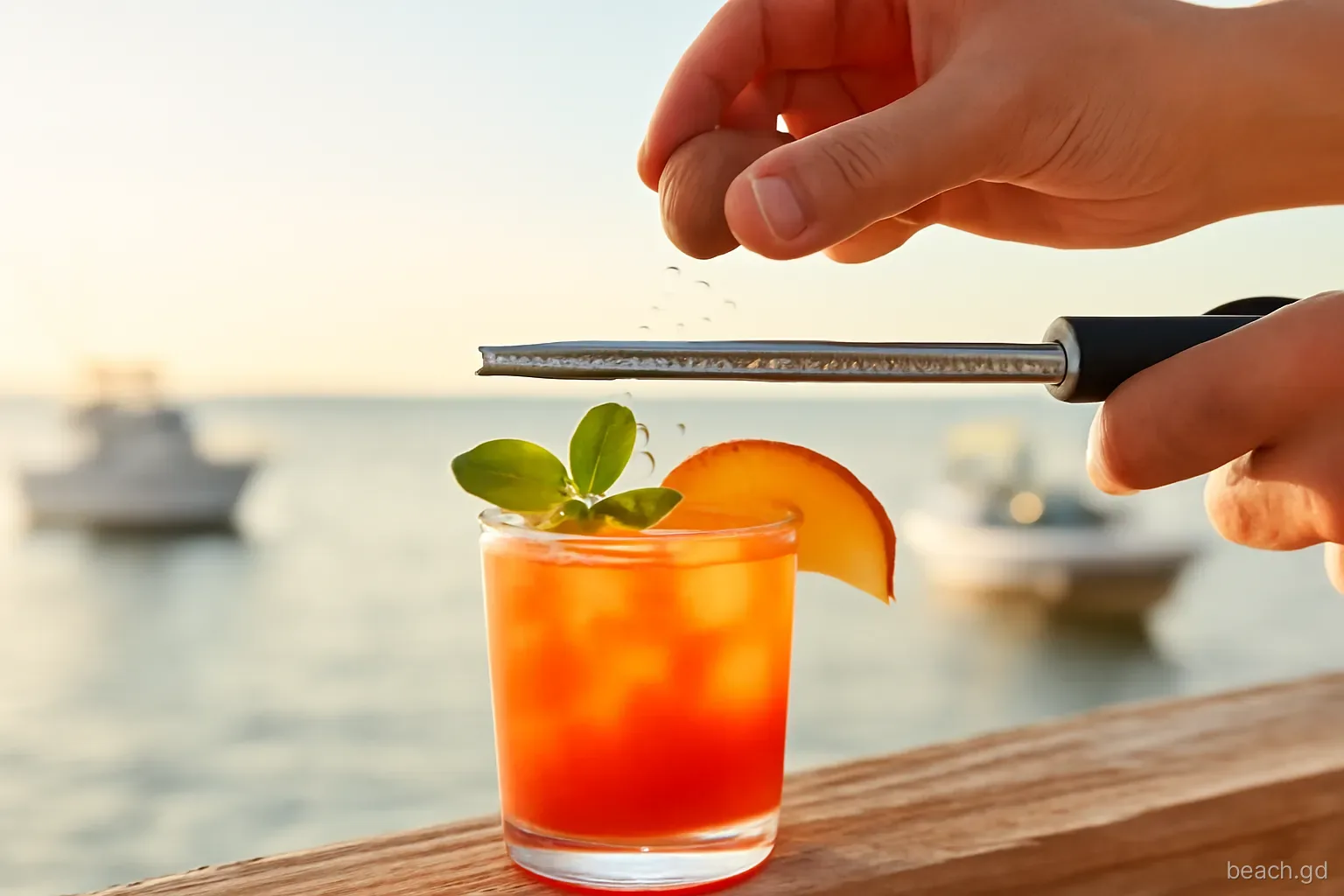
- Whole nutmeg in the shell or shelled. A good nutmeg feels heavy and solid for its size. Whole nutmegs keep for a long time; grate as needed with a small nutmeg grater, also sold by many vendors.
- Mace. The lacy red covering of the nutmeg seed, which dries to orange. It should be pliable and fragrant rather than brittle and dusty.
- Cinnamon sticks. Locally rolled bark, often thicker and more rustic than supermarket quills.
- Cocoa balls or cocoa sticks. Ground roasted cocoa formed into balls, used to make cocoa tea. Keep them dry.
- Bay leaf and cloves. Light, cheap and aromatic; good for filling a basket.
- Turmeric, called saffron locally. Sold dried or ground; ground spice loses strength faster.
- Nutmeg products. Nutmeg syrup, jams and jellies are popular gifts; check your airline liquid rules for hand luggage.
Licensed operators and water sports safety
Grand Anse vendors are supposed to be registered with the authorities, and many wear identification. For goods, an unlicensed seller is mostly a fair-trade question; for water taxis and motorised water sports it is a safety question. A licensed operator should have life jackets for everyone, a boat in sound condition and a captain who knows where swimmers are.
Before booking a jet ski or a water taxi from the beach, look at the vessel and the life jackets, ask how long the trip takes and what happens if the sea picks up, and check whether the marine park entry fee for the sculpture park is included. A per-visit fee applies in the Molinere–Beausejour protected area and has been revised in recent years, so ask the current amount.
Swimmers have reason to be cautious too. Jet skis and water taxis operate close to the swimming zone on Grand Anse at busy times. Swim inside marked areas where they exist, stay visible and keep children close to shore.
Saying no without offence
Most vendors accept a polite no the first time. A few phrases and habits help.
- Acknowledge the person. A smile and "good morning" before "no thanks" goes a long way; ignoring a greeting is considered rude in Grenada.
- Be clear and friendly: "Not today, thank you" works better than "maybe later" if you do not intend to buy.
- If you might buy later, say so honestly and come back; vendors remember.
- Do not accept a "free gift" such as a bracelet tied onto your wrist unless you are happy to pay for it.
- If someone persists, a firm repeated no is enough. Hotels and beach bar staff can help if a situation becomes uncomfortable.
- Choose one coconut man or spice seller and buy from them each day; others will leave you alone once you are known.
What not to buy on the beach
A few items sometimes offered to visitors in the Caribbean cause problems for the seller, the buyer or the reef. Jewellery or ornaments made from turtle shell, usually from hawksbill turtles, fall under international wildlife trade bans, and they can be seized by customs when you arrive home, with fines in some countries. The same applies to black coral and many other coral products.
Large queen conch shells are tempting souvenirs, but queen conch is also a regulated species internationally, and some countries require permits for shells. Live shells, sea fans, sea stars and sponges taken from the water should be left alone; removing marine life from protected areas such as Molinere–Beausejour is prohibited.
Beyond legality, it is worth thinking about where the money goes. Calabash bowls, woven baskets, seed jewellery, carved wood and local spices put money directly into Grenadian hands without taking anything from the reef. If a vendor offers shell or coral items, a polite "no thank you" is enough.
Cruise days, quiet days and the best time to buy
From roughly November to April, cruise ships dock at the St George's cruise terminal and many passengers head straight to Grand Anse. On those days the northern half of the beach near the access points gets busier, vendors are more numerous and prices drift up. Mornings before passengers come ashore and late afternoons after passengers return are calmer.
Outside the cruise season, from about May to October, the beach is much quieter and vendors have fewer customers. This is when conversations are longer, prices are steadier and you get a better sense of who has been working the beach for years.
For spices in quantity, the beach is convenient, but the market square in St George's on a Saturday morning and the craft and spice market by Grand Anse give more choice and a chance to compare. Whole nutmeg keeps far longer than ground spice, so it makes the more practical souvenir.
Frequently asked questions
Is it safe to buy food from beach vendors on Grand Anse?
Coconuts opened in front of you are about as safe as food gets. For cooked food, use the same judgement as anywhere: buy from vendors with a steady stream of local customers, choose items cooked fresh and hot, and avoid things that have sat in the sun for hours.
Do beach vendors take US dollars?
Yes, most vendors on Grand Anse accept US dollars, but change usually comes back in EC dollars, often at a rounded rate. Carrying small EC notes is simpler and usually works out slightly cheaper. Cards are generally not accepted by individual vendors on the sand.
Can you take spices home from Grenada?
Whole and packaged dried spices such as nutmeg, cinnamon and cloves are usually allowed into most countries, but rules differ, especially for seeds, fresh produce and anything containing soil. Check the customs rules of your home country and declare food items if required.
Are water taxis from Grand Anse safe?
Many are run by experienced, licensed captains, but quality varies. Check that there are life jackets for everyone, the boat looks well kept and the captain is clear about price and route. Ask whether the marine park fee is included if you are going to the sculpture park.
How do you stop vendors approaching all day?
Greet them, decline clearly once, and most will not return. Buying from one regular coconut or spice seller also helps, as others tend to respect that. Sitting at a hotel or beach bar area reduces approaches, but vendors have the right to work the public beach.