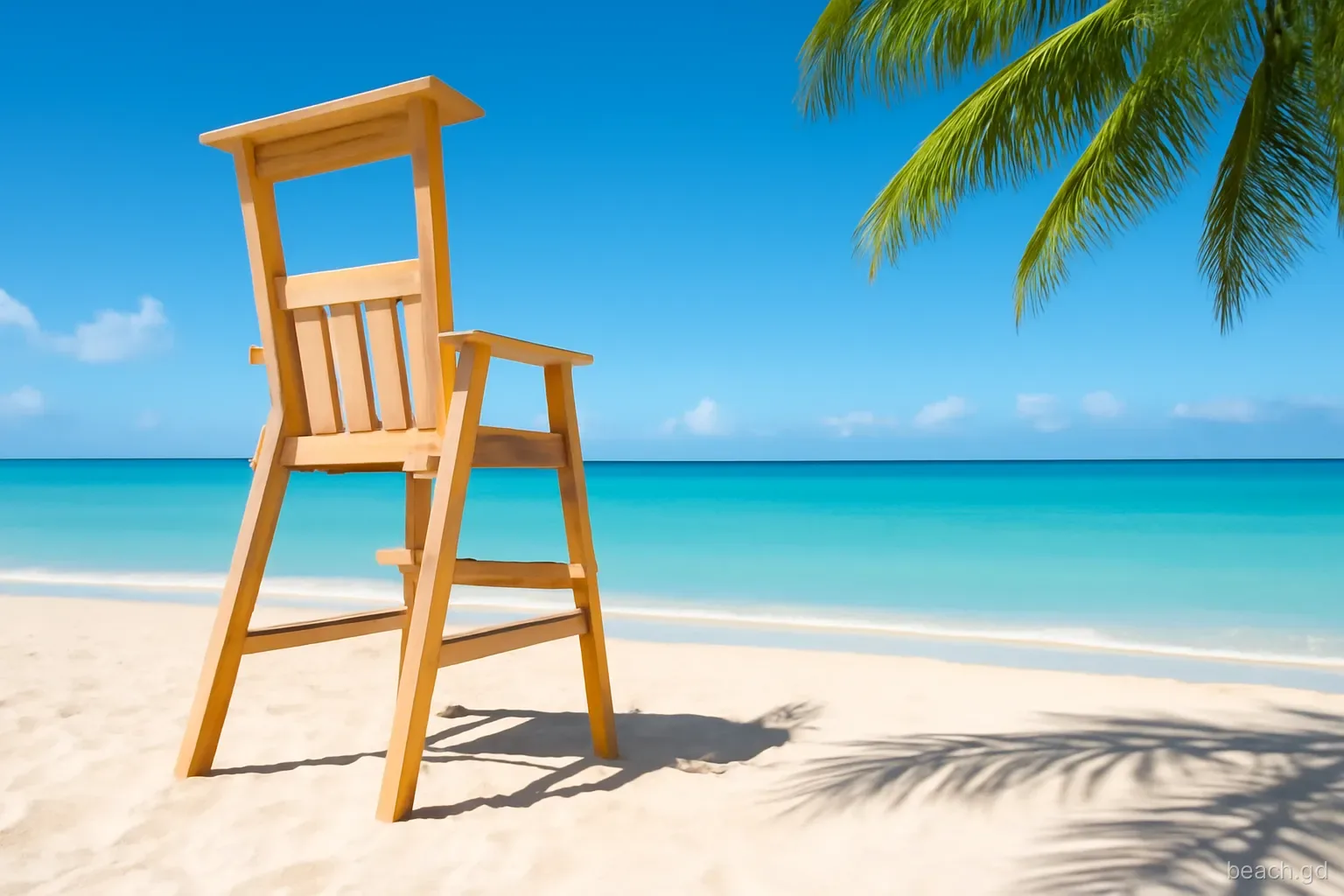
Visitors from Australia, Britain or Florida often arrive expecting a beach system they recognise: patrolled zones, a lifeguard tower every few hundred metres and coloured flags telling you exactly where to swim. Grenada does not work like that. A few of the busiest public beaches have had lifeguards on duty at various times, but cover is limited and most of the island's beaches, including nearly all the quiet coves and almost every Atlantic beach, have no lifeguard and no flags.
That is not a reason to worry, since the main tourist beaches are among the calmest in the Caribbean. It is a reason to understand who is actually watching the water, what any flags you see probably mean, and how to make your own judgement when nobody else is there to make it for you.
Who is watching the water in Grenada
All beaches in Grenada are public up to the high-water line, so you can swim in front of any hotel. That does not mean the hotel staff are responsible for your safety. Some resorts keep a staff member on watch for guests, especially near water-sports areas, but that cover is for their own guests and their own stretch of sand.
Public lifeguard provision has historically focused on the beaches with the most people, Grand Anse above all. Where lifeguards are posted, expect daytime hours only, and do not assume cover on weekdays outside the main season or on public holidays when the beaches are packed and staff are stretched. Lifeguard arrangements change with funding, so the safest assumption on any given day is that nobody is on duty until you see a lifeguard in place.
Beyond the beach, the Royal Grenada Police Force operates the coast guard, which responds to emergencies at sea. Its role is search and rescue, not supervising swimmers. In an emergency anywhere on the coast, the number to dial is 911.
In practice, the first people to reach someone in trouble are usually whoever is nearest: a fisherman, a water-taxi driver, a vendor or another swimmer. That informal network is a real strength of Grenada's beaches, but it depends on someone noticing, which is why the habits below matter.
What flag colours mean, if you see them
Red flag. Dangerous conditions: no swimming. In most systems a red flag is raised for strong currents, big surf, or a hazard such as stinging jellyfish or a pollution incident. Some places use a double red flag to mean the water is closed outright.
Yellow flag. Caution. Swimming is possible but conditions are moderate, so weaker swimmers and children should stay in the shallows and keep close to shore.
Red-and-yellow flags. The international sign for a supervised swimming area. Swim between the pair of flags, where the lifeguard is watching.
Purple flag. Dangerous marine life, typically jellyfish, used in many Caribbean and North American systems.
Green flag. Calmer conditions. It still means calm relative to that beach, not risk-free, and it does not mean someone is watching you.
No flag at all. The usual situation in Grenada. It simply means no information. Never read an absent flag as permission.
Hazards a lifeguard would point out, so you need to spot them yourself
On an unpatrolled beach, the checks a lifeguard makes fall to you. Before your group settles down, look around for these things:
- Boat traffic. Water taxis run along Grand Anse and around the coast to St George's, fishing boats land on many village beaches, and personal watercraft operate off the busier stretches. Swim close to shore and away from boat landing points.
- Moorings and dinghy lanes in bays such as Prickly Bay, Mount Hartman and Hog Island, where tenders come and go between yachts and the shore.
- Steep shelving. Some beaches drop to deep water within a few steps, which catches out children and non-swimmers who walk in confidently.
- Rocks, reef and urchins at the ends of bays, where snorkellers naturally head.
- Signs of current, such as debris moving out to sea or a gap in the waves.
- Changing weather. A dark squall line coming over the hills can bring sudden gusts, chop and poor visibility within minutes.
A five-minute safety routine for any beach
This routine takes less time than unpacking the cooler and replaces much of what a lifeguard would do:
- Watch the sea for a few minutes before swimming: wave size, gaps in the surf, the direction debris is moving.
- Ask someone who uses the beach daily, such as a vendor, a fisherman or a bar owner, whether there is anywhere to avoid today.
- Agree a water watcher. One adult stays out of the water and watches the children, and hands over the job when they want to swim.
- Pick a fixed landmark on the beach so swimmers notice if they have drifted.
- Know your exit: where you would get out if the sea picks up, and where the nearest road access is for an ambulance.
- Note the beach name, parish and a landmark you could give a 911 operator.
Common mistakes on unpatrolled beaches
The most frequent mistake is assuming that a busy beach is a watched beach. Grand Anse on a cruise-ship morning can hold hundreds of swimmers, and everyone assumes someone else is paying attention. Children slip away in crowds faster than on an empty cove, so the water-watcher rule matters more there, not less.
The second is treating a resort's watch as general cover. A staff member keeping an eye on hotel guests near the kayak rack is not responsible for the family two hundred metres along the sand. The third is swimming at dusk and after dark, when no lifeguard is on duty anywhere, boat skippers cannot see heads in the water and the sea gets dark quickly at this latitude.
Finally, alcohol. A long beach lime with rum punch and a swim to cool off is part of island life, but drinking affects judgement, stamina and cold tolerance. Swim before the drinks, not after.
Inflatables deserve a mention of their own. Lilos, rings and inflatable animals are sold in shops around Grand Anse and St George's, and they are fun in a calm bay. On a breezy day, though, the offshore wind on the leeward coast can push a child on an inflatable away from the beach faster than an adult can wade after them. Use them only in shallow water, with an adult alongside, and leave them on the sand when the wind picks up.
Quiet beaches: planning for no help nearby
The coves that make Grenada special are often the ones furthest from help. A beach reached by a dirt track off the main road in St David, a bay on the north-east coast or a stretch of sand on Carriacou can be empty for hours. On those beaches a lifeguard is irrelevant; what matters is whether anyone would know you were in trouble and how long help would take.
Tell someone at your accommodation where you are going and when you expect to be back. Check that your phone has signal before anyone swims, since coverage dips in some valleys and on parts of the east coast, and keep the phone in a dry bag in the shade rather than baking in the car. Carry a basic first-aid kit with tweezers, plasters, antiseptic and a bottle of vinegar.
Think about the route out. Ambulances need a road, and a steep or rutted track adds minutes. On remote beaches, swim conservatively: stay inside reef lines, keep within your depth, and leave long snorkels along open coastline for days when you are with a guide or a boat. Those minutes of planning cost nothing and make a quiet beach as safe as a busy one.
Frequently asked questions
Are there lifeguards on Grand Anse Beach?
Grand Anse is the beach where public lifeguard cover has most often been provided, usually during daytime hours. Arrangements change with funding and season, so look for a lifeguard in place when you arrive rather than assuming one is on duty, and keep children within arm's reach.
Do Grenada beaches use warning flags?
Most do not. A few hotel or patrolled areas may fly flags, and when they do they generally follow the international colours: red for no swimming, yellow for caution. On the majority of beaches there is no flag at all, which means no information rather than safe conditions.
Is it safe to swim in front of a hotel?
Yes, legally you can swim anywhere along the shore, because beaches in Grenada are public. The safety question is the water itself. Hotel beaches are often calm but may have water-sports traffic offshore, so stay inside any marked swim area and well away from boat lanes.
What should non-swimmers do on beaches without lifeguards?
Stay in water no deeper than waist height, wear a properly fitted buoyancy aid if going further, and choose sheltered Caribbean-side beaches with gentle slopes. Always have a strong swimmer nearby and avoid inflatables, which can drift quickly into deep water on a breezy day.
Who rescues people at sea in Grenada?
The coast guard, part of the Royal Grenada Police Force, handles search and rescue at sea, working alongside fishermen and private boats who are often first on the scene. Call 911 and give the beach name, parish and a clear description of where the person was last seen.