
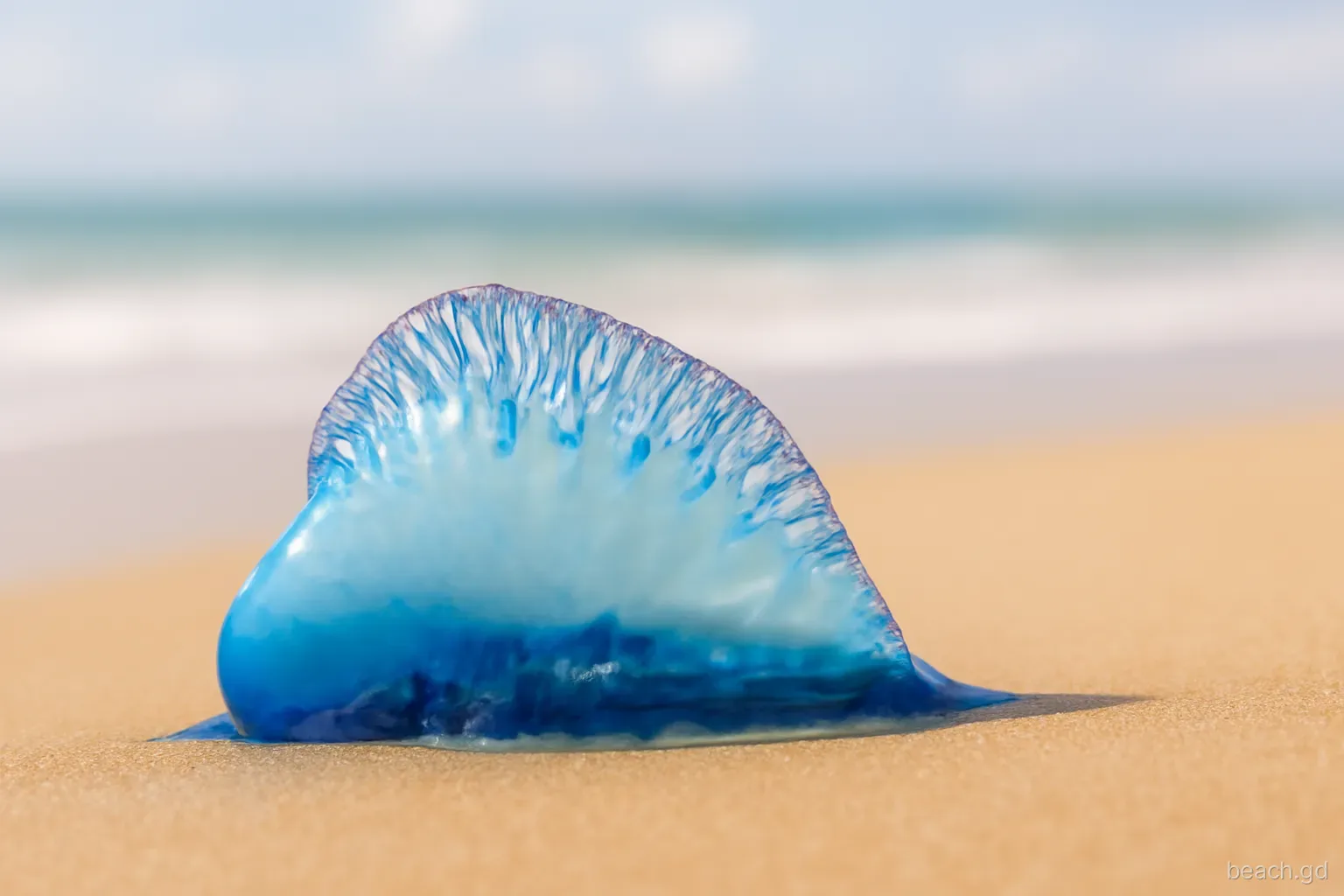
Jellyfish are not a daily problem on Grenada's beaches, which is exactly why people are unprepared on the day they are. Most stings here are a few minutes of irritation from small, almost invisible animals. The exception is the Portuguese man o' war, which drifts in from the open Atlantic and can deliver a sting painful enough to end a holiday afternoon and, rarely, cause a serious reaction.
Which jellyfish you meet depends on the coast, the wind and the season. Knowing the difference between them matters, because the right first aid for one can make another worse. Here is what to look out for, where, and what to do in the first ten minutes.
The jellyfish and lookalikes you might meet
Portuguese man o' war. Not a true jellyfish but a colony of organisms, recognisable by a gas-filled float, often blue or violet with a pinkish crest, a few centimetres to the size of a hand. Its tentacles can trail several metres below and stay venomous even when the animal is stranded on the sand. It travels on the wind, so it appears mostly on the Atlantic coast during strong onshore breezes.
Box jellyfish. Small, cube-shaped and transparent, with four tentacle clusters. Across the Caribbean, species such as Alatina come close to shore in swarms roughly eight to ten days after a full moon, typically in the evening and early morning. Reports in Grenada are occasional rather than routine, but the pattern is worth knowing for night swims.
Thimble jellyfish larvae, or sea lice. Tiny larvae that cause seabather's eruption: an itchy red rash, often under swimsuits where larvae get trapped. Caribbean outbreaks tend to come in spring and early summer.
Moon jellies and other mild species. Saucer-shaped, translucent, sometimes seen in calm bays. Stings, if any, are usually minor.
Hydroids and fire coral. Fern-like growths on rocks, ropes and moorings that sting on contact. People often blame jellyfish when they have brushed against these while snorkelling.
Where and when they turn up
Wind is the main driver. The man o' war cannot swim; its float acts as a sail, so it ends up wherever persistent onshore wind pushes it. In Grenada that means the windward beaches, Bathway, Levera, Antoine Bay and the St Andrew coast, during spells of strong easterly trades. After a blow you may find dozens stranded along the tideline at the Atlantic beaches while Grand Anse, on the sheltered side, has none.
The sheltered Caribbean-side beaches see fewer jellyfish overall, but they are not immune. Small species drift in on calm days, and the sea lice that cause seabather's eruption can appear anywhere with warm, still water. Box jellyfish, where they occur, follow the lunar cycle rather than the wind, which is why some Caribbean dive operators keep a calendar of expected swarm nights.
The simplest early warning is the tideline. If you walk the beach for a minute and see blue floats washed up, or local swimmers are standing on the sand instead of in the sea, stay out or keep to the very shallows with eyes open.
First aid for a Portuguese man o' war sting
A man o' war sting causes immediate, burning pain and whip-like red welts. Act quickly and calmly:
- Get out of the water carefully. Pain can cause panic, so help the person to shore.
- Remove any tentacles still stuck to the skin using tweezers, a stick or a gloved hand. Do not use bare fingers, which will be stung too.
- Rinse the area with seawater. Do not use fresh water, which can trigger remaining stinging cells to fire.
- Immerse the area in hot water, as hot as the person can comfortably tolerate, around 45°C, for about 20 minutes. Heat is the best-supported treatment for pain. A hot shower works if a basin is not available.
- Do not rub the area with sand or a towel, and skip folk remedies involving urine.
- Watch for warning signs: difficulty breathing, chest pain, swelling of the face or throat, confusion or collapse. Any of these means calling 911 immediately.
First aid for box jellyfish and sea lice
Box jellyfish: vinegar first. For box jellyfish, current guidance is to rinse the sting generously with household vinegar for at least 30 seconds to deactivate stinging cells, then remove tentacles and apply heat. Vinegar is the one area where advice differs from the man o' war, which is why identifying the animal matters. If you are unsure what stung you, seawater rinse and hot-water immersion are reasonable for both.
Box jellyfish: get medical help. Caribbean box jellyfish stings are painful and occasionally cause a systemic reaction with nausea, muscle cramps or breathing difficulty. Seek care at the General Hospital in St George's or the nearest health centre if symptoms spread beyond the sting site.
Sea lice: change and shower. Get out of your swimsuit as soon as you leave the sea and shower off. Larvae trapped against skin keep stinging while the fabric stays wet. Wash the swimsuit before wearing it again.
Sea lice: ease the itch. The rash usually appears a few hours later and can last several days. Over-the-counter hydrocortisone cream and an oral antihistamine from a pharmacy usually help. See a doctor if a child develops a fever or the rash becomes infected.
Mistakes people make with stings
The commonest error is picking up a stranded man o' war because it looks like a pretty balloon. Children are especially drawn to them. The tentacles stay active for a long time after the animal is beached, so teach children to look but never touch, and step around the tangled blue threads at the tideline.
The second error is grabbing the nearest bottle of drinking water to rinse a sting. Fresh water, alcohol and rubbing all risk making stinging cells fire. Use seawater, then heat. The third is ignoring a reaction because it started small. Allergic reactions can build over twenty or thirty minutes, so keep an eye on anyone who was stung, particularly children, older adults and people with a history of allergies.
Finally, if you are planning a family day on the Atlantic coast after a period of strong winds, consider rash vests or thin wetsuit tops. A layer of fabric stops most tentacle contact and is easier than avoiding the sea altogether.
A small sting kit worth carrying
Beach bars and vendors rarely keep first-aid supplies, and the nearest pharmacy may be a long drive from an Atlantic beach. A pouch in the beach bag covers most situations. Pharmacies in St George's, Grand Anse and Grenville stock everything on this list, though brands and prices vary:
- A small bottle of white vinegar, for box jellyfish and fire coral.
- Fine tweezers and a pair of disposable gloves for lifting off tentacles without being stung yourself.
- A flask of very hot water, or a plan for where to get some, such as a beach bar kitchen or a nearby guesthouse. Heat is the main treatment for man o' war, stingray and lionfish stings.
- Hydrocortisone cream and an oral antihistamine suitable for each member of the family, for itch and mild reactions.
- Any prescribed adrenaline auto-injector for family members with known severe allergies, kept out of direct sun.
- A spare dry swimsuit or set of clothes, so anyone with a sea lice rash can change straight away.
- Plasters and antiseptic wipes for scratches from rocks or coral that come with the same afternoon.
- A note on your phone of the nearest hospital: the General Hospital in St George's, the Princess Alice Hospital at Mirabeau, or the Princess Royal Hospital in Carriacou.
Frequently asked questions
Are there jellyfish at Grand Anse?
Occasionally, but they are uncommon. Grand Anse faces the Caribbean on the sheltered side of the island, so wind-driven species like the man o' war rarely reach it. Small, mild jellyfish and sea lice can appear on calm days. Glance along the tideline and ask locals if you are unsure.
Should you put vinegar on a man o' war sting?
Vinegar is recommended for box jellyfish, but for the Portuguese man o' war current advice favours removing tentacles, rinsing with seawater and soaking in hot water. If you cannot identify what stung you, the seawater rinse and hot water are a sensible approach that helps in both cases.
When is jellyfish season in Grenada?
There is no single season. Man o' war appearances follow strong onshore winds on the Atlantic coast, sea lice outbreaks are more typical of spring and early summer across the Caribbean, and box jellyfish follow the lunar cycle, appearing roughly a week to ten days after a full moon.
Is a jellyfish sting dangerous for children?
Most stings cause pain and redness that fade within hours, but children react more strongly because of their size. Watch them for at least half an hour after a sting. Breathing trouble, swelling of the face, vomiting or drowsiness need urgent help, so call 911.
Do rash vests protect against jellyfish?
Largely, yes. Tentacles struggle to sting through fabric, so a long-sleeved rash vest or thin wetsuit top protects the torso and arms, where most stings happen. It will not cover the face, hands or legs, and it also helps against sunburn during long snorkels.