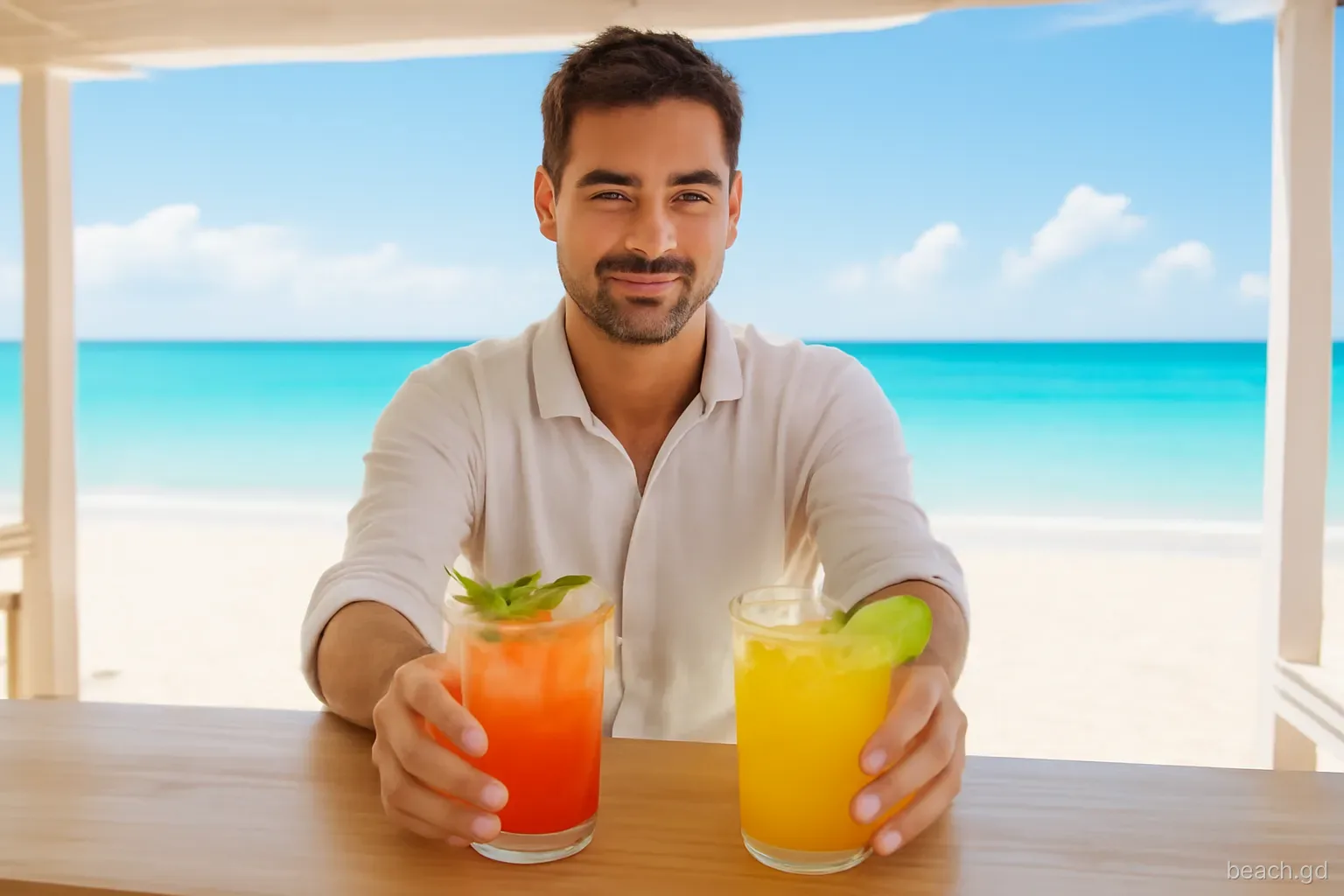
A Grenadian beach bar can be anything from a plywood shack with a cooler and a sound system to a hotel deck with cushioned loungers and a cocktail list. The rules are rarely written down, and the confusion visitors run into is nearly always the same: who owns the chair you just sat on, whether the price on the board already includes tax, and why the bill arrives with an extra 10% on top.
This guide explains how the system usually works on the busier beaches such as Grand Anse, Morne Rouge and Lance aux Epines, and how it changes at the small village bars on the Atlantic side or in Carriacou. Practices vary from place to place, so treat this as the default pattern and ask when something is unclear. Asking is normal here and nobody will think less of you for it.
Three kinds of beach bar, three sets of habits
The first kind is the hotel or resort bar that faces a public beach. On Grand Anse in particular, the sand in front of the hotels is public, but the loungers, umbrellas and table service belong to the hotel. Some hotel bars happily serve walk-in customers; others reserve their furniture for guests, and a few let non-guests use chairs if they spend a minimum amount. Prices are usually quoted in US dollars and cards are accepted.
The second kind is the independent beach restaurant-bar, typically a wooden building with a deck and a kitchen, often with its own set of chairs on the sand. These are the places that make or break a beach day for many visitors: decent food, toilets, shade and a cold drink without hotel prices. Most take cards, but card machines and connections do fail, so carry a back-up.
The third kind is the local shack or rum shop near the beach, more common at places such as Bathway, Gouyave or the beaches of Carriacou. Expect cash only, EC dollar prices, a cooler of Carib and Stag, small bottles of rum and maybe a pot of something on the stove at weekends. Service here is at the counter, not at your towel.
Chairs, umbrellas and who you pay
Assume furniture costs money unless told otherwise. On popular beaches the loungers and umbrellas are either a hotel's, a bar's or a licensed rental operator's. A pair of loungers with an umbrella commonly costs somewhere around US$10–25 for the day on the busier stretches, depending on location and season. Prices change, so confirm before you settle in.
Some bars waive the rental if you eat or drink. A common arrangement is that chairs are free while you are a customer, or that the rental fee is credited against your food bill. It is fair to ask "is it free if we have lunch here?" before you sit down rather than after.
Pay the right person. On a cruise-ship day at Grand Anse several operators may work the same stretch of sand. Pay the person attached to the bar or rental stand, ideally at the counter, and keep any receipt or ticket until you leave.
Shade goes early. Natural shade under sea grape and almond trees is free and claimed fast, especially on weekends and public holidays. If you want a tree, arrive before about 10:00.
VAT, service charge and tipping
Grenada charges value added tax at 15%, and many restaurants and hotel bars also add a service charge, usually 10%. Whether these are already included in the prices you see differs from place to place. A rum punch listed at US$10 can therefore cost US$10, or roughly US$12.50 once both are added. Read the small print at the bottom of the menu or simply ask whether prices include tax and service.
If a service charge appears on the bill, an extra tip is optional. Many visitors round up or leave a little more for good service, particularly where the same server has been looking after them all afternoon, but it is not expected on top of a 10% charge. Where no service charge is added, something around 10% is a reasonable tip in sit-down places.
At counter-service shacks, tipping is not part of the culture in the same way. Leaving the coins from your change is appreciated, and so is a straightforward "thanks, see you next time". Over-tipping in small local bars is not harmful, but it is not what regulars do.
Cash, cards and currency
The Eastern Caribbean dollar is fixed at EC$2.70 to US$1, but the exchange rate you are given in practice is often a little worse. A few habits keep the arithmetic in your favour.
- Carry EC dollars in small notes. EC$20 and EC$50 notes are the most useful; EC$100 can be awkward at a shack first thing in the day.
- US dollars are widely accepted on the tourist beaches, but change usually comes back in EC dollars, sometimes at a rate such as 2.6 or 2.5 rather than 2.7.
- Cards work at hotel bars and most beach restaurants, though some add a surcharge for card payments and a few have a minimum spend.
- Card machines rely on mobile data and can drop out. Have enough cash to cover lunch in case the terminal will not connect.
- ATMs are not on the sand. Grand Anse has banks and machines along the main road and in the malls behind the beach; on the Atlantic side and in Carriacou they are far fewer, so withdraw before you go.
Opening hours, kitchen times and running a tab
Most beach bars open mid-morning and are busiest from about noon to sunset. Kitchens often close earlier than the bar, sometimes by mid-afternoon at the smaller places, so do not leave lunch until 16:00 and expect a full menu. Hours also shift with the season: from roughly December to April, when cruise ships call and hotels are full, bars keep longer hours; in the quieter months some close a day a week or shut for a few weeks.
Running a tab is common at restaurant-bars and hotel bars. You will usually be asked for a name and sometimes a room number or a card to hold. At shacks, pay as you go. Either way, check the bill against what you actually ordered before paying, especially after a long afternoon with friends.
Sunday is a different day. Many Grenadian families spend Sunday afternoon at the beach, music gets louder and some bars put on a barbecue or a special dish. It is the best day to see local beach life and the worst day to look for an empty lounger.
Common mistakes that cost money or goodwill
Most friction at beach bars comes from a handful of avoidable misunderstandings, and almost all of them can be cleared up with a question before you sit down or order. Staff are used to visitors asking how things work, and a two-minute conversation at the start of the day saves an awkward one at the end.
- Sitting on a bar's loungers without asking, then being surprised by a rental charge.
- Assuming the price on the board is final, then finding VAT and service added.
- Paying in US dollars with a large note and receiving change at an unfavourable rate.
- Bringing your own cooler and food onto a bar's furniture; on the public sand it is fine, on their chairs it is bad form.
- Leaving bottles, cans or cigarette ends in the sand. Bins are not always obvious, so ask the bar to take your rubbish.
- Ordering lunch late in the afternoon at a small place whose cook has already gone home.
Frequently asked questions
Are beaches in Grenada public?
Yes. Beaches in Grenada are public, including the sand in front of hotels on Grand Anse. What is private is the furniture, the bar service and the hotel grounds behind the beach. You can lay a towel anywhere on the sand, but loungers and umbrellas generally belong to someone and usually cost money or require you to be a customer.
Is a 10% service charge the same as a tip?
A service charge is added by the business and is usually described as being shared among staff, although how it is distributed varies. If it is on your bill, an extra tip is optional. Many visitors add a little more for attentive service, but nobody expects a further 10% on top.
Can you pay for drinks in US dollars?
On the main tourist beaches, US dollars are accepted almost everywhere, but your change will normally come back in EC dollars and sometimes at a rate below the official 2.70. At village shacks and in Carriacou, EC dollars in small notes make life much easier.
Can you bring your own food and drinks to the beach?
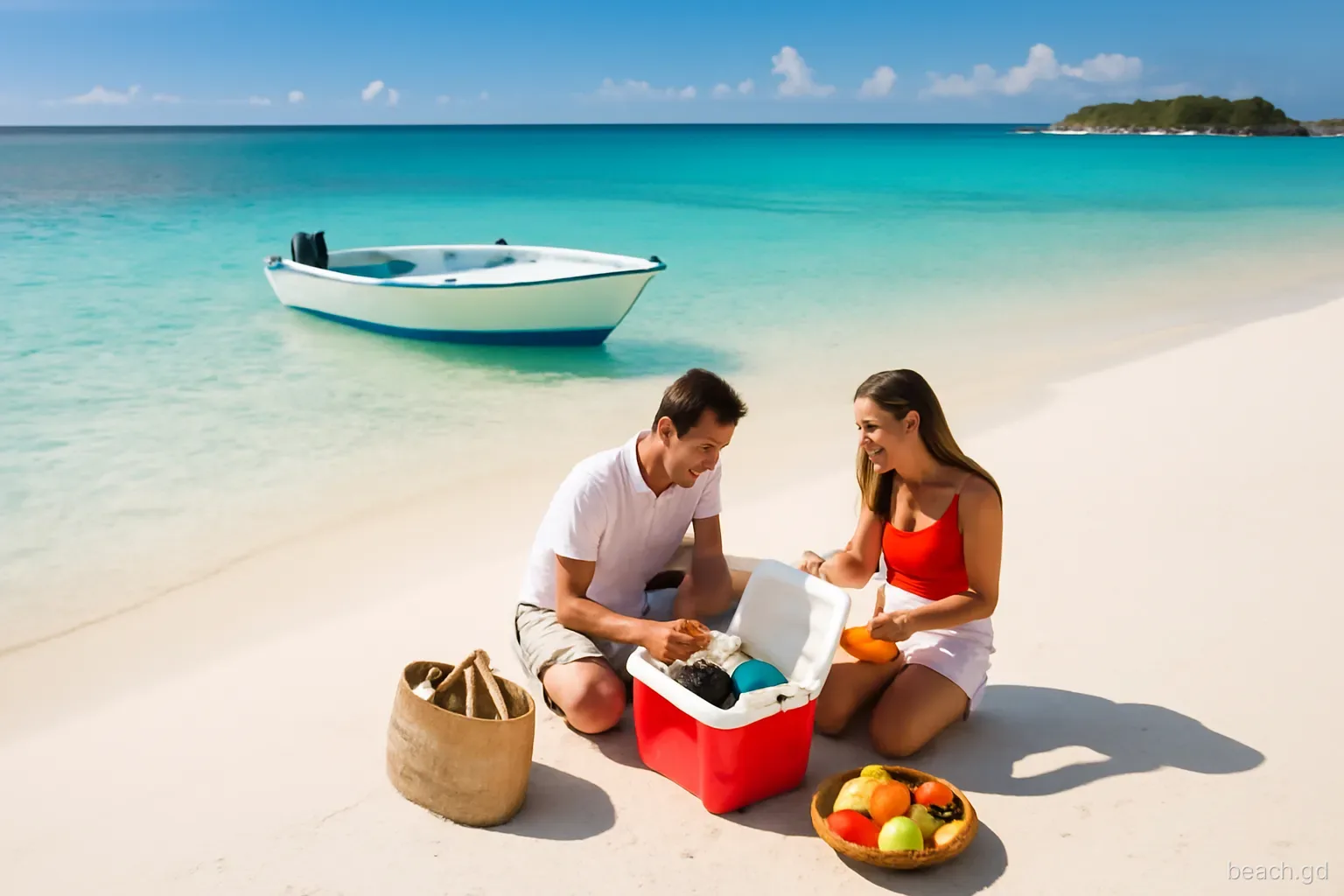
On the public sand, yes, and many Grenadians do exactly that on Sundays and holidays. What causes friction is using a bar's loungers or tables while eating food from elsewhere. If you want to picnic, bring your own towel or chairs and set up away from the bar's furniture.
What time do beach bars close?
Most are busiest from late morning to sunset. Kitchens at small places may stop serving by mid-afternoon, while bars at hotels and larger restaurants stay open into the evening. Hours change through the year and between weekdays and weekends, so check the day before if a specific bar matters to your plans.