Most visitors pass through Grenville on the way to somewhere else, and most guidebooks list no beaches near it at all. That is half right. The shore around Grenada's second town is not built for sunbathing; it is a coast of fishing beaches, reef-fronted bays and surf-beaten points that face the Atlantic head-on. But it is a real coastline with real character, and a couple of spots reward a stop if you know what you are looking at.
This page covers the main stretches either side of Grenville in St Andrew, from Telescope and Marquis to the south to Pearls and Conference Bay to the north. Think of it as a guide to reading a working coast: where people swim, where they fish, and where you should do neither.
Grenville Bay itself
Grenville, once called La Baye by the French, is the capital of St Andrew, the largest parish, and the town grew up around a broad bay protected by an offshore reef. That reef makes the bay a harbour rather than a beach. The water inside is shallow and often murky with runoff from the rivers and the town, especially after rain, and the shoreline is given over to boats, the fish market and the commercial life of the waterfront.
A walk along the seafront is worth doing. On weekday mornings the fish market is busy, boats come in through the gap in the reef, and you get a clear sense of how much of the east coast still lives from the sea. Saturdays are generally the busiest market days in town. But nobody local would swim in the middle of Grenville Bay, and you should not either. For water, look further along the coast.
The reef itself is part of the view. From the seafront you can see the line of white water where swell breaks on it, and the darker channel the boats use to come and go. Watching a boat time its run through that gap on a rough day explains more about the east coast than any guidebook: this is a shore shaped by weather, and the people who use it read the water constantly.
South of town: Telescope and Marquis
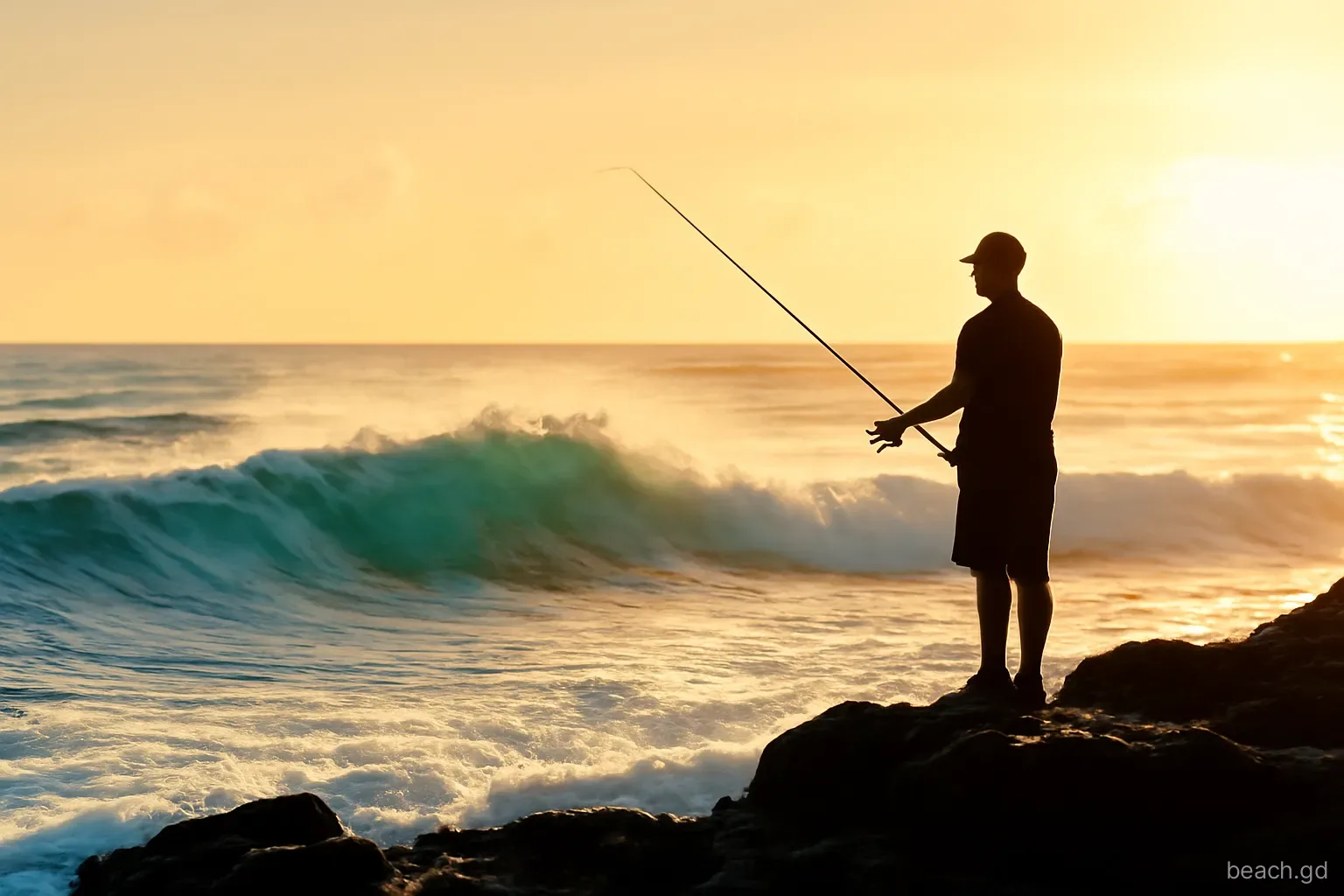
Telescope. A short drive south of Grenville, Telescope is a small community on a point facing straight out to the Atlantic, with sand and rocks along the shore below the road. The views up and down the coast are excellent, and the beach is used by local people for walking and fishing. The water is exposed and waves break close in, so treat it as a place to look rather than swim unless people who know the beach are in the water and conditions are clearly calm.
Soubise. A fishing village close to Grenville with a short, golden beach that tends to be busy with boats rather than bathers. On calm days children swim near the shore, and the sheltered corner can be pleasant for a dip, but conditions change quickly with the wind. It is at its most interesting early in the morning when the boats return.
Marquis. Further south on the Eastern Main Road, Marquis was briefly the parish's administrative centre in the 1790s before Grenville took over. Today it is known for weaving baskets, hats and mats from wild pine, and the shore below the village is a working coast of rocks and small sandy pockets. Combine it with nearby Mt Carmel waterfall rather than planning a beach stop here.
North of town: Pearls and Conference Bay
North of Grenville the road runs past Pearls, the site of the island's original airport. Pearls Airport handled commercial flights until the international airport at Point Salines took over in the mid-1980s, and the old runway, partly used for informal driving and gatherings, still runs parallel to the sea. The area is also one of the most important Amerindian archaeological sites in Grenada, with pottery and artefacts found along this coast over many decades, so leave anything you find where it lies.
The shore beside the runway and up towards Conference Bay is long, open and windswept, with reefs offshore, mixed sand and rubble and a constant line of surf. It is a good place for a long walk with the trade wind in your face and the hills of St Andrew behind, especially in the early morning. Swimming is not the point here: the water is exposed and there are no lifeguards or facilities. Continue north towards Bathway if you want a supervised swim.
How to visit a working beach respectfully
The beaches around Grenville belong to the communities that use them every day. A few habits make you a welcome visitor rather than an obstacle.
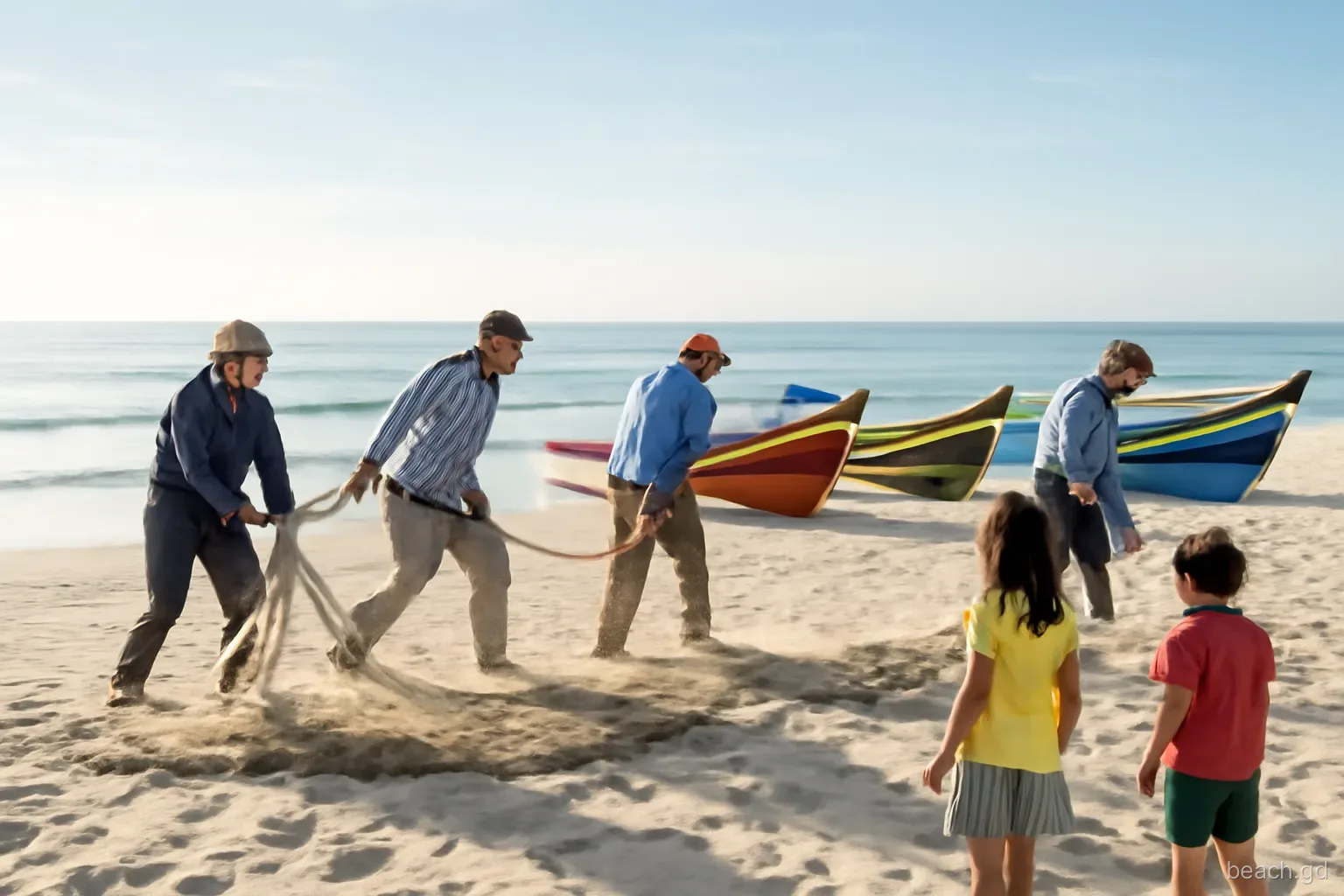
- Give boats and nets room. When fishermen are launching, landing or pulling a seine net to shore, stand well back and do not walk across the ropes. A pull seine involves many hands and careful timing.
- Ask before photographing people. Wide shots of the coast are fine. Close-ups of someone working, or of children, deserve a quick question first.
- Buy, do not just watch. If fish is being sold on the beach and you can cook it, buying some is the best way to say thank you for the show. Prices are set by the seller and change with the catch.
- Park thoughtfully. Village roads are narrow and the space beside the beach may be where boats are hauled. Park on firm ground away from slipways.
- Dress for town. Swimwear is for the beach. Put a shirt on to walk through Grenville or into a shop.
- Take your rubbish with you. Many of these beaches have no bins, and litter left on the sand ends up in the bay.
Fitting the Grenville coast into a day
Grenville is roughly an hour from St George's by the road over the mountains past Grand Etang, a little longer from Grand Anse, and about the same again from the far north. That makes it a natural midpoint on a loop around the island. Most people do best by giving the town and its coast an hour or two in the morning, when the market and the fish landings are busiest, then continuing north to Pearls, River Antoine and Bathway for the afternoon.
The road south from Grenville towards Marquis and St David runs close to the sea for much of the way, with lay-bys and village junctions where you can pull over for a view. Distances are short but driving is slow, with bends, buses stopping without warning and people walking on the road. Fuel and supermarkets are easy to find in Grenville and scarcer once you leave it, so fill up and buy water and snacks before heading out along the coast in either direction.
Where swimming works on this stretch, and what to check
The honest answer is: not in many places, and never without checking. The St Andrew coast faces the full force of the trade winds, reefs create channels where water rushes out, and river mouths bring sudden muddy plumes after rain. Sargassum also lands heavily on this side of the island in bad years. On calm days, local people swim in particular sheltered corners they know well, and that knowledge is the thing a visitor lacks.
If you want to get in the water around Grenville, ask first, ideally someone already swimming or a fisherman on the beach, and stay in water where you can stand. Look for a calm surface without lines of foam or patches of choppy, discoloured water running seaward, which signal a current. Avoid swimming alone, after heavy rain or near river mouths. And keep the bigger picture in mind: Bathway, about forty minutes further north, has a sheltered pool and lifeguards, which is why most people save their swim for it.
Frequently asked questions
Are there good swimming beaches near Grenville?
Not many. The coast around Grenville faces the open Atlantic, with reefs, currents and frequent surf, and Grenville Bay itself is a harbour. Some sheltered corners at Soubise and nearby are used by local swimmers on calm days. For a supervised swim, most people drive north to Bathway.
What is there to see at Pearls Airport?
The old runway of Grenada's first airport, which closed to commercial flights in the mid-1980s, runs beside the sea north of Grenville. The coast there is open and windswept, good for a walk. The area is also a significant Amerindian archaeological site, so artefacts should be left in place.
When is the best time to see fishing boats come in near Grenville?
Early morning is usually busiest, as boats return through the reef gap and catches are landed at the Grenville fish market and on village beaches like Soubise. Activity depends on weather and season, so treat it as a likely sight rather than a scheduled one.
Is Telescope Beach safe to swim?
It is exposed to the Atlantic, with waves breaking close to shore and no lifeguards, so swimming is risky for visitors who do not know the beach. On very calm days local people may swim near the shore. Treat it mainly as a scenic stop and swim at a supervised beach instead.
How do you get to Grenville by bus?
Route buses run regularly between the main terminal in St George's and Grenville, crossing the mountains via Grand Etang. The ride takes roughly an hour depending on traffic and stops. From Grenville, local buses continue to villages along the coast, though services thin out in the evening and on Sundays.