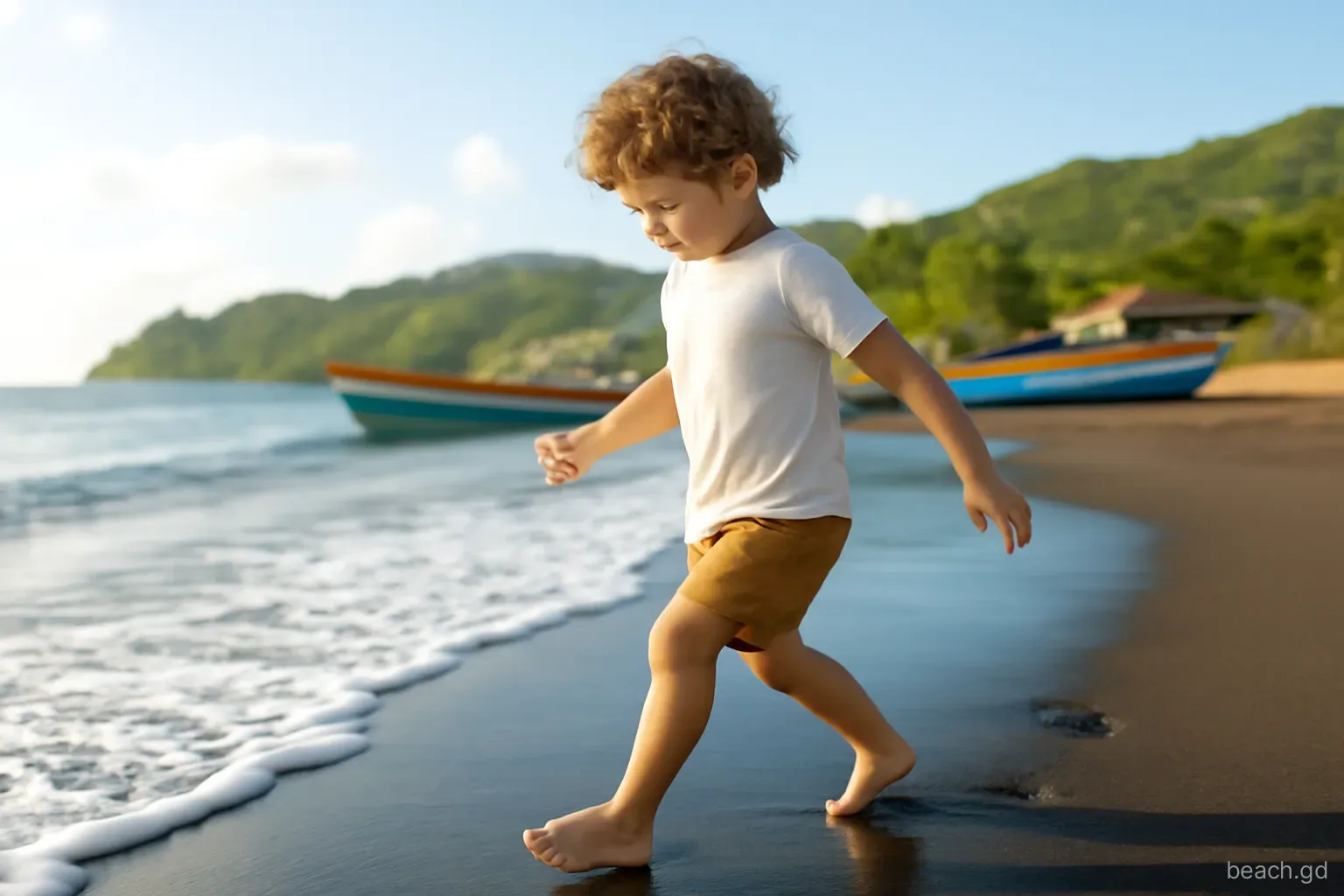
Drive north from St George's and the sand changes colour. The golden beaches of the south-west give way, bay by bay, to grey and then to sand as dark as coffee grounds. Black Bay near Concord, the village beach at Grand Roy and the shore at Victoria are the clearest examples, each sitting where a river from the mountains meets the sea.
Black sand beaches surprise people. They look dramatic, they photograph beautifully at sunset and they get hotter underfoot than any white beach. The swimming can be good, but conditions depend on rivers and swell more than on the Atlantic side's trade winds. This page explains why the sand is dark, what each beach is like and how to enjoy them.
Why the sand is black
Grenada is a volcanic island, and its interior mountains are built from layers of lava and volcanic ash. Over thousands of years, rain and rivers wear down that rock and carry the fragments to the coast. Those grains are rich in dark minerals, so where a river delivers a lot of sediment and there is little coral offshore to add white sand, the beach ends up dark grey or black.
The pale beaches of the south-west, by contrast, are made largely of broken coral and shell from the reefs that fringe that coast, with less input from big rivers. Along the leeward coast north of Grand Mal, you can watch the mix change: lighter sand in bays sheltered by reefs, darker sand at the mouths of rivers coming down from Mount St Catherine and the central ridge. After heavy rain, rivers add fresh sediment and the sand at their mouths can look darker and coarser.
Look closely at a handful and you will see the mixture: glassy black grains, duller grey fragments, sometimes tiny glints of green or white where a little coral or other mineral has crept in. The fine, heavy grains cling to wet skin, which is why black sand seems to follow you home. It also stays warm long after sunset, and on cooler evenings local people sometimes sit on it for exactly that reason.
The beaches
Black Bay, St John. Close to Concord, below the road that leads inland to Concord Falls, Black Bay is a small, steep cove of very dark sand framed by rocks. It is quiet on most days and has a dramatic, slightly wild feel. Swimming is pleasant on calm days, but the beach shelves quickly, so the water gets deep close to shore. It pairs naturally with a visit to the falls.
Grand Roy. A broad bay with a fishing village, Grand Roy is a working beach where boats are pulled up on dark sand and the river flows out at one end. It is a good place to watch village life and to swim in calm conditions away from the river mouth, but there are few facilities and boats come and go.
Victoria, St Mark. The capital of the smallest parish has a dark-sand shore along its seafront, used for fishing boats, swimming by local children and evening limes. Mount St Catherine, the island's highest peak, rises behind the town. The beach is at its liveliest in the late afternoon.
In between. Smaller dark-sand pockets appear at almost every river mouth along this coast. Most are used by fishermen and nearby residents; respect working areas and private land.
The heat: practical advice for dark sand
Dark sand absorbs sunlight and can become painfully hot by late morning, far hotter than pale coral sand in the same sun. A few simple habits avoid burnt feet.
- Wear sandals to the water's edge and leave them just above the waterline, where you can find them again.
- Go early or late. Before ten in the morning and after about four in the afternoon, the sand is comfortable; at midday it can be too hot to stand on barefoot.
- Protect children and dogs. Small feet and paws burn quickly. Carry toddlers across the sand at midday.
- Bring a thick towel or mat. Thin towels let the heat through.
- Shade is essential. Few of these beaches have reliable trees; bring your own.
- Stay hydrated. Reflected heat from dark sand adds to the sun, and dehydration creeps up on people lying on it.
Swimming conditions: rivers, swell and clarity
Leeward beaches are sheltered from the trade winds, so on most days the sea is calm. Two things change that. First, rivers: after heavy rain, especially in the rainy season, the rivers at Black Bay, Grand Roy and Victoria flood the nearshore water with brown, sediment-laden runoff. Visibility drops to nothing, debris washes out, and there can be strong outflow currents near the mouth. Wait a day or two after heavy rain, and in any case swim away from the river outlet.
Second, swell. Between about December and March, northerly ground swells occasionally reach this coast, and steep dark-sand beaches receive them hard. Waves that look small can dump heavily on the shore and drag back with force. On those days, admire the surf from the sand.
On calm, dry days, the water off these beaches can be surprisingly clear, with a deep blue-green colour over the dark seabed. Snorkelling is limited compared with the protected bays further south, but rocky ends sometimes hold fish worth a look.
Respecting village beaches
Every beach on this stretch belongs, in practice, to the community behind it. Fishermen launch and land their boats on the dark sand, nets are mended under the trees, and children grow up swimming in the same water. Visitors are welcome, but the beach is a workplace and a front yard as much as a leisure spot.
A few courtesies go a long way. Greet people as you arrive; in Grenada a simple good morning or good afternoon is expected and noticed. Park where you are not blocking boat access or a driveway. Keep music low, swimwear for the beach and photographs of people for after you have asked. If fish is being sold on the sand and you can cook it, buying some is a good way to connect.
Take your rubbish home. These villages often have limited collection, and anything left behind ends up washed into the sea by the next heavy rain. Leaving the beach cleaner than you found it is the best thank-you a visitor can give.
Making a day of it
Black sand beaches fit best into a drive up the leeward coast rather than as a destination in themselves. A good combination is Concord Falls in the morning, while the forest is cool, followed by a swim at Black Bay and a late lunch further north. Grand Roy makes a pleasant brief stop on the way to Gouyave, and Victoria rewards a late-afternoon visit when the sea turns gold and people gather on the seafront.
Photographers love these beaches at sunset, when the dark sand turns glossy and reflective after each wave and the contrast with white foam is striking. Bring a lens cloth; fine black sand gets everywhere, including inside camera bags and car footwells. A quick rinse of feet and gear before getting back in the car saves a lot of cleaning later.
Frequently asked questions
Why is the sand black on Grenada's west coast?
The dark sand comes from volcanic rock in Grenada's mountains, which rivers erode and carry to the coast. Where rivers deliver lots of sediment and there is little coral offshore to add pale sand, beaches end up grey or black. The golden south-west beaches are made mostly of coral and shell.
Is Black Bay in Grenada safe to swim?
On calm days, yes, though the beach shelves steeply and water gets deep close to shore. There are no lifeguards. Avoid swimming after heavy rain, when the river brings murky water and debris, and during winter ground swells, when waves dump hard on the steep beach.
Is black sand hotter than white sand?
Yes. Dark sand absorbs much more sunlight and can become painfully hot by late morning, far hotter than pale coral sand. Wear sandals to the water, bring a thick towel and plan visits for early morning or late afternoon, especially with children.
How far is Concord Falls from Black Bay?
Concord Falls lies a short drive inland from the coast road near Concord, in St John, so the two combine easily. The first waterfall is reached by road, with further falls requiring a longer hike. Small fees have been charged at the falls; check locally.
Which black sand beach is best for families?
None has full facilities, so families need to bring shade, water and food. Victoria's seafront is easiest to reach and livelier, while Black Bay is quieter but steeper. Choose a calm day, swim away from river mouths and visit when the sand is cooler.