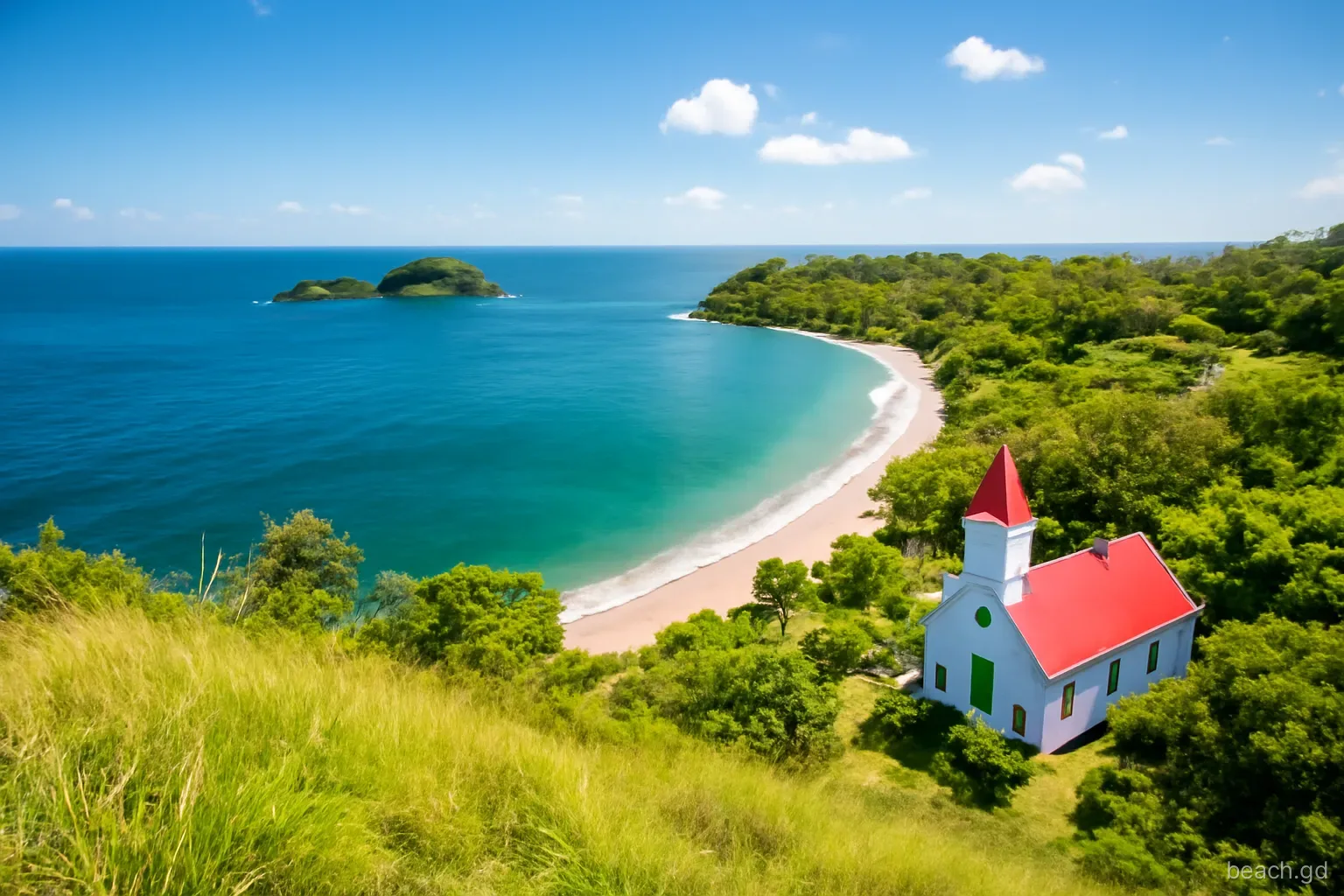
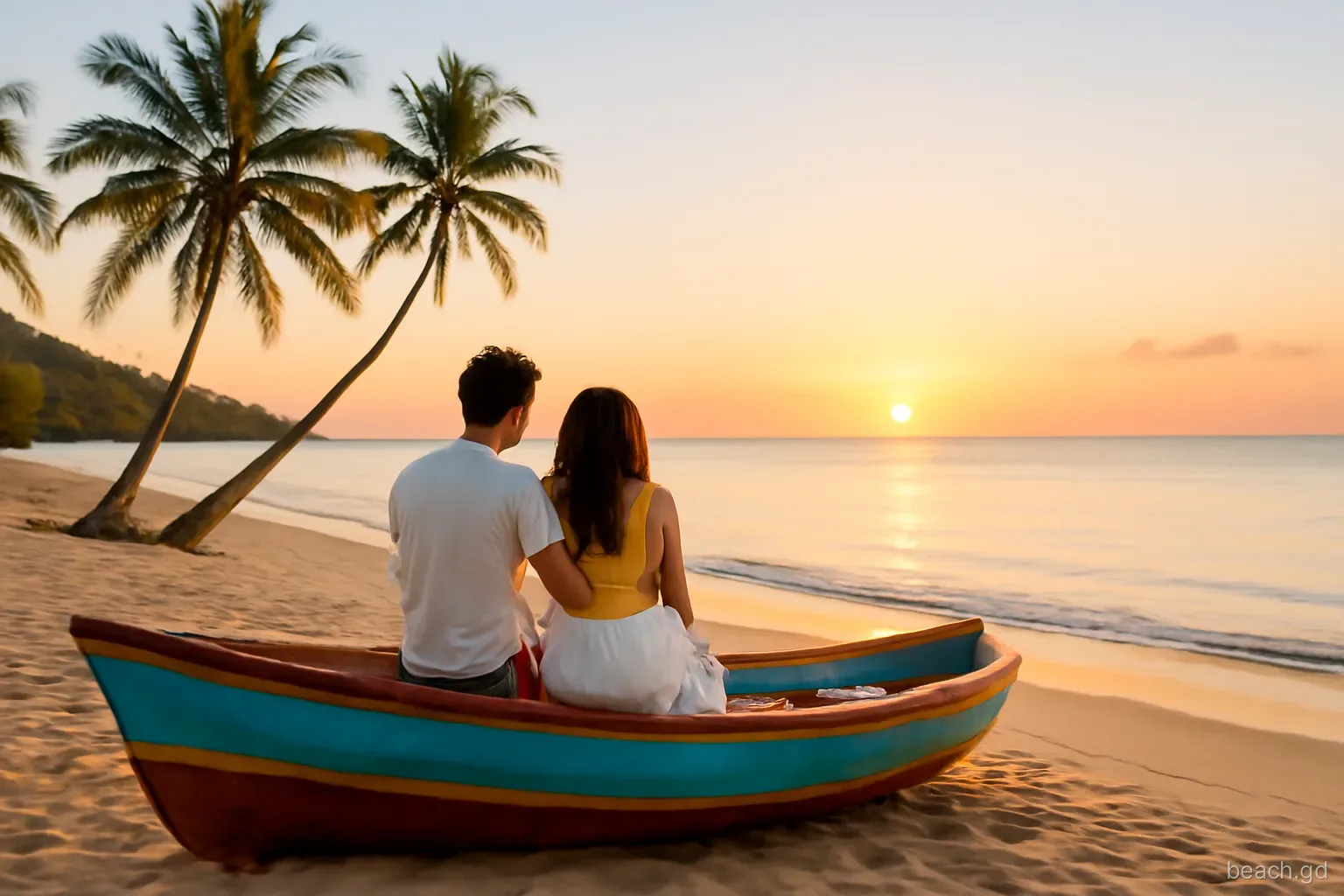
Grenada's leeward coast faces west across the open Caribbean Sea, with nothing between the beaches and the horizon. That makes it one of the best stretches in the region for watching the sun go down from the sand. Unlike the famous south-west beaches, where hotels and restaurants frame the view, the leeward bays north of St George's give you fishing boats, village life and a clear horizon.
This page is a guide to the best spots, what each offers, how sunset times change through the year and how to make the most of the light, from the green flash to driving home safely in the short tropical dusk.
Sunset times and the short dusk
Grenada lies only about twelve degrees north of the equator, so sunset times vary relatively little through the year. The sun sets earliest, at around twenty to six in the evening, in November and early December, and latest, at just after half past six, around late June and early July. Check a sunset calculator for the exact time on your day; the difference between seasons is enough to matter if you are planning a drive.
Dusk in the tropics is short. The sun drops almost vertically towards the horizon, and darkness follows within about half an hour of sunset. That is wonderful for a quick, intense show of colour, and less wonderful if you have a winding drive home on unlit roads. Plan to be on the beach at least half an hour before sunset and to leave soon after the afterglow fades, or arrange transport in advance.
The best sunset beaches, south to north
Grand Mal. Just north of St George's, a calm, west-facing bay with a clear horizon and the hills of the town to the south. Easy to reach after work and popular with local swimmers in the late afternoon.
Happy Hill and the bays beyond Grand Mal. The shoreline around Happy Hill and on towards Beausejour has small local beaches with uninterrupted views west. They are quiet, unpretentious and used mainly by people from the surrounding communities; respect them as such.
Palmiste and Gouyave. A swim at Palmiste followed by sunset over Gouyave's fishing boats makes a fine evening, especially on a Friday when Fish Friday starts as the light goes.
Victoria. The dark-sand seafront in St Mark's capital turns glossy at sunset, with Mount St Catherine catching the last light behind the town.
Sauteurs and the north coast. From the cliffs and bay at the northern tip, the sun sets to the west with the Grenadines visible to the north, giving a wide panorama.
Sunsets by season: cloud, dust and colour
The dry season, roughly January to May, gives the cleanest horizons. Skies are often clear down to the sea, the sun sets as a sharp orange disc and the green flash is most likely. Colour can be simpler than in other months, with fewer clouds to catch the light, but the clarity makes up for it. The leeward sea is usually calm in these months, apart from occasional winter ground swells in the early part of the season.
From June, the rainy season brings more cloud and more drama. Towering clouds over the sea and showers passing on the horizon catch red and pink light long after the sun has gone, and some of the most striking sunsets of the year come on evenings after rain. Saharan dust, which drifts across in pulses during summer, softens the light and turns the sun a deep red as it sinks, but it often hides the horizon altogether.
In the hurricane season peak, from August to October, still, humid evenings between weather systems can give glassy seas that reflect the whole sky, a gift for photographers if the clouds cooperate.
The green flash: what it is and when to look
The green flash is a brief burst of green light seen at the very top edge of the sun just as it disappears below the horizon. It is a real optical effect caused by the atmosphere bending different colours of light by different amounts, and it needs a clear, sharp horizon with no clouds or haze in the way. The open sea west of Grenada provides exactly that on good evenings.
Your best chance comes on clear dry-season evenings, when the air is clean and the horizon crisp. Saharan dust in summer and cloud banks on the horizon both reduce the odds. Watch the last sliver of sun closely but do not stare at the sun for long before it is almost gone; protect your eyes until the final moment. The flash lasts a second or two, and many people who see it once spend years trying to see it again.
Photography tips for leeward sunsets
The leeward coast gives photographers fishing boats, dark sand, palms and calm water to work with.
- Arrive early to scout the composition while there is still light.
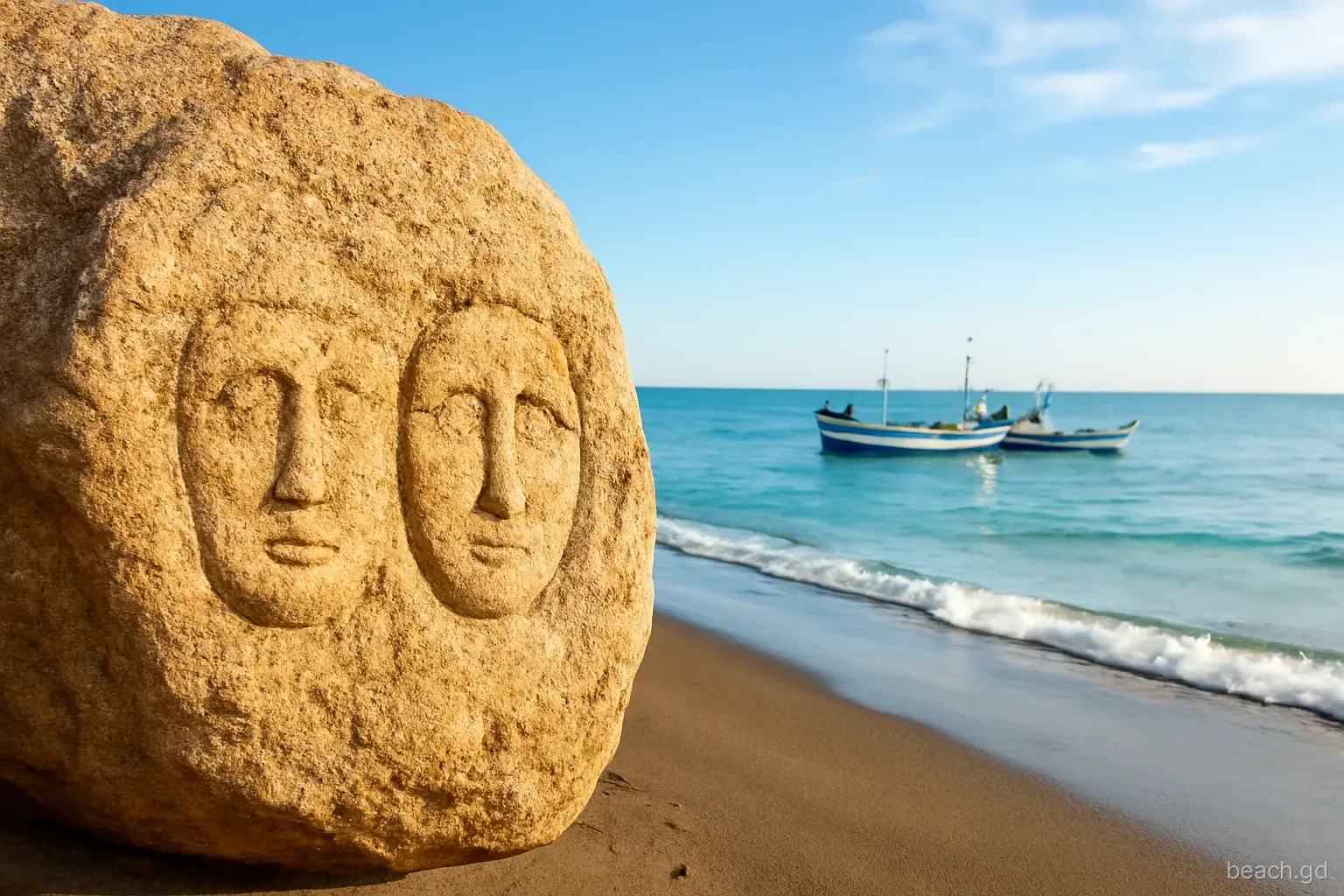
- Use foreground: boats on the sand, palms, rocks or people at the waterline give scale and interest.
- Dark sand reflects beautifully when wet. Shoot just after a wave recedes.
- Keep shooting after sunset. The afterglow often produces the best colours, ten to twenty minutes after the sun has gone.
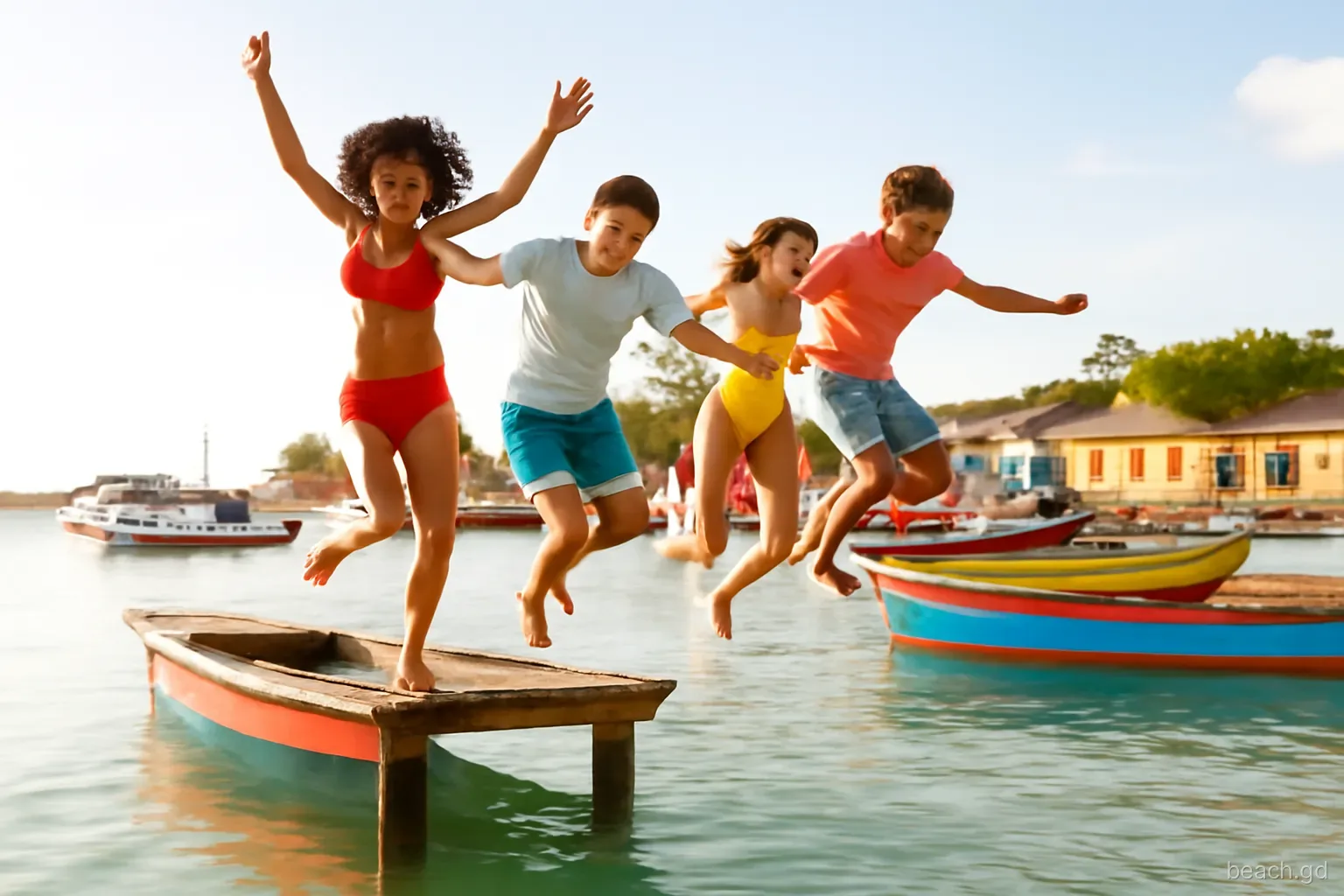
- Ask before photographing people, especially fishermen working and children swimming.
- Protect gear from sand and spray; fine black sand gets into everything.
- Expose for the sky, letting boats and palms fall into silhouette, rather than trying to light the foreground with a phone flash.
- Bring a small tripod or rest the camera on a boat hull for the dim minutes after sunset.
Planning a sunset picnic on the leeward coast
A simple picnic on the sand is one of the best ways to spend an evening on this coast. A little planning keeps it easy.
- Check the sunset time for the day and aim to arrive at least forty-five minutes before it, to swim while it is still light.
- Pick a beach close to where you are staying, or one on the way home, so the drive after dark is short.
- Pack food that needs no cooking, such as bakes, fruit, cheese and cold drinks, in a cooler, plus a blanket or thick towel for the sand.
- Bring a torch, insect repellent and a light layer; the breeze can feel cool after a swim.
- Choose a spot away from fishing boats and working areas, and greet people already there.
- Pack everything away, including food scraps, before full darkness, when small items become hard to find on dark sand.
Staying comfortable and safe after dark
Sandflies and mosquitoes appear around dusk, particularly near river mouths, mangroves and still water, and on calm evenings. Insect repellent and light long sleeves make the last half hour far more pleasant. Bring a torch or use your phone light to find your way off the beach, and avoid swimming after dark, when you cannot see conditions or other hazards.
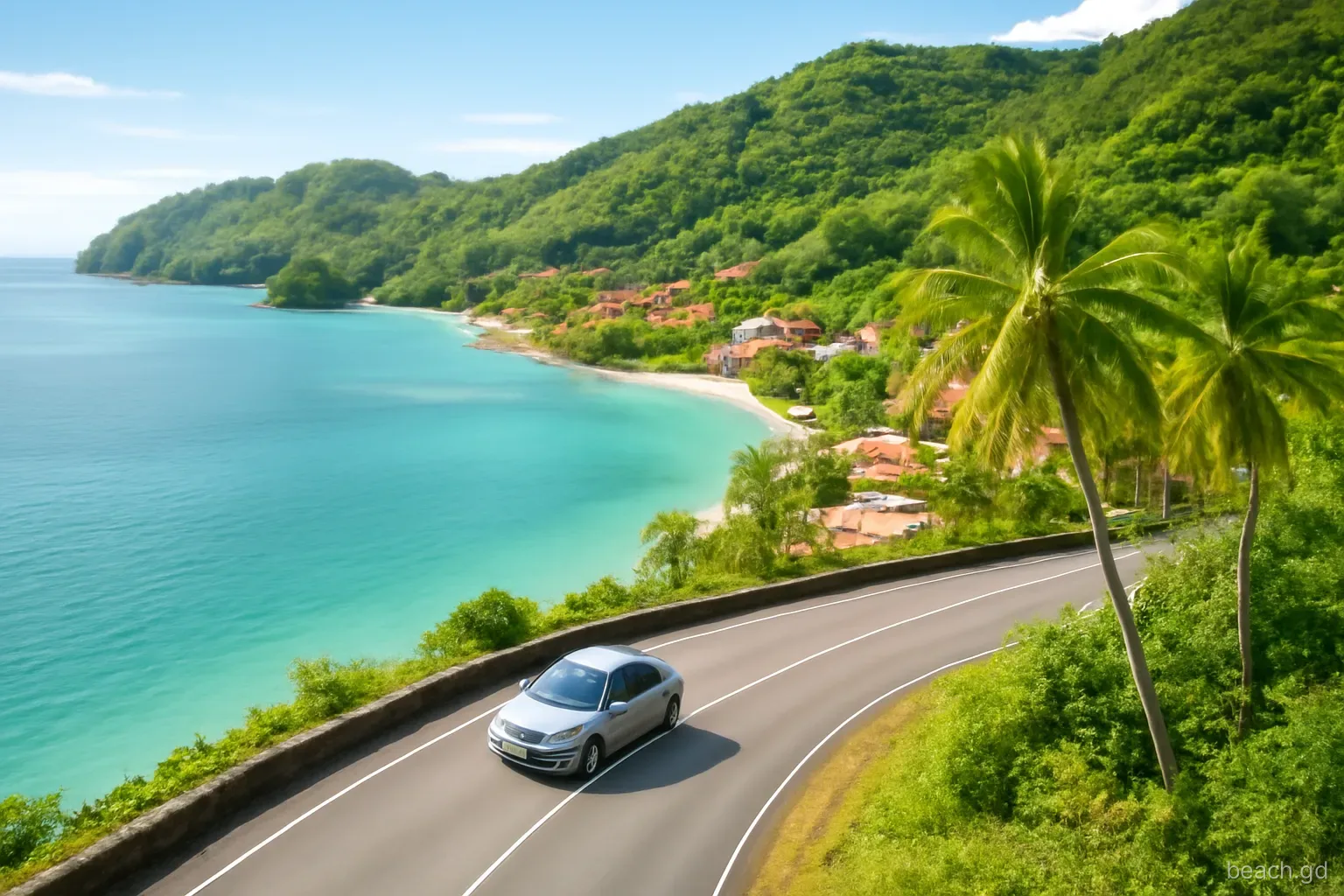
If you are driving back to the south-west, the leeward road is narrow, winding and unlit in places, with pedestrians and buses. Drive slowly, dip your headlights for oncoming traffic and do not drink if driving. If you plan to stay for food and music, as on a Friday in Gouyave, consider booking a taxi for the return or staying nearby. Route buses run in the evening but become less frequent later.
Frequently asked questions
What time is sunset in Grenada?
Sunset ranges from around 5.40 pm in November and early December to just after 6.30 pm in late June and early July. Because Grenada is close to the equator, the variation is small and dusk is short, with darkness following within about half an hour.
Which side of Grenada is best for sunsets?
The west, or leeward, coast faces the open Caribbean Sea and has clear views of the sun setting over the water. Beaches from Grand Mal north to Gouyave, Victoria and Sauteurs all offer good sunsets, as do the south-west beaches such as Grand Anse.
Can you see the green flash in Grenada?
Yes, on clear evenings with a sharp, cloud-free horizon over the sea. The best chances are in the dry season, when the air is clearer. Saharan dust in summer and clouds on the horizon reduce the chance. The flash lasts only a second or two.
Is it safe to drive back from the west coast after dark?
It is possible with care, but the road is narrow, winding and unlit in places, with pedestrians and buses. Drive slowly and avoid drinking. Many visitors prefer to leave soon after sunset, book a taxi or stay overnight on the coast.
Are there sandflies at sunset on Grenada's beaches?
Often, especially near river mouths, mangroves and still water on calm evenings. Insect repellent and long sleeves make a big difference. They tend to be worst in the half hour around dusk and fade once the breeze picks up or darkness falls fully.