Turtle watching at Levera is not a show that starts at a set time. It is a long, quiet night on a dark beach, waiting for a wild animal to decide whether to come ashore, and then watching her work by the faintest light. Done well, it is unforgettable. Done badly, it drives turtles back to sea without laying.
Levera Beach is a legally protected closed area during the nesting season, and night visits are only permitted with authorised guides. This guide explains the rules, how a typical tour runs, what to bring and the behaviours that cause the most harm.
The law: Levera as a closed area
Under the Levera Beach Closed Area Regulations, first made in 2010 and amended in 2011, Levera Beach is closed from 1 April to 31 August. During that period, access to the beach at night is controlled and visitors should only be there as part of an authorised turtle watching group. Official notices have warned that breaching these rules can lead to a fine of up to EC$5,000, imprisonment for up to two years, or both.
These rules sit alongside Grenada's wider fisheries regulations on turtles. Leatherbacks are protected at all times: it is illegal to take, kill, sell, buy or possess a leatherback, or to disturb its nest. Turtle eggs of all species are protected year-round, and there is a closed season for other turtle species from 1 April to 31 August.
Enforcement involves the Fisheries Division, park staff, conservation groups and, increasingly, police patrols during nesting season. Visitors who follow their guide are not at risk of breaking the rules; the regulations exist to stop unsupervised beach access, poaching and disturbance.
How a typical night tour runs
Tours vary by operator, but most follow a similar pattern. Expect a long evening, often returning to the south coast close to or after midnight.
- You are collected from your accommodation in the late afternoon or early evening; the drive from the south coast to Levera takes roughly one to one and a half hours.
- At Levera, a guide gives a briefing on turtle biology and the rules: no white light, no flash, keep together, stay quiet.
- The group waits in a designated area, often near the back of the beach, while patrollers walk the beach looking for turtles coming ashore.
- When a turtle is found and has started digging or laying, the guide brings the group down quietly, approaching from behind.
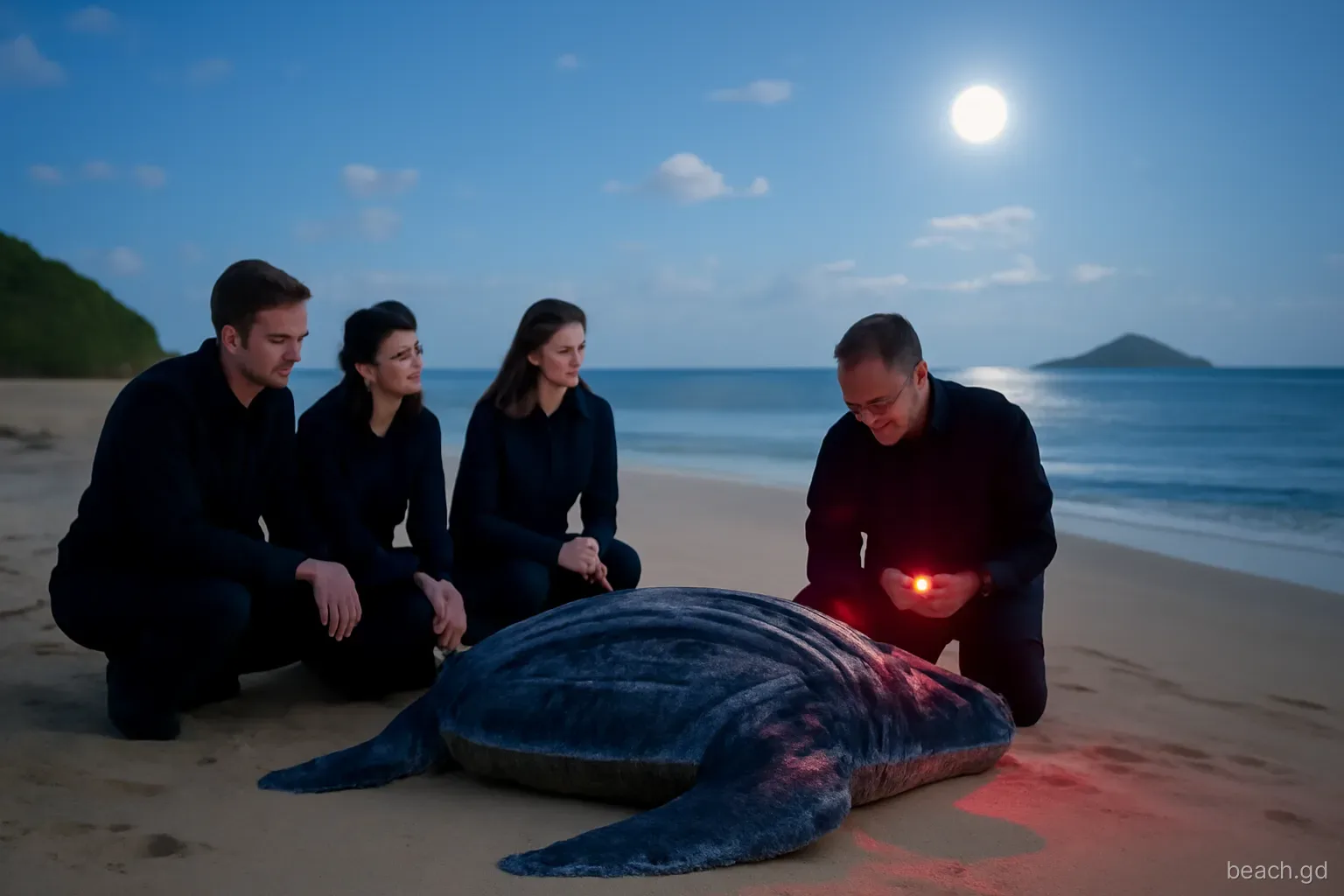
- You watch the laying by dim red light, keeping to the position the guide shows you; you may see the eggs drop and hear the guide explain measurements and tagging.
- Once the turtle begins covering the nest, the group moves back so she can finish and return to the sea undisturbed.
- If no turtle comes ashore by the agreed time, the tour ends; this is part of wildlife watching, and many operators explain their policy in advance.
What to wear and bring
Comfort and darkness are the priorities. You will sit or stand on sand for hours, possibly in a breeze or a shower, and anything bright, noisy or bulky becomes a nuisance on a dark beach where the guide is trying to keep the group together.
- Dark clothing, ideally long sleeves and trousers, which also helps with sandflies and mosquitoes.
- Closed shoes or sandals with straps for walking on soft sand in the dark.
- Insect repellent, applied before you arrive rather than sprayed on the beach.
- A light rain jacket; showers are common during the season.
- Water and a snack, since you may wait a long time.
- A red-light torch only if your guide allows it; most guides prefer visitors to carry no light at all.
- Patience. Leave expectations of a schedule at home.
Making a day of it in the north-east
If you are travelling up from the south coast, it is worth arriving in daylight. Bathway Beach, just south of Levera, has an offshore reef that shelters part of the shoreline and makes for a pleasant afternoon swim when the sea is calm, although the Atlantic can be rough and currents can be strong further out. Swim only where locals swim and stay inside the reef.
Levera National Park includes Levera Pond, a wetland important for birds, and dry coastal forest. In daylight you can see the beach itself, the offshore islands including Sugar Loaf, and the setting of the night ahead. Sauteurs, the nearest town, is home to Leapers Hill, a site connected with the history of the Kalinago people and the French colonial period.
Eat before the tour starts, since there are few food options near Levera at night. Tours usually build in time for a meal, but if you are making your own way to join a guided group, plan dinner in Sauteurs or bring food with you.
Hatchling nights later in the season
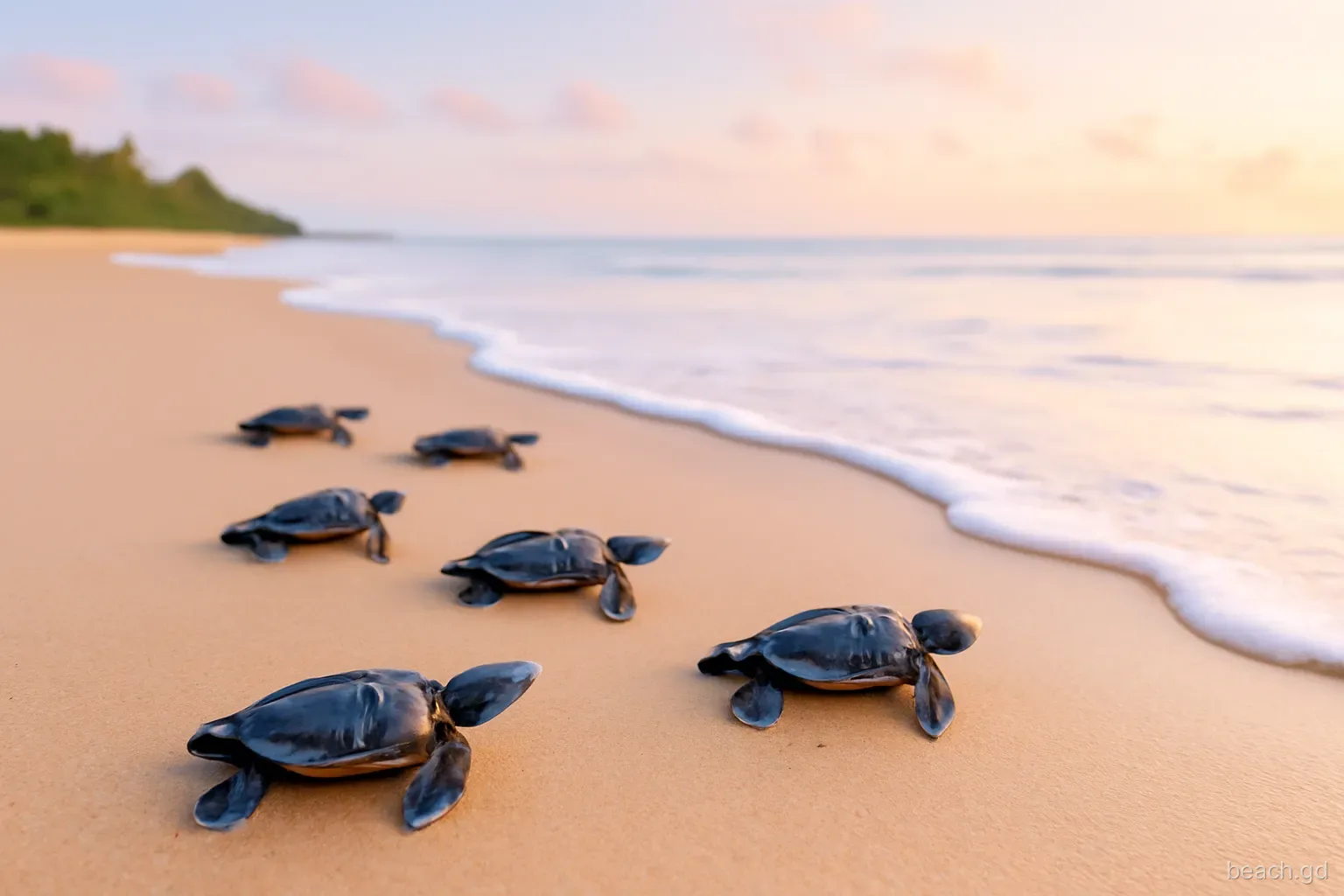
From around late June into August, some tours may coincide with hatchlings emerging from nests laid earlier in the season. Emergences happen when they happen, often late at night, and guides will manage the group so hatchlings can reach the sea undisturbed.
If hatchlings appear, keep all lights off, stand still and well back from their path, and do not pick them up. Their crawl from nest to water is believed to be important for orientation, and handling them can do harm. Guides may shield them from artificial light or gently redirect stragglers if necessary; visitors should leave that to them.
The combination of nesting females and hatchlings in the same night is most likely in July. Ask your operator what they have been seeing in recent nights; guides usually have a good sense of how the season is going.
Behaviours that disturb turtles most
White light. Torches, phone screens and camera flashes are the biggest problem. A turtle emerging from the sea can be frightened back by a single light, and hatchlings are drawn away from the water by artificial light.
Approaching too early. Before laying begins, turtles are sensitive. Guides will wait until the right moment; walking towards a turtle that is still crawling or digging can make her abandon the attempt.
Standing in front of her. Turtles see movement ahead of them. Always stay behind the turtle, out of her line of sight.
Touching. Touching the turtle, sitting on the shell or handling eggs is prohibited and stressful for the animal.
Noise. Voices carry on a quiet beach. Talk in whispers, and keep children calm and close.
Beach fires and parties. Fires and gatherings on nesting beaches in season can deter nesting and damage nests in the sand.
Booking a tour and choosing an operator
Turtle watching at Levera has historically been organised with the involvement of conservation groups such as Ocean Spirits, which has worked on leatherback monitoring in Grenada for many years, and with trained local guides from the surrounding community. Tour operators on the south coast also sell evening trips that include transport and an authorised guide.
When choosing, ask who provides the guiding on the beach, whether the guides are trained and authorised for the closed area, how large groups are, what time you are likely to return and what happens if no turtle appears. Prices vary with transport and group size; part of the fee typically supports beach monitoring and community guides.
Book early in peak months, especially May and June, as groups are limited to reduce disturbance. Your accommodation can usually recommend an operator. If you are based in the north of the island, you may be able to join directly at Levera without long transport.
Frequently asked questions
Can you go to Levera Beach at night on your own during nesting season?
No. From 1 April to 31 August, Levera Beach is a closed area and night access is controlled. Visitors should only be on the beach at night as part of an authorised turtle watching group with a trained guide. Breaching the rules can lead to significant fines or imprisonment.
Are you allowed to take photos of the turtles?
Flash photography and white light are not allowed. Some guides permit photographs under their own red light during laying, without flash, but policies vary. Most visitors find it better to watch rather than photograph. Never use a phone screen or camera light near a turtle that is still crawling.
Are children allowed on turtle watching tours?
Many tours accept children, but the night is long, dark and involves waiting quietly. Children who can stay calm and whisper for several hours enjoy it most. Ask the operator about minimum ages and whether they can drop you back early if a child is tired.
What happens if no turtle comes ashore?
Turtles nest on their own schedule, so some tours end without a sighting. Operators handle this differently: some offer a return visit or partial refund, others do not. Ask about the policy when booking, and consider going early in your trip to leave time for a second attempt.
Is it legal to visit Levera Beach during the day in nesting season?
Daytime visits to Levera and Bathway as beaches are common, but nests lie buried in the sand and should not be disturbed. Do not dig near marked nests, do not drive on the beach and follow any instructions from park staff or signage. Night access is the part that is restricted.