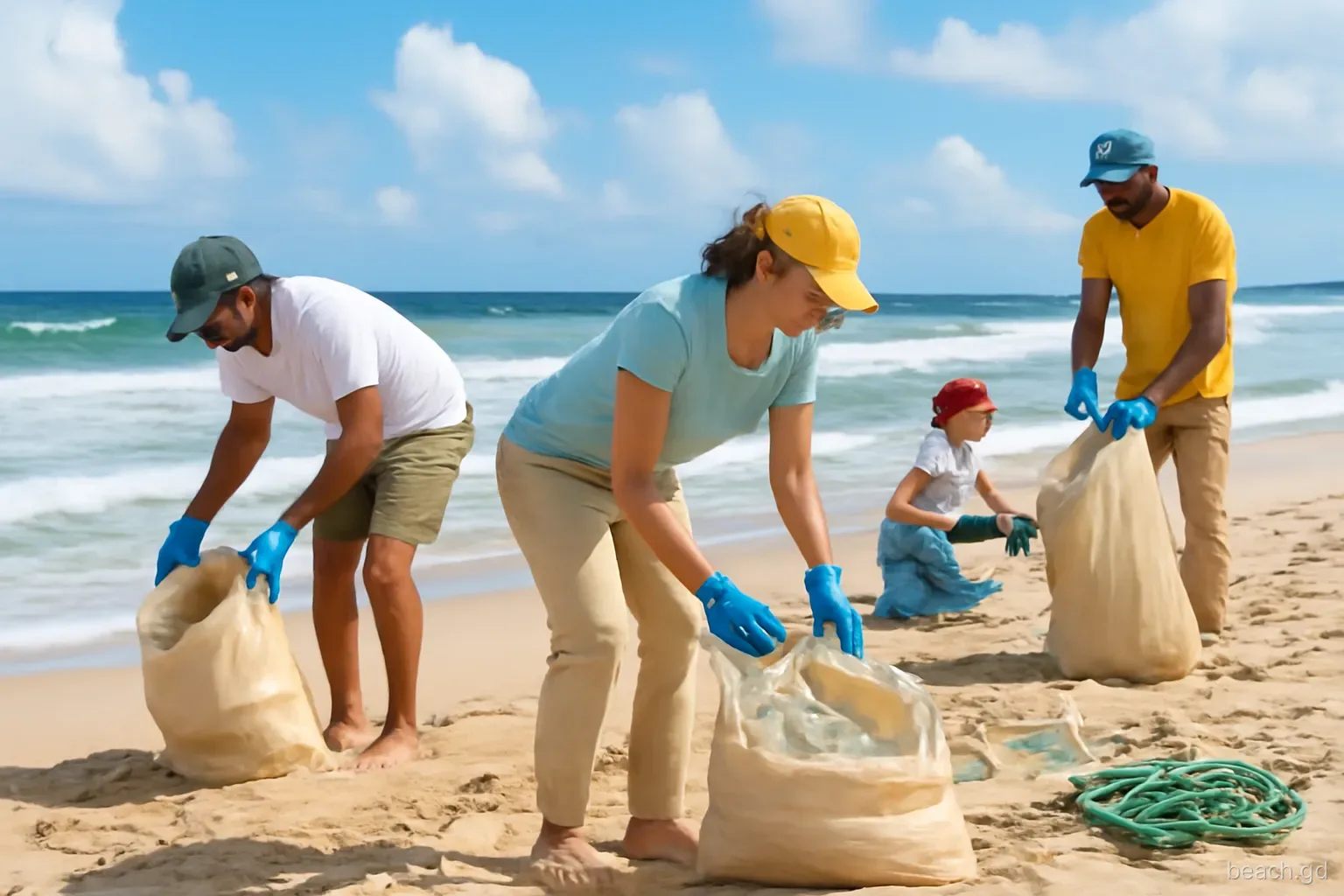
Walk a sheltered beach on the south-west coast and you may see little litter. Walk an exposed beach on the Atlantic side after a few days of strong trade winds and the high-tide line can be scattered with bottles, bottle caps, flip-flops, rope and fragments of plastic that have crossed the ocean. Beach clean-ups in Grenada are a practical response, and visitors are welcome at many of them.
This guide explains who organises clean-ups, where they tend to happen, what to bring and how to stay safe, and how to run a small clean-up yourself responsibly, including on beaches where turtles nest.
Why some beaches collect far more debris
The trade winds blow mainly from the east, and ocean currents carry floating debris towards Grenada's windward coast. Beaches on the Atlantic side, from the north-east around Levera and Bathway down the east coast, therefore collect more washed-up rubbish than calm leeward beaches. Much of it comes from far away, from shipping, fishing and land-based sources around the Atlantic and Caribbean.
Local sources matter too. Litter left on beaches, rubbish carried down rivers and drains in heavy rain, and waste from boats all end up on the shore. After heavy rain, river mouths are often where the most debris accumulates.
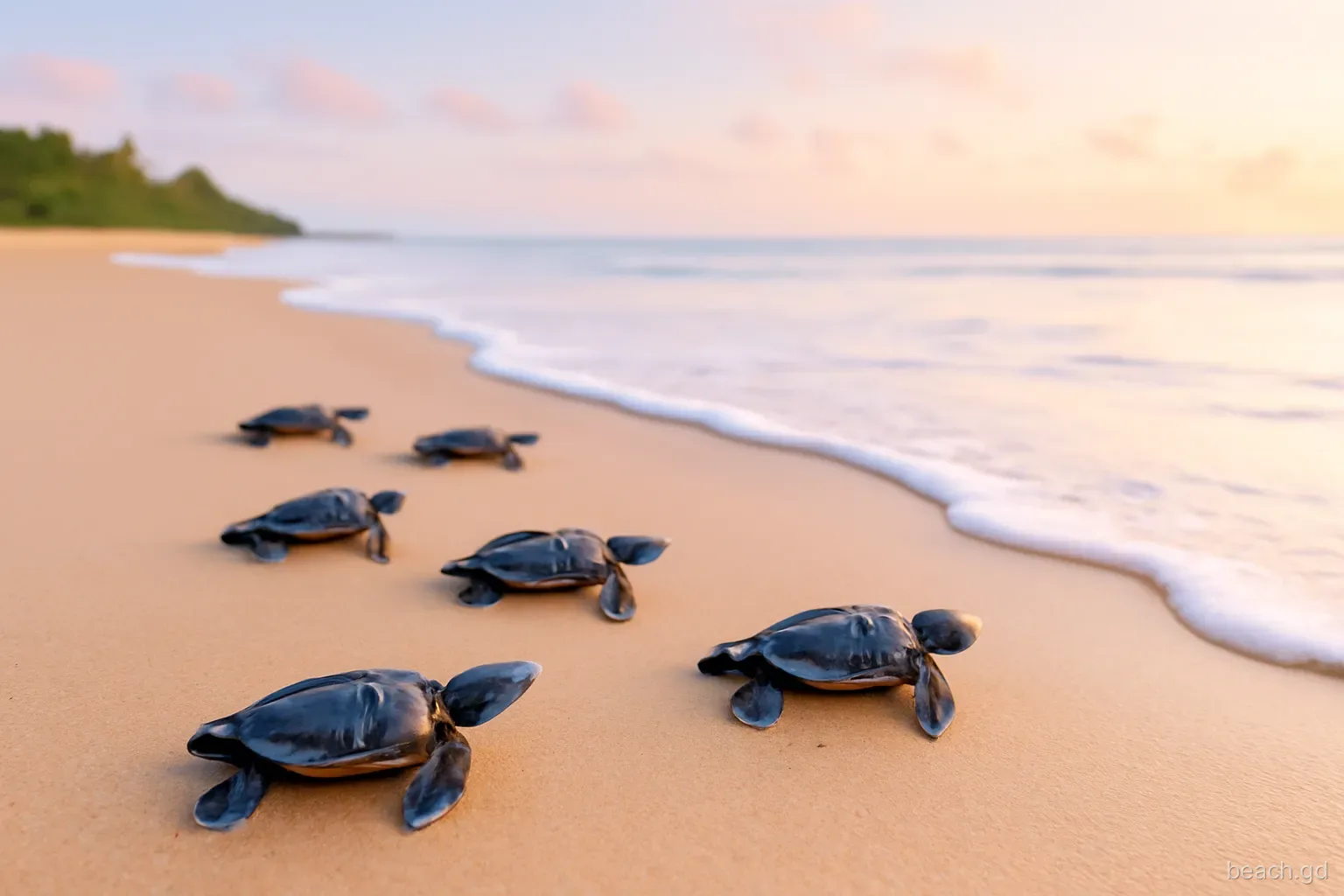
This pattern is why many organised clean-ups focus on the east coast, and why nesting beaches are a priority: debris at the top of the beach can block nesting females and trap hatchlings on their way to the sea.
Who organises clean-ups
International Coastal Cleanup. Each September, groups in Grenada join this worldwide event, usually around the third Saturday of the month, collecting rubbish and recording what they find. It is often the biggest clean-up day of the year.
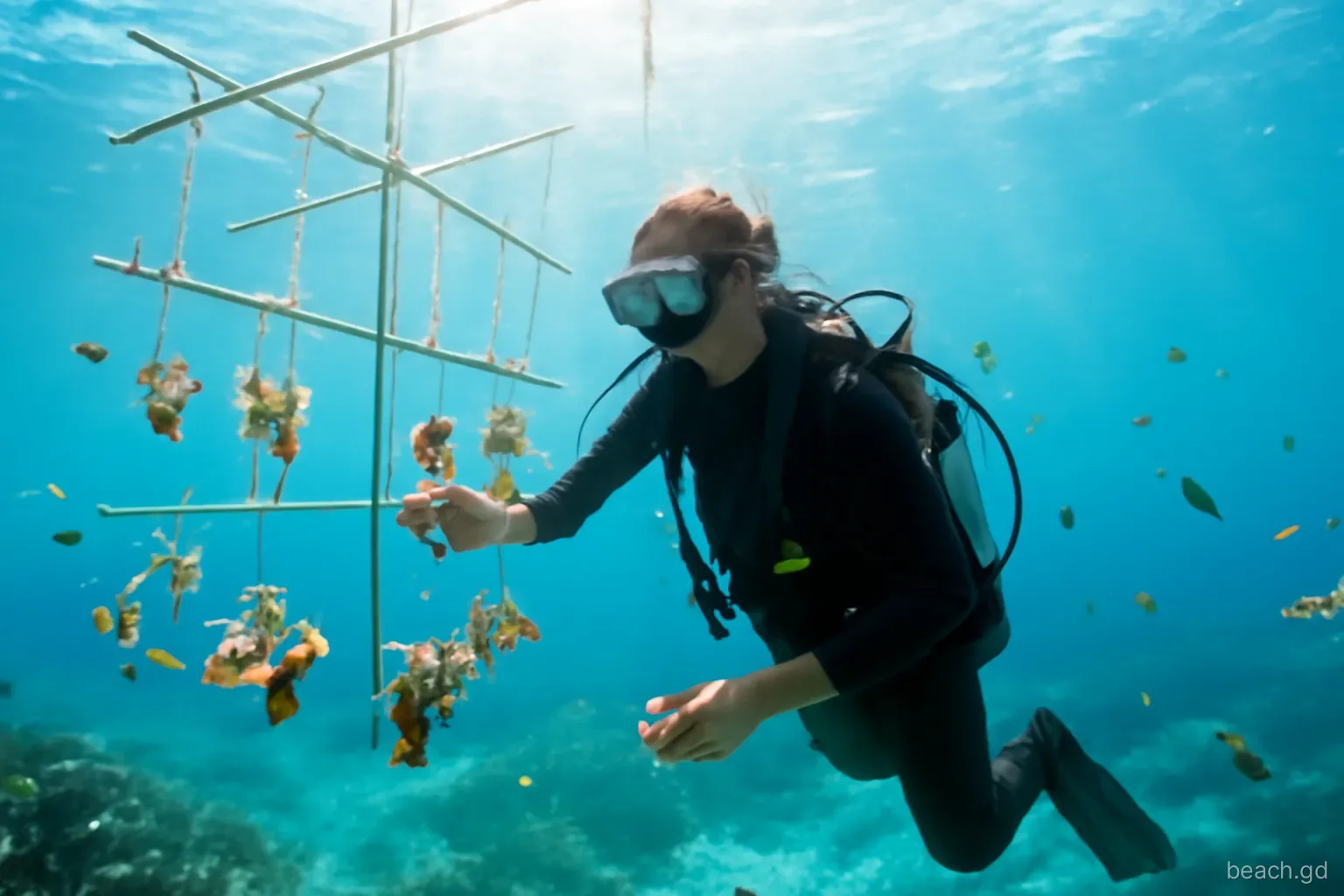
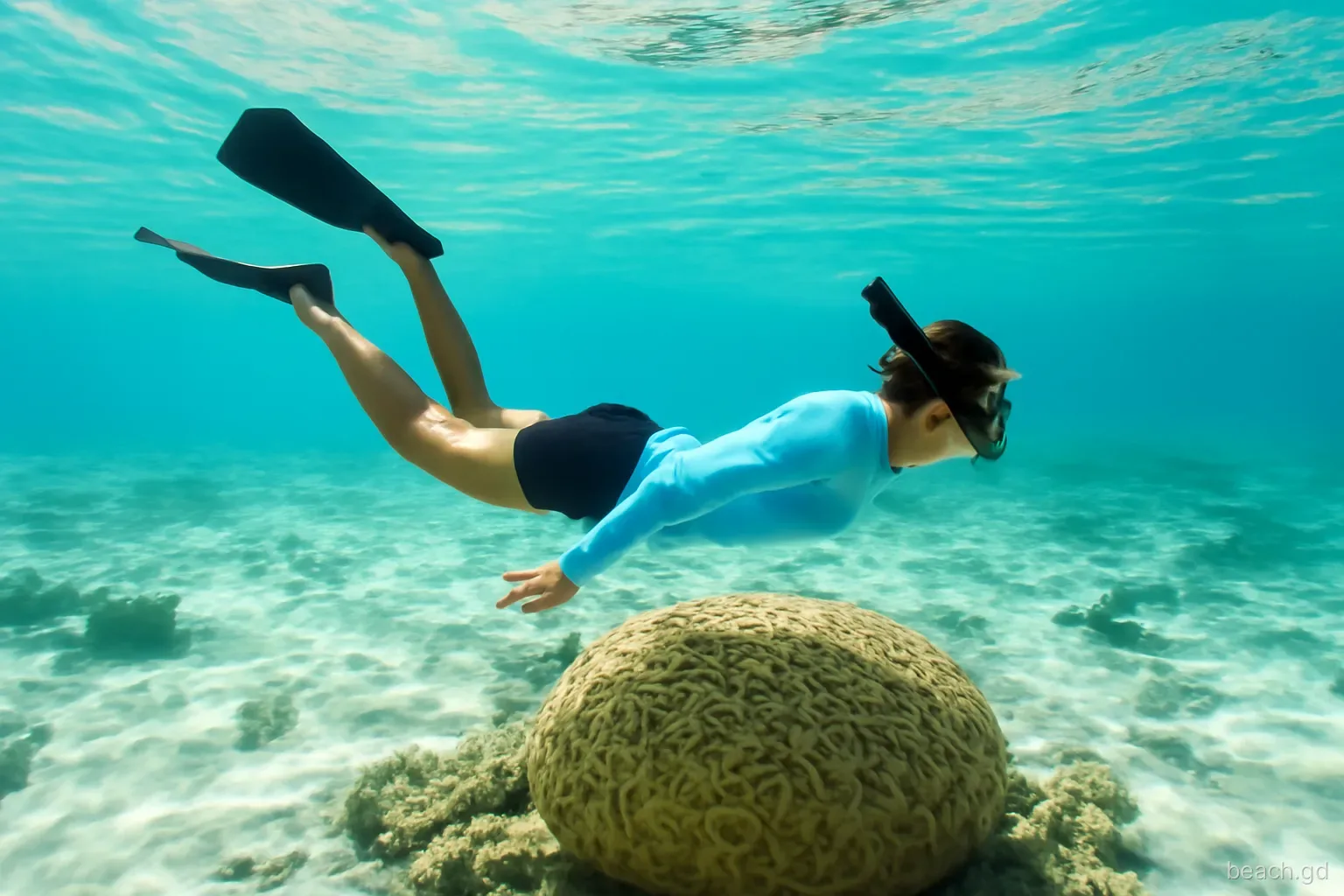
Dive shops and water sports operators. Many run beach and underwater clean-ups, including removing debris and fishing line from reefs, and some welcome guests.
Hotels and resorts. Several organise regular clean-ups of their beaches and nearby stretches, sometimes inviting guests to take part.
Conservation groups. Turtle monitoring groups clear nesting beaches before and during the season.
Schools, churches and community groups. Clean-ups are a common community activity, often around Earth Day, World Oceans Day or national events.
Student groups. Clubs at St George's University and other institutions organise clean-ups during term time.
What to bring
Clean-ups are usually informal, and nobody expects specialist equipment. Organisers often provide bags and gloves, but supplies can run short when more volunteers turn up than expected, so it helps to come prepared with the basics below.
- Gloves, ideally reusable work or gardening gloves that protect against cuts.
- Closed shoes rather than flip-flops, since broken glass and sharp debris are common.
- Sun protection: hat, long sleeves and sunscreen; clean-ups often start early to avoid midday heat.
- Water in a reusable bottle, more than you think you need on an exposed beach.
- Sturdy bags or sacks, plus a separate bucket or bottle for sharp items.
- A phone or notebook for recording what you find, if the organisers are collecting data.
- Insect repellent for beaches near mangroves or vegetation.
Safety rules that matter
Most clean-ups are relaxed, but debris can be dangerous, and beaches are sensitive habitats. Organisers usually brief volunteers on these points at the start; if you are cleaning on your own or with family, they apply just as much.
- Do not pick up needles, syringes or medical waste with your hands; mark the spot and tell the organiser.
- Do not open unknown containers or drums, which may hold chemicals or fuel.
- Leave heavy items such as logs, tyres or large nets for teams with the right equipment.
- Watch for broken glass in sand and seaweed.
- Take breaks in the shade and drink water; heat exhaustion is a real risk on exposed beaches.
- Stay off cliffs, rocks and unstable slopes.
- Keep children supervised and away from sharp items.
Clean-ups on turtle nesting beaches
On beaches such as Levera and Bathway during the nesting season, roughly March to September including hatching, clean-ups need care. Nests are buried in the sand and may not be marked. Raking, digging or driving vehicles on the upper beach can damage eggs or hatchlings. Clean-ups on nesting beaches should be coordinated with the groups that monitor turtles.
Remember too that Levera Beach is a closed area from 1 April to 31 August, so organised activities there need permission. Daytime clean-ups organised with monitoring groups are often welcome; unsupervised night activities on the beach are not.
Natural seaweed wrack on the tide line is part of the beach ecosystem and feeds birds and invertebrates. Heavy sargassum strandings are a different issue, but removing them usually requires coordination with authorities and care to avoid nests. Focus on human-made debris.
What gets found, and why counting it matters
The most common items on Grenada's beaches are the same as on beaches around the world: plastic bottles and caps, food wrappers, straws, cups, cigarette butts and fragments of hard plastic. On the Atlantic side, there is also a lot of fishing gear, including rope, net fragments, floats and line, plus flip-flops and shoes that have drifted a long way.
Recording what you collect helps. Organised clean-ups often use data cards, such as those used in the International Coastal Cleanup, to count items by type. The resulting data shows which items are most common and where they come from, which supports campaigns, policy and targeted action such as the restrictions on styrofoam.
Even a simple tally on a phone, noting the beach, date and approximate counts of the main items, is useful to local conservation groups. Photographs of unusual items or large ghost nets can help too.
How to run a small clean-up yourself
If you are staying in Grenada and want to organise a clean-up with friends, family or colleagues, keep it simple and well planned.
- Choose a public beach and a time, ideally early morning or late afternoon, avoiding the hottest hours.
- Check whether the beach is a turtle nesting site and, if so, contact the monitoring group first.
- Arrange disposal in advance: the Grenada Solid Waste Management Authority handles waste collection, and some areas have communal bins; avoid overloading small bins meant for daily use.
- Gather gloves, bags, a sharps container and water.
- Brief everyone on safety and on separating recyclables if a recycling option exists.
- Record what you collect, such as counts of bottles, caps and fishing gear, which helps conservation groups.
- Take the bags away or leave them at an agreed collection point, never on the beach where wind and dogs scatter them.
Plastic laws and reducing waste at source
Grenada has acted on plastic waste through the Non-Biodegradable Waste Control Act, which restricts styrofoam food containers and single-use plastic items such as bags. Food vendors and shops have moved to paper, card and other alternatives, and many charge for bags or no longer supply them. Enforcement and the exact list of covered items have been phased in over time.
Visitors can help by bringing reusable bags and bottles, refusing plastic straws and cutlery, and choosing vendors that use reusable or compostable packaging. On beach days, packing food in reusable containers and taking all rubbish away prevents it from blowing into the sea.
Clean-ups treat the symptom; reducing what reaches the shore treats the cause. Both matter, and the most effective beach clean-up is the rubbish that never arrives.
If you are staying longer, small routines help: a bag in your beach kit for picking up a handful of litter on every walk, buying drinks in returnable or larger containers, and choosing refill options where shops offer them. Residents who do this quietly on their local beach often keep it noticeably cleaner than any one-off event.
Frequently asked questions
When is International Coastal Cleanup day in Grenada?
International Coastal Cleanup takes place each September, usually around the third Saturday. Groups across Grenada, Carriacou and Petite Martinique join in, often focusing on east coast beaches. Dates and locations are announced by local organisers, dive shops and conservation groups in the weeks before.
Can visitors join beach clean-ups in Grenada?
Yes. Many clean-ups welcome visitors, especially those run by dive shops, hotels and community groups. Ask your accommodation or a dive operator what is planned during your stay. Bring gloves, closed shoes, water and sun protection, and follow the organisers' safety briefing.
Why is there so much plastic on Grenada's east coast beaches?
The prevailing trade winds and ocean currents push floating debris onto the windward Atlantic coast. Much of it comes from distant sources across the Atlantic and Caribbean, as well as from local litter carried by rivers and drains. Sheltered west coast beaches generally collect less.
Are styrofoam containers banned in Grenada?
Grenada's Non-Biodegradable Waste Control Act restricts styrofoam food containers and some single-use plastic items, with measures phased in over time. Most vendors now use alternatives. Check current rules if you run a food business, and bring reusable items to reduce waste on beach days.
What should you do with fishing line found on a reef?
If you are diving or snorkelling with a guide, point it out; many operators remove line and nets safely. Do not attempt to cut large nets or line wrapped around coral without training, as it can damage the reef or entangle you. Report large ghost nets to your operator or the Fisheries Division.