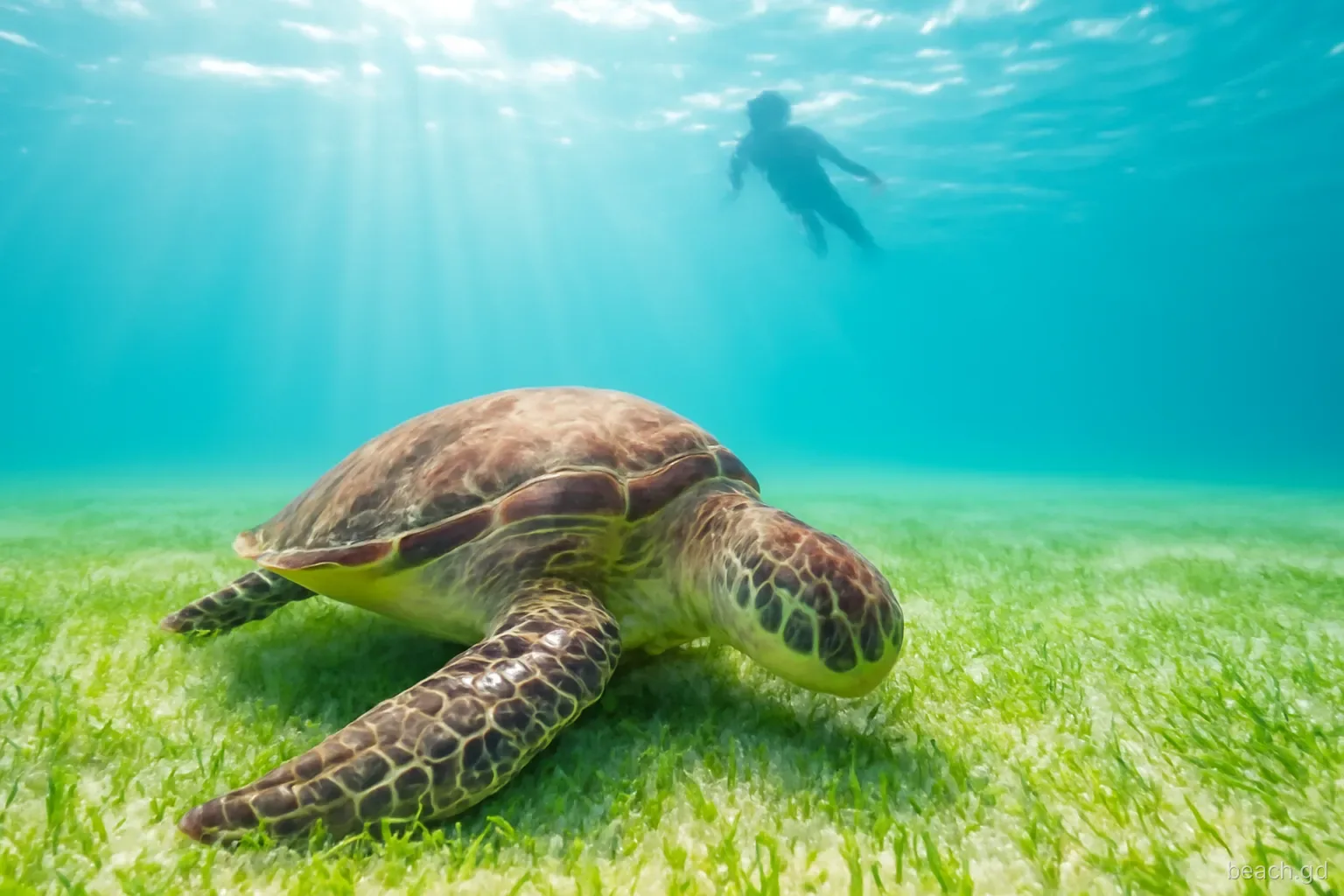
Most visitors who see a sea turtle in Grenada do not see it on a nesting beach at night. They see it underwater, gliding over a reef or grazing on a seagrass meadow a few metres below their mask. Hawksbill and green turtles feed around Grenada and Carriacou all year, and an encounter is possible on many snorkel trips.
These are wild animals in a protected environment, and how you behave in those few minutes matters. This guide explains how to tell the species apart, where encounters are more likely, and the etiquette that lets the turtle carry on feeding instead of fleeing.
Telling the species apart
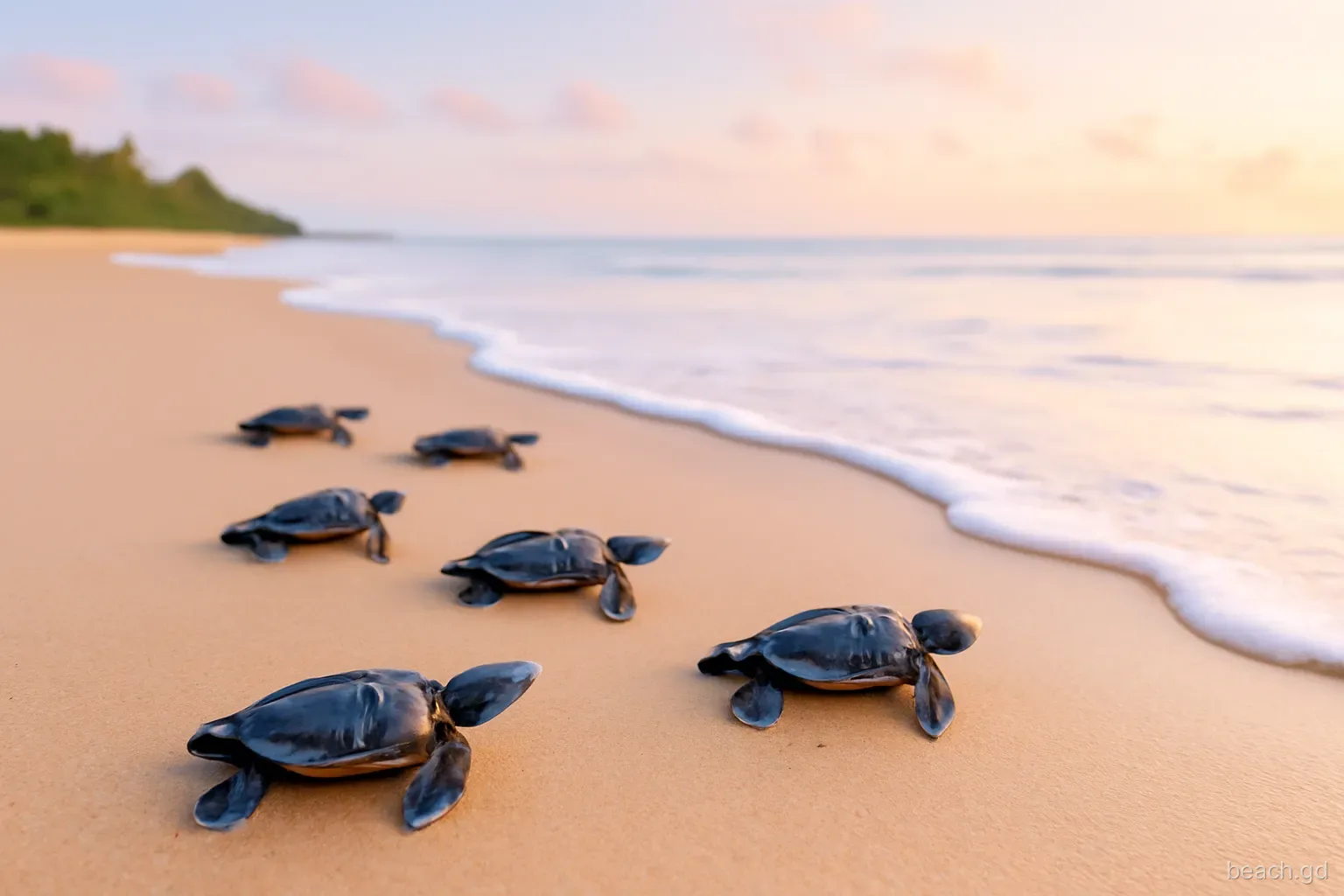
Hawksbill turtle. A smaller turtle with a narrow head and a pointed, beak-like mouth, rather like a bird of prey. The shell has overlapping plates with a serrated edge at the back and beautiful amber and brown patterns. Hawksbills feed mainly on sponges and are usually seen on reefs, poking into crevices. They are critically endangered globally and nest in small numbers in Grenada and Carriacou.
Green turtle. Larger as adults, with a small rounded head and a smooth, rounded shell in olive and brown tones. Despite the name, the shell is not green; the name refers to the colour of their fat. Adults graze on seagrass and algae, so they are most often seen over seagrass beds and sandy bays, surfacing calmly to breathe.
Loggerhead turtle. Rare in Grenada, recorded as foraging rather than nesting. Recognisable by a very large head and reddish-brown shell.
Leatherback. Almost never seen by snorkellers. Leatherbacks live in open water and only come close to shore when nesting.
Where encounters are more likely
Turtles move around, so no spot is guaranteed, but some habitats give better odds. On Grenada's west coast, the reefs and bays within the Molinere–Beausejour Marine Protected Area, north of St George's, are a regular snorkel and dive destination where hawksbills are often seen among the rocks and coral. Snorkel trips from Grand Anse and Morne Rouge commonly visit this area, including the Underwater Sculpture Park.
Seagrass beds in calm, sheltered bays are where green turtles feed. They occur in many of the south coast inlets and around Carriacou, where the Sandy Island Oyster Bed Marine Protected Area includes reef, seagrass and mangrove habitat. Snorkellers around Sandy Island and the reefs off the west of Carriacou sometimes see turtles, particularly in the morning when the water is calm.
Dive and snorkel operators know where turtles have been feeding recently, so ask when booking. A guided trip is also the best way to enter protected areas, which charge fees and have rules on where boats may anchor and moor.
In-water etiquette
The aim is simple: the turtle should not change its behaviour because you are there. If it stops feeding, swims away fast or keeps glancing at you, you are too close.
- Keep at least a few metres away, and more if the turtle seems unsettled. Let it decide whether to come closer.
- Never touch, chase, ride or grab a turtle, and never block its path to the surface. Turtles need to breathe, and a frightened turtle uses energy it needs.
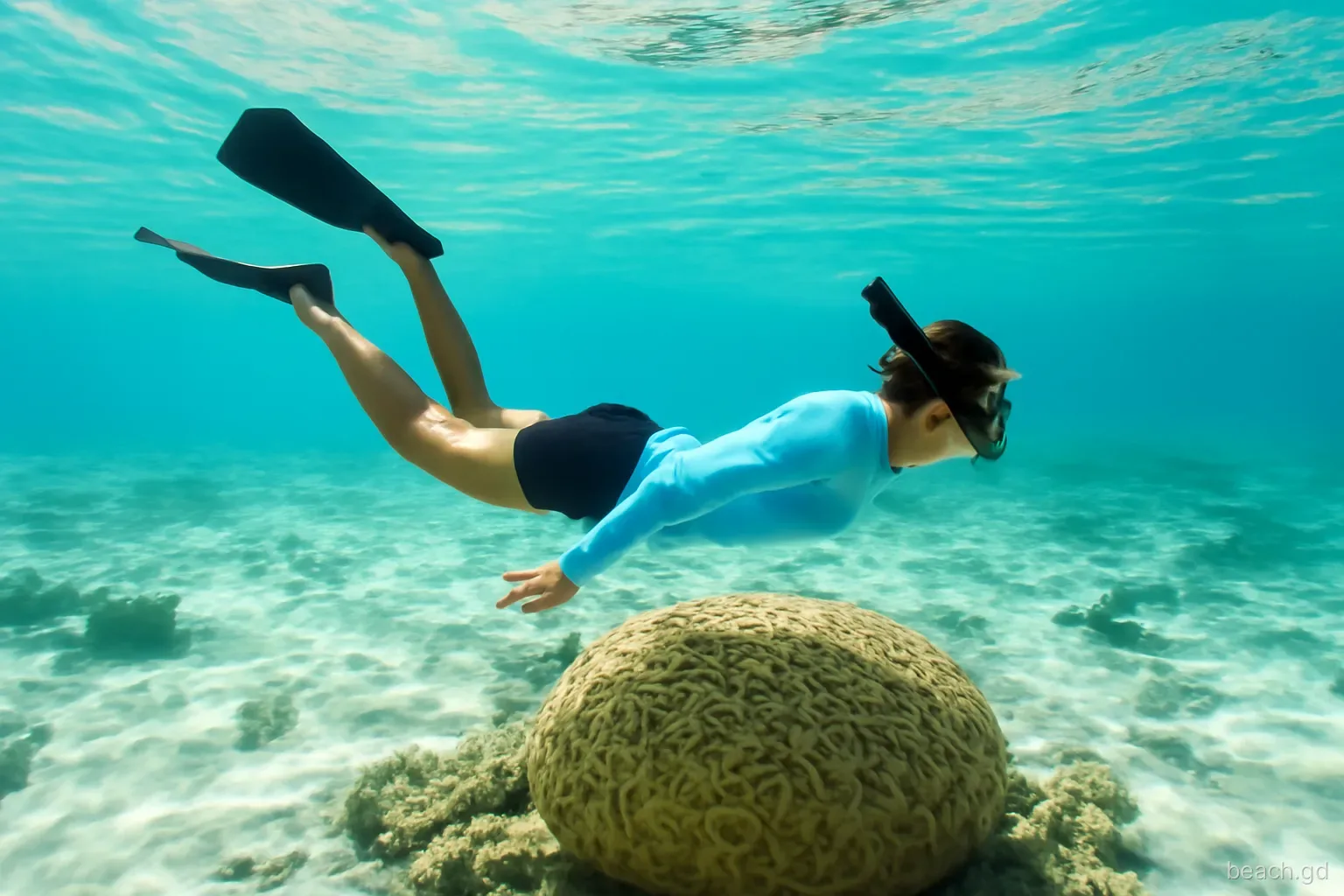
- Approach from the side, not from above or in front, and move slowly with gentle fin kicks.
- Do not crowd it. If several snorkellers are present, keep to one side and leave an open escape route.
- No feeding. Feeding changes natural behaviour and can make turtles approach boats and propellers.
- Mind the bottom. Kicking up sand or standing on seagrass and coral damages the very habitat turtles depend on.
- No flash photography, and avoid holding a camera right in the turtle's face.
Why these turtles matter, and what threatens them
Hawksbills play an important role on reefs by eating sponges that would otherwise compete with corals for space. Green turtles keep seagrass meadows healthy by grazing, which in turn supports fish nurseries. Losing them affects the whole system that makes snorkelling in Grenada worthwhile.
The main threats include habitat damage, entanglement in fishing gear and discarded line, boat strikes in busy bays, plastic debris that turtles mistake for food, and illegal harvesting. Hawksbill shell has long been prized for jewellery, and items made from it fall under international trade bans; buying them encourages poaching elsewhere.
Grenadian law protects turtle eggs at all times, gives leatherbacks full protection and sets a closed season from 1 April to 31 August for other species. Outside that season, regulated harvesting of hard-shelled turtles above a minimum size has been allowed, which is controversial among conservation groups. Visitors can make their own choice not to eat turtle meat or buy turtle products.
When conditions are best
The leeward west coast is usually calmest, and visibility is generally best on mornings with little wind and no recent heavy rain. After downpours, rivers carry sediment into bays and visibility can drop sharply for a day or two, particularly during the rainy season from roughly June to November.
In the winter months, ground swells from distant North Atlantic storms occasionally reach the north and west coasts, churning up the water and making entries difficult. Operators will cancel or change sites when this happens. On the south coast, wind and chop can make open bays uncomfortable in the afternoons.
Turtles themselves are present year-round. Hawksbills tend to stay around the same reef areas, and green turtles return to the same seagrass beds to feed. Early morning trips often find turtles feeding more actively and fewer boats in the water, which makes for calmer encounters.
Seasonal crowds matter too. On cruise-ship days in the winter season, popular sites such as the sculpture park can have several boats at once, and turtles tend to move off when the water gets busy. A trip on a non-cruise day, or a quieter site suggested by your operator, usually gives a more relaxed encounter.
Choosing a trip that respects wildlife
A responsible operator makes a real difference to the turtles and to your experience. Grenada has many experienced, conservation-minded dive and snorkel businesses, and a few that cut corners. These questions, asked politely when booking, help separate careful operators from careless ones.
- Does the guide brief the group on turtle and reef etiquette before entering the water?
- Does the boat use mooring buoys rather than dropping anchor on reef or seagrass?
- Are group sizes kept small enough for the guide to watch everyone?
- Is the marine protected area fee included, and is it paid properly?
- Do guides discourage touching, chasing and feeding, even when guests push for a photo?
- Do they provide or recommend mineral sunscreen and rash vests?
- Will they change plans if conditions are poor rather than pushing a trip in bad visibility?
Mistakes that spoil encounters
Most bad turtle encounters come from enthusiasm rather than bad intent. These are the errors guides see most often, and every one of them shortens the encounter for everyone else in the water as well.
- Swimming straight at a turtle as soon as someone shouts "turtle!"
- Diving down on top of a turtle that is resting or feeding on the bottom.
- Following a turtle when it surfaces to breathe, crowding the space it needs.
- Touching the shell for a photo, which is stressful for the animal and can transfer bacteria.
- Standing on coral or seagrass to adjust a mask, damaging habitat.
- Using a jet ski or speedboat fast in bays where turtles feed; slow down near snorkellers and grazing areas.
Frequently asked questions
Is it common to see turtles while snorkelling in Grenada?
It is reasonably common on trips to reefs and seagrass areas, but never guaranteed. Hawksbills are often seen around the reefs north of St George's and in Carriacou, and green turtles over seagrass in calm bays. Guided snorkel trips improve your chances because operators know where turtles have been feeding.
How close can you get to a sea turtle?
Stay at least a few metres away and let the turtle decide whether to come closer. If it stops feeding, changes direction or swims off quickly, you are too close. Never touch, chase or block a turtle, especially when it needs to surface to breathe.
Can you touch turtles in Grenada?
No. Touching, handling or harassing turtles stresses them and can harm them, and disturbing protected species can breach fisheries and marine protected area rules. Keep hands to yourself, avoid diving down on top of them and keep a respectful distance while watching.
What is the difference between a hawksbill and a green turtle?
Hawksbills have a narrow, pointed, beak-like mouth and patterned shells with a serrated rear edge; they feed on sponges on reefs. Green turtles have a small rounded head and smooth shell, and adults graze on seagrass. Green turtles are generally larger and calmer at the surface.
Do you need a guide to snorkel with turtles?
Not always, but it helps. Guides know where turtles feed, handle marine protected area fees and moorings, and keep groups from crowding animals. Some good sites are reached only by boat. If you snorkel independently, choose calm conditions, stay visible and follow the same etiquette.