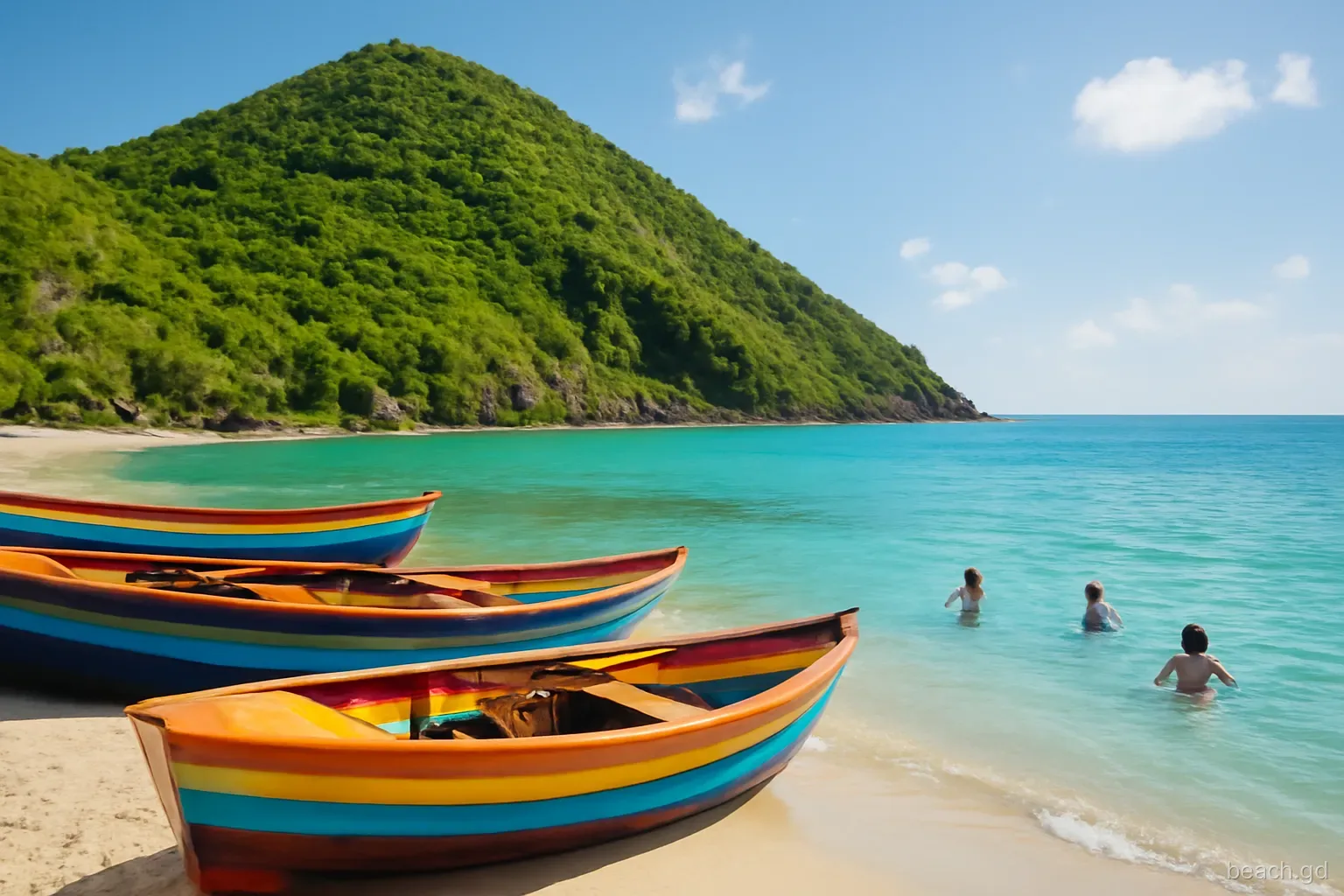
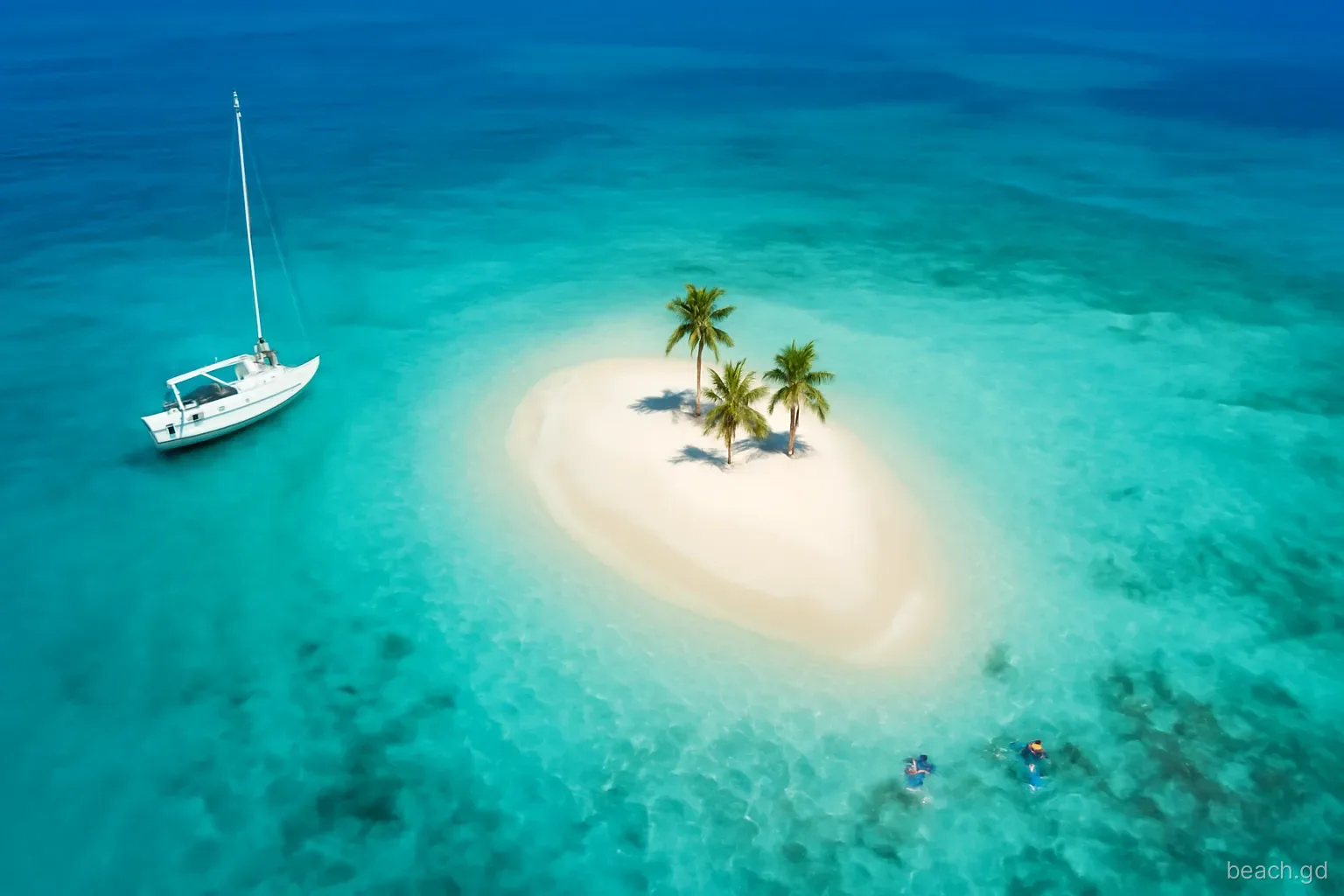
Sandy Island is a thin bar of white sand in Hillsborough Bay, a few minutes by boat from Paradise Beach. From the air it looks like a cartoon desert island; from the water it is lower and smaller than people expect, with reef on its sheltered side and open water on the other. It has no buildings, no bar and no fresh water.
The island sits inside the Sandy Island Oyster Bed Marine Protected Area, which also covers the reef and seagrass around L'Esterre and the mangroves near Tyrrel Bay. That means rules on anchoring, fishing and collecting, and rangers who enforce them. Done well, a visit is two to four hours of snorkelling and lying on sand; done badly, it is the worst sunburn of the trip. Here is how to plan it.
What the island is actually like
Sandy Island has always been at the mercy of the weather. Storm swells over the decades have washed over it, narrowed it, shifted its sand and stripped its palms more than once, and replanting efforts have followed. Its shape and the amount of vegetation therefore vary from one year to the next, and Beryl in 2024 was the latest test. Expect a low, narrow island where you can walk end to end in a few minutes, with little or no natural shade.
The sheltered western and southern sides have the calmer water and the reef. The side facing the open sea can have small waves and a stronger pull along the edges. Sand bars extend out from the ends, and the colour change from white sand to deep blue is sudden; this is where currents can run.
It is not a place for a long, lazy day without equipment. A half day, with shade you bring and water you carry, fits it far better.
Getting there by water taxi
From Paradise Beach. The shortest crossing, often under ten minutes. Boatmen wait on the beach or can be found through the beach bars. Many visitors arrange this the day before.
From Hillsborough or Tyrrel Bay. Longer and a little more expensive, but useful if you are staying in town or on a boat.
Price. Return fares have commonly been in the range of roughly EC$40–80 per person or a set price per boat, and some beach businesses offer a reduced fare to customers. Prices change and vary by operator, so agree the amount, the currency and whether it is per person or per boat.
Pick-up time. Fix it clearly and repeat it back. Ask the boatman to check in on the way past if you might want to leave early, and exchange contact details in case the signal reaches. Two to three hours is plenty for most people.
Weather. In strong wind, boatmen may postpone. The crossing is short but small boats get wet; put your phone and towel in a dry bag.
Protected-area rules that apply to you
Rangers patrol the protected area and the rules exist because the reef was badly damaged by anchors and collecting before the park was set up:
- Do not stand on, kick or touch coral. Float over it, and rest on sand patches only.
- Do not collect shells, coral, starfish or anything else, alive or dead.
- No fishing or spearfishing inside the protected zones.
- Private boats use the mooring buoys; anchoring on reef or seagrass is not allowed. Mooring and visitor fees are collected by park staff, and the amounts have changed over the years, so confirm locally.
- Do not feed fish. It changes their behaviour and the reef balance.
- Take all rubbish back with you, including fruit peel and cigarette ends.
- Use a rash vest or reef-safe sunscreen; oily sunscreen leaves a sheen in still water over shallow reef.
Snorkelling the reef
The reef around Sandy Island is shallow, generally from a metre or so down to a few metres, which suits beginners and children with buoyancy aids. Expect parrotfish, sergeant majors, blue tang, wrasse, small groupers and, with luck, a turtle or a ray in the sandy patches. Coral cover has suffered from storms and bleaching events over the years, and recovery is patchy, so the fish life tends to impress more than the coral.
Enter from the sheltered side and swim along the reef rather than straight out. The edges of the island are where the water moves; if you feel yourself being carried, swim across the flow back towards the sand rather than against it. Do not snorkel alone, and keep away from the mooring area where dinghies and yachts come and go.
Mid-morning, with the sun high and the water still, gives the clearest view. Late afternoon has softer light but often more chop.
A sensible half-day plan
This order keeps you out of the worst heat and gives the best water:
- Arrange the water taxi the day before for around 8.30 or 9am, and agree the return time.
- Pack shade (a light umbrella or pop-up shelter), at least a litre of water per person, snacks, a dry bag, mask and fins.
- Snorkel first while the water is calmest and the sun is behind you.
- Rest under your own shade, drink, re-apply sun protection or put on a long-sleeved top.
- Do a second, shorter snorkel or a walk round the island.
- Leave by about midday or 12.30pm, before the sand is too hot to walk on and before the glare peaks, and have lunch back at Paradise Beach.
Common mistakes on a Sandy Island trip
Most bad experiences on Sandy Island trace back to a handful of avoidable decisions made before the boat even leaves the beach. Boatmen and rangers see the same ones every week:
- Arriving at midday with no shade and planning to stay four hours.
- Agreeing a vague pick-up time such as later or after lunch, then waiting in the sun.
- Standing on coral to adjust a mask. Float, or swim back to sand.
- Snorkelling off the ends of the island, where the current runs, instead of along the sheltered side.
- Bringing glass bottles, which break on the sand and stay there.
- Forgetting that there is no toilet; plan accordingly before you leave Paradise Beach.
- Ignoring a ranger. They can ask boats and visitors to leave, and the rules protect the reef you came to see.
- Feeding bread to the fish to draw them in. It is banned in the protected area and it harms the reef.
- Paying the full return fare upfront to someone you cannot contact later. Paying half on the way out and half on collection is a common and accepted arrangement.
Arriving on your own boat
Yachts visiting Carriacou often spend a night or two off Sandy Island. Pick up one of the park's mooring buoys rather than anchoring, check that the line looks sound before you trust it overnight, and expect a ranger to come by to collect the fee and explain the zones. If all buoys are taken, the anchorages in Tyrrel Bay and off Hillsborough are the usual alternatives.
Clear in with customs and immigration at Tyrrel Bay or Hillsborough before visiting, if you have arrived from outside Grenada. Dinghies should land slowly on the sand on the sheltered side and keep well clear of snorkellers, who are hard to see low in the water. Do not discharge waste in the protected area; the water is shallow, still and close to people swimming.
Who Sandy Island suits
First-time snorkellers. Shallow reef, calm sheltered water and a short boat ride make it one of the gentlest introductions to reef snorkelling in Grenada. A buoyancy vest takes away most of the nerves.
Families with school-age children. Children who swim reasonably well love the scale of it: an island they can walk round in minutes. Very young children are harder work without shade or toilets, so keep the visit short.
Photographers. Morning light over the white sand and pale water is the classic Carriacou image. Drones are increasingly restricted in protected and populated areas; check the current rules with the authorities before flying one.
Not ideal for... anyone who needs shade and facilities for a full day, or who dislikes small boats. For them, Paradise Beach with its view of the island may be the better way to enjoy it.
Frequently asked questions
Is there a fee to land on Sandy Island?
Simply landing from a water taxi has not normally carried a separate charge, but the island is within a marine protected area where mooring, diving and snorkelling fees can apply. Ask your boatman or operator whether any fee is included, and confirm current rates locally.
Is there shade on Sandy Island?
Very little. Storms have stripped the island's vegetation several times and young palms take years to grow. Bring your own umbrella or shelter, a hat and a long-sleeved top, and plan a morning visit rather than staying through midday.
Can beginners snorkel at Sandy Island?
Yes. The reef is shallow and the sheltered side is usually calm, which makes it a good place for first-time snorkellers. Wear a buoyancy vest if unsure, stay with a partner and avoid the island's edges, where currents can run.
How long should you stay on Sandy Island?
Two to three hours suits most people. That allows a good snorkel, a rest and a walk round. Longer stays work only if you bring shade, plenty of water and food, because there are no facilities at all on the island.
Can you camp on Sandy Island?
Camping is not a normal or permitted use of the island, which is part of a protected area. Plan a day visit only, and leave nothing behind. If you are on a yacht, use the mooring buoys and follow the rangers' instructions.