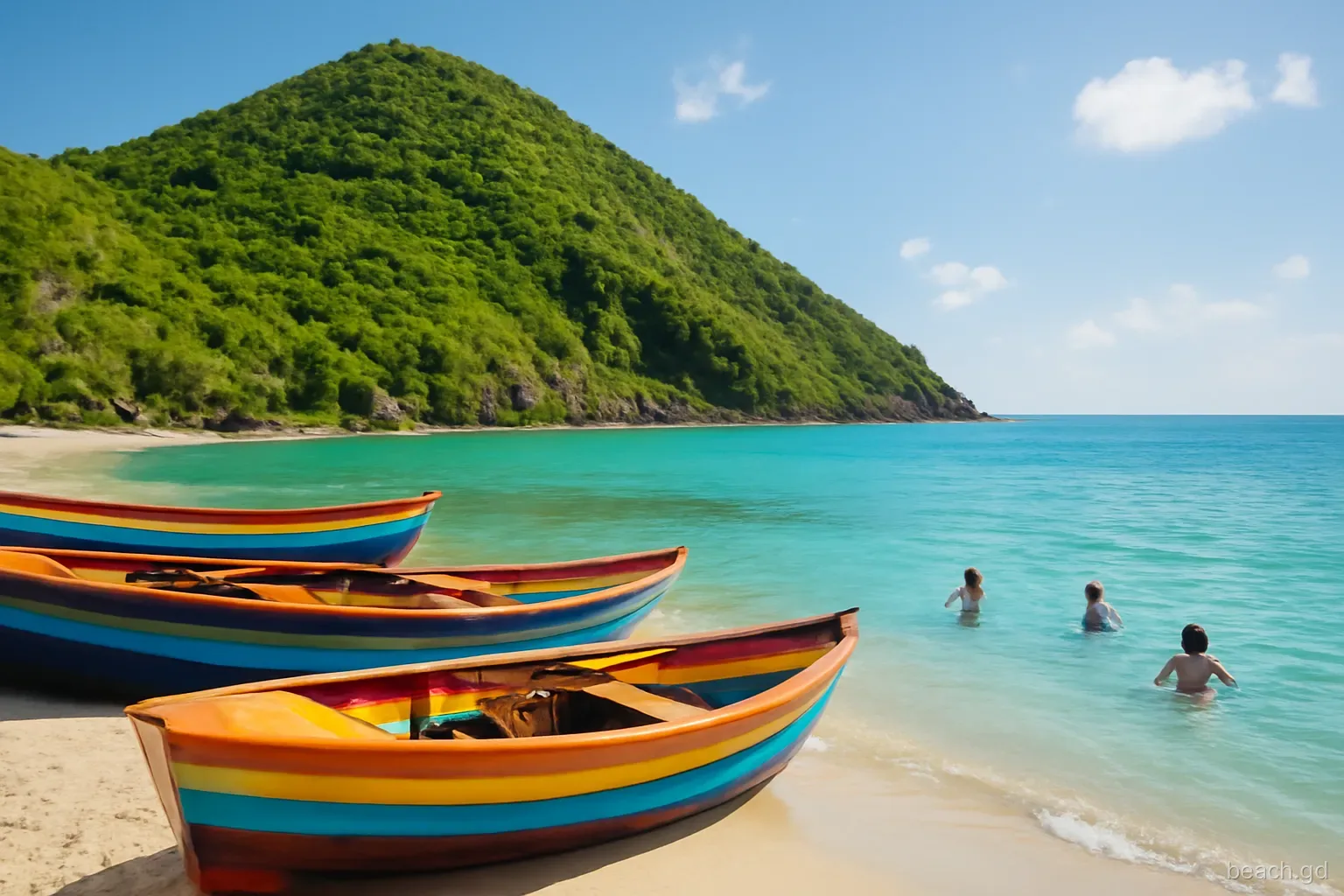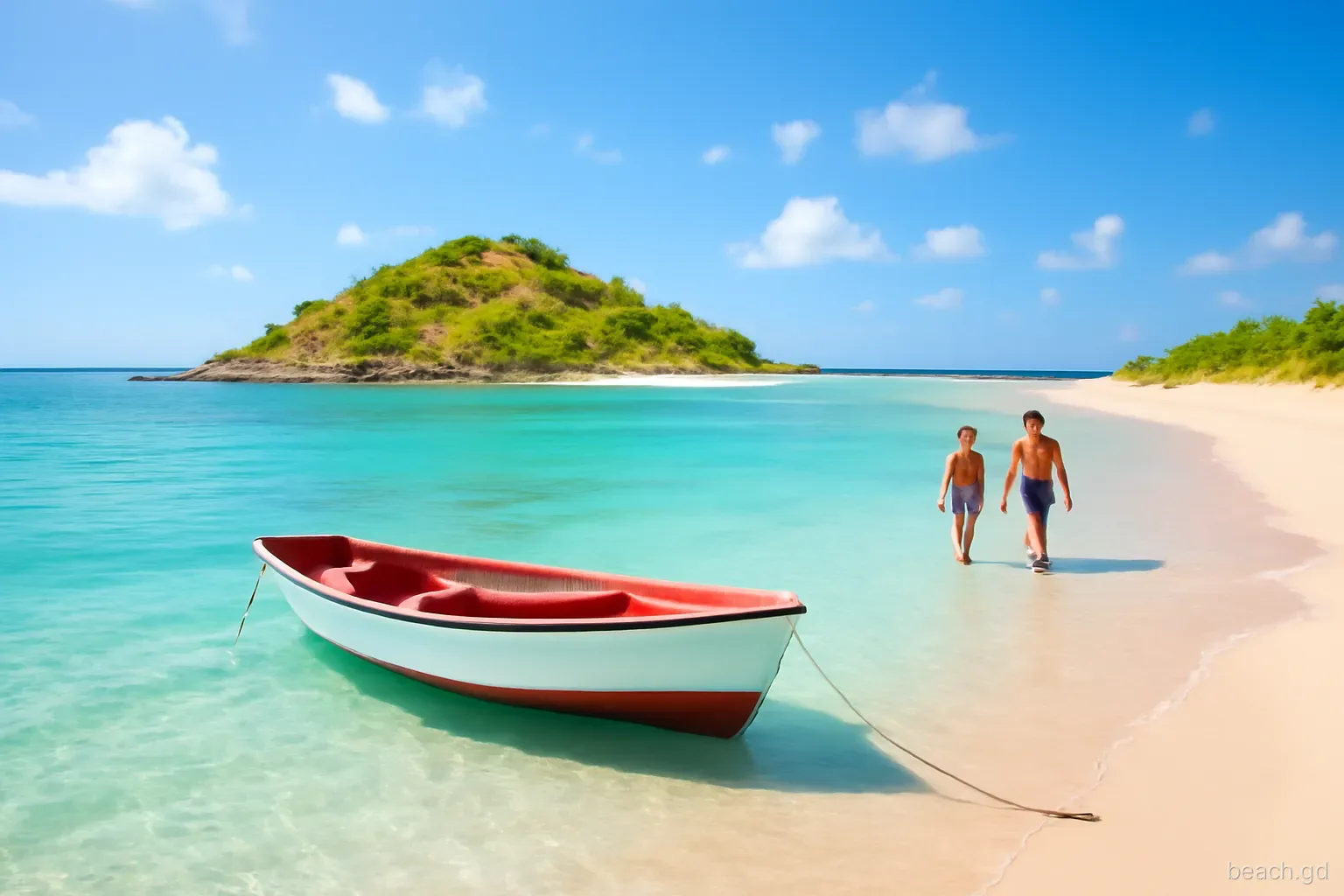
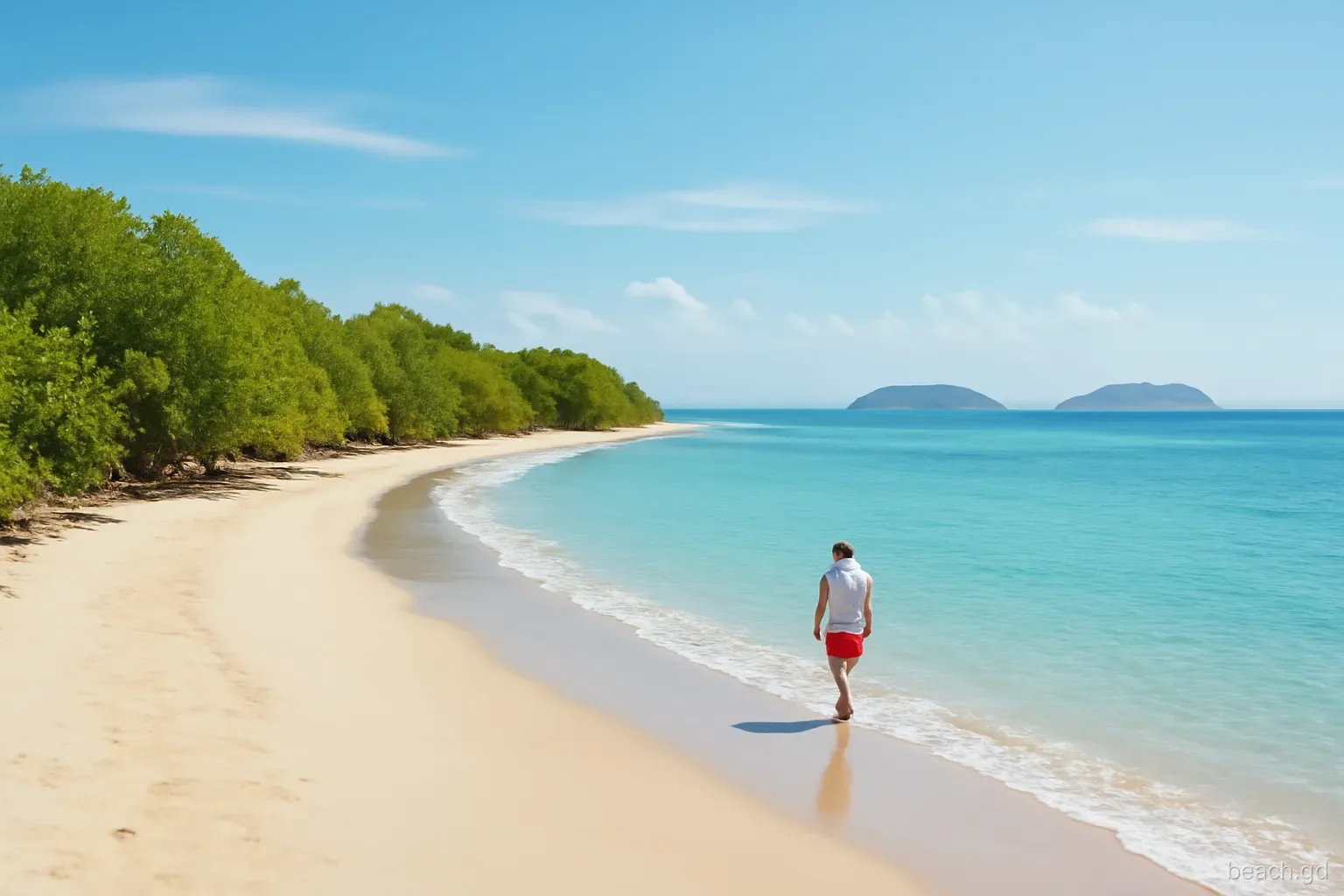
Most of Carriacou's beach traffic stays on the sheltered west coast. Petite Carenage Bay, on the north-east side beyond the boatbuilding village of Windward, sees a fraction of it. It is a curve of sand with woodland and a mangrove-fringed wetland behind, open views across the water towards Petite Martinique and the small islands of the Grenadines, and very often nobody else there.
It is a different kind of beach from Paradise Beach. The trade wind blows onshore, the sea has more movement, and seaweed can arrive with the current. In return you get a wilder shoreline, a turtle nesting beach and a strong sense of the island's windward side. This piece explains how to get there, when it works for swimming and how to behave on a beach that matters for wildlife.
Where it is and how it feels
Petite Carenage lies on the north-east coast, north of Windward, towards the end of the road that runs up the island's eastern side. The northern part of Carriacou is the least developed: dry woodland, a few scattered homes and the slopes of High North rising inland. The bay faces roughly east and north-east, straight into the prevailing wind, so the first thing you notice is the breeze, which keeps it cooler than the west coast on a hot day.
The sand is pale to golden and the beach is backed by vegetation rather than buildings. Behind it lies a wetland area with mangroves and a pond, which floods and shrinks with the seasons. Birds use it, and mosquitoes and sandflies can be noticeable near the vegetation at dawn and dusk, so bring repellent.
Hurricane Beryl hit the north-east of Carriacou hard in 2024, and Windward lost many homes and boats. The woodland around the bay was damaged and has been regrowing since. Expect less tree cover than older photographs suggest and check access locally, as tracks can be affected by fallen trees and rain.
Getting there
From Hillsborough. Taxis and minibuses run up the east side to Windward, a drive of around 20 minutes. Minibus service to the far north is limited, so a taxi with an agreed collection time is the more reliable choice.
From Windward. The bay is reached by continuing north from the village by road and track. Ask in Windward for the best way down to the beach; people will point you to the current path. The walk from the village is manageable for most people but exposed to the sun.
By scooter or car. The last section can be rough. Drive slowly, park where you do not block anyone's access, and be prepared to walk the final stretch rather than force a hire car down a rutted track.
By boat. Boats from Windward, which is also the jumping-off point for Petite Martinique, can sometimes drop you along the coast. Arrange this through people in the village and agree the fare and return time.
Sea conditions: when to swim and when to walk
Because the bay faces the trade wind, conditions vary more from day to day than on the west coast. On calmer days, typically when the trade wind eases in the summer months or between weather systems, the water can be pleasant for swimming and wading near the shore. On days of strong easterly wind, which are common from December to April, the sea is choppy, visibility drops and small waves break on the beach. Those are days to walk, watch the birds and look across to Petite Martinique rather than to swim far out.
There is no lifeguard and the beach is often empty, so the usual rules matter more: swim only where you can see the bottom and stand, do not go beyond the shallows alone, and stay out if you notice water running back out strongly along the beach. Reef and rock lie off parts of the bay; reef shoes help if you wade around the edges.
In the rainy season, roughly June to December, squalls can sweep in from the east with little warning. They pass quickly, but get out of the water when the sky darkens to windward.
Sargassum: what to expect
Since around 2011, large mats of sargassum seaweed have drifted into the eastern Caribbean in many years, carried by Atlantic currents. East-facing beaches such as Petite Carenage receive it first:
- Arrivals are irregular. Some months the bay is clear; in heavy years thick brown mats can line the waterline for weeks, most often between spring and late summer.
- Fresh sargassum floating offshore is harmless to swim near, though unpleasant to swim through.
- Seaweed that piles up and rots on the shore gives off hydrogen sulphide, with a rotten-egg smell. People with asthma or breathing problems should avoid lingering near large decaying heaps.
- Ask in Windward or at your guesthouse before making the trip. If the bay is heavily covered, the west coast beaches are usually clear.
- Do not try to burn or bury large quantities on the beach, especially in turtle nesting season, when heavy clearing can damage nests.
Turtles and the rules on a nesting beach
Why it matters. Carriacou's quieter beaches, including bays on the north-east coast, are used by nesting sea turtles. Hawksbills are the most frequently recorded around the Grenadines, and leatherbacks also nest on Grenada's beaches. Nesting runs broadly from March to around October, with hatchlings emerging into the autumn.
By day. Do not dig in the dry upper beach where nests are laid, and walk around any area marked off with sticks or tape. Keep dogs on a lead.
At night. Avoid visiting after dark in season unless you are with a local conservation group. Torches, phone screens and car headlights disorient nesting females and hatchlings, which head for the brightest horizon.
If you see a turtle. Keep well back, stay low and quiet, and never touch it or take flash photographs. Let your guesthouse know, so the sighting can reach local turtle monitors.
The law. Taking turtles or eggs is illegal in Grenada, and turtle harvesting has been under a moratorium. Do not buy turtle-shell items anywhere.
What to bring, and mistakes to avoid
Petite Carenage has no facilities, and help is a long way off on foot. A short kit list and a few warnings:
- Water, snacks and a bag to carry out all rubbish.
- Insect repellent for the edge of the mangroves, especially early and late.
- A hat and long-sleeved top; the breeze hides how strong the sun is.
- Reef shoes for rocky edges, and sturdy footwear for the track.
- Do not leave valuables in a parked car on the track, and do not leave bags on the sand while swimming.
- Do not cut through the mangroves or wetland; they are fragile and soft underfoot.
- Do not assume the sea will be as calm as Paradise Beach. Check it from the sand before deciding to swim.
Making a half day of it with Windward
Petite Carenage pairs naturally with Windward, the village you pass through to reach it. Windward is the heart of Carriacou's boatbuilding tradition, where wooden sloops have been built by hand on the beach for generations, using skills often traced to Scottish shipwrights and passed down through local families. Boats under construction or repair may be visible on the shore; ask before walking up close or taking photographs, and keep clear of anyone working with tools.
Windward is also where boats leave for Petite Martinique, which sits just across the channel, and it has small shops for water and snacks before you head north. A sensible plan is an early start for Petite Carenage while the light is soft and the breeze cool, then back through Windward for a cold drink and lunch before the midday heat. Recovery after Beryl has been slow in parts of the village, so spending money locally here goes a long way.
Frequently asked questions
Where is Petite Carenage Bay?
On Carriacou's north-east coast, north of the village of Windward, facing towards Petite Martinique and the small islands of the Grenadines. It is the most remote part of the island's road network, so allow time and ask in Windward for the current path to the sand.
Is Petite Carenage good for swimming?
On calm days it can be, near the shore. It faces the trade wind, so on breezy days, common in the dry season, the sea is choppy and better for walking than swimming. There is no lifeguard and the beach is usually empty.
Is there sargassum at Petite Carenage?
In some years, yes. East-facing beaches catch drifting sargassum first, mostly between spring and late summer. Arrivals are irregular. Ask locally before you go, and choose a west coast beach if the bay is heavily covered.
Can you see turtles at Petite Carenage?
Turtles nest on Carriacou's quieter beaches in season, broadly March to October, but sightings are never guaranteed. Avoid night visits with lights unless you are with a conservation group, and keep well away from any marked nest area.
Are there facilities at Petite Carenage Bay?
No. There are no toilets, bars or shade structures. The nearest shops are in Windward. Bring water, food, insect repellent and sun protection, and carry out all rubbish when you leave.