Prickly Bay is better known to sailors than to beachgoers. It is one of the busiest yacht anchorages in Grenada, a port of entry where boats clear customs and immigration, and home to a marina and a boatyard. At the head of the bay, between the True Blue and Lance aux Epines peninsulas, there is also a small beach where people swim, paddle and gather for drinks as the sun goes down.
Swimming in a working anchorage is a different experience from swimming at Grand Anse or Morne Rouge, and it pays to understand how the bay works before getting in. This page explains what the beach is like, where to swim, what to watch for and why many people come here more for the evening atmosphere than the water.
The beach and the water
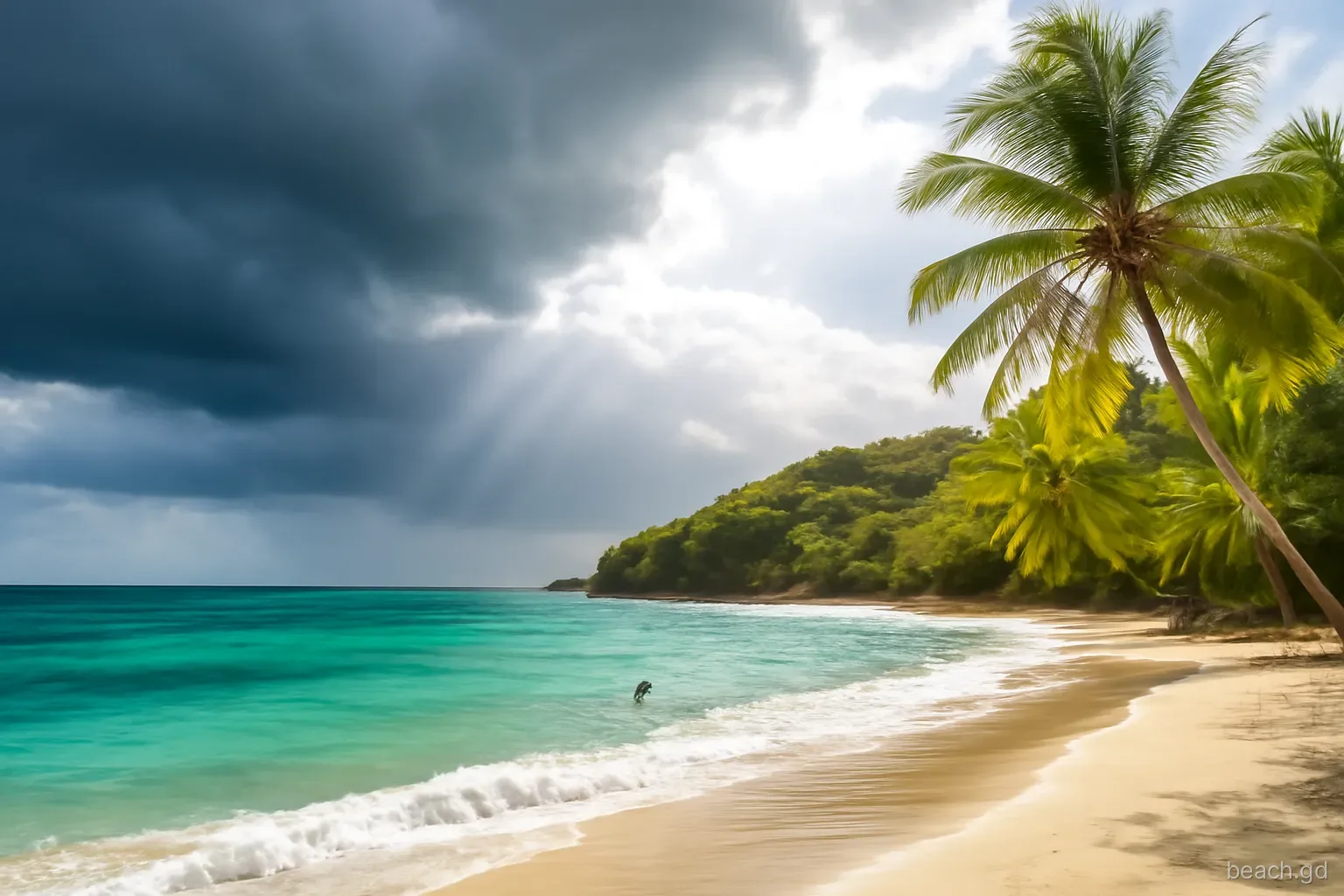
The beach at the head of Prickly Bay is small and relaxed, with sand that gives way quickly to very shallow water over a seagrass bottom. You can wade a long way out, which children enjoy, but the grass means the water looks darker than on the white-sand beaches and is not as inviting for those who like a clean sandy floor.
To protect swimmers, a swimming area off the beach is marked with small buoys, and boats are not supposed to anchor within roughly 600 feet of the shore. That leaves a decent area of calm, shallow water for paddling and floating close to the beach, well inside the anchored fleet.
The bay is open to the south. When swell comes from that direction, more common in the summer and autumn when tropical waves pass, a gentle roll works its way into the bay. Yachts at anchor feel it more than swimmers do, but on those days the water near the beach can be slightly stirred up.
How the anchorage affects swimming
Dinghy traffic. Dozens of dinghies run between yachts and the shore throughout the day, landing at docks and sometimes on the beach. Swim inside the buoyed area and never across the routes they use.
Visibility to drivers. Dinghy drivers look ahead for other boats and moorings, not for heads in the water. A bright swim cap or tow float makes you far easier to spot.
Water quality. With many boats at anchor, water quality in the bay can be affected by discharge and by runoff after rain. Swim close to the beach, inside the buoys, and avoid the water for a day after heavy rain.
Boatyard activity. Boats are hauled out and worked on in the bay. Keep away from haul-out areas, slipways and fuel docks, where boats manoeuvre in tight spaces and the water can carry traces of fuel and antifouling paint.
Evenings. Traffic increases around sunset as crews head ashore. Finish swimming before dusk.
Facilities around the bay
Prickly Bay is served more by its marina and sailing community than by beach facilities. Names and services change, so check before relying on any one place:
- The marina. Prickly Bay Marina has a dock, a small shop and food and drink for its customers. A bar and restaurant at the marina has long been a gathering point for sundowners, though its format has changed over the years.
- Boatyard. A large boatyard on the bay hauls out and stores yachts, and its surrounding businesses serve sailors rather than beachgoers.
- Customs and immigration. Prickly Bay is a port of entry for yachts, with officers serving arriving boats.
- Toilets. At bars and restaurants, for customers. There are no public facilities on the sand.
- Shops. Groceries and services are a short drive away towards the airport roundabout and True Blue.
- Shade. Some trees at the back of the beach; little near the water.
Why people really come: evenings and the sailing crowd
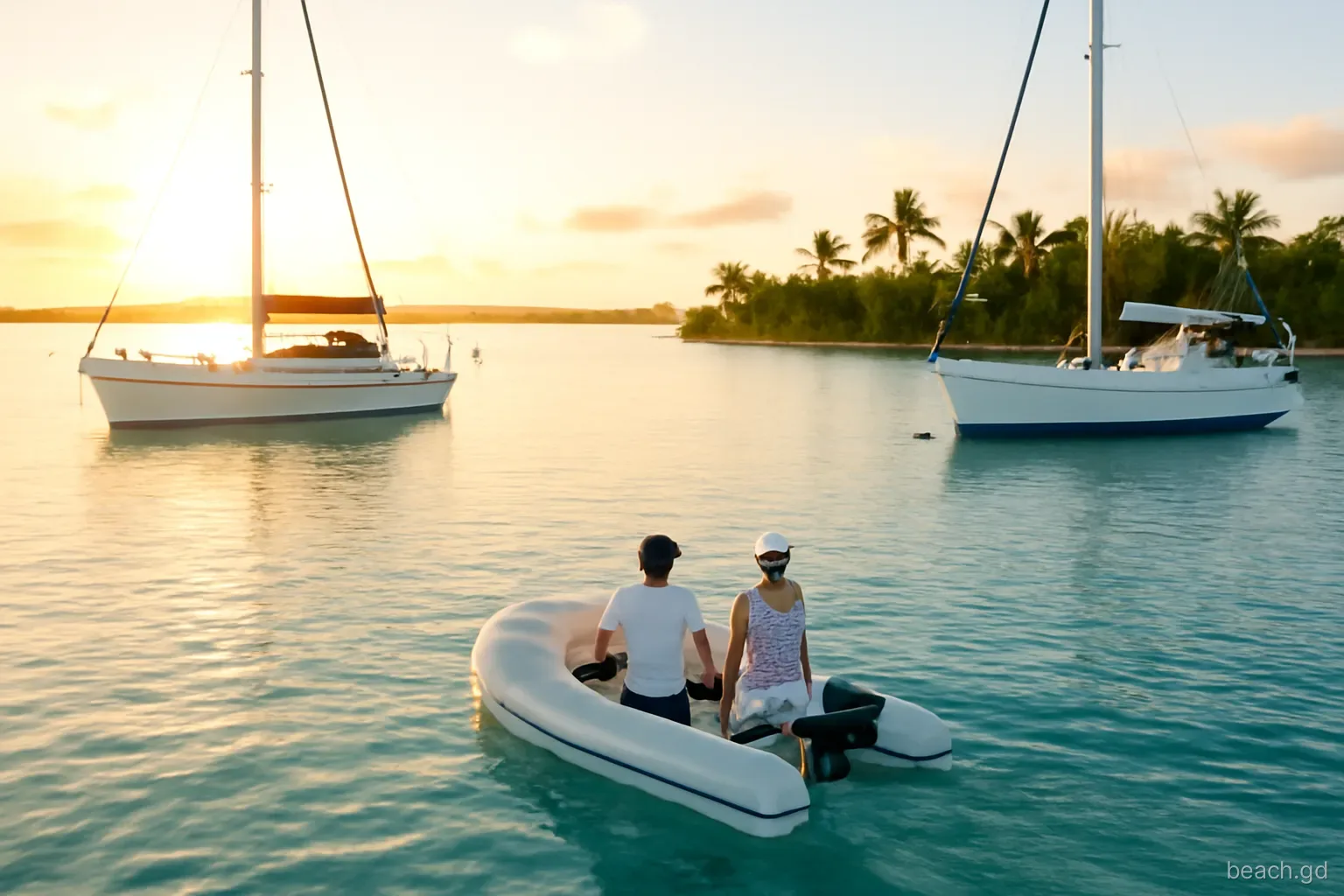
For many visitors and residents, Prickly Bay is an evening place. As the heat goes out of the day, crews come ashore, students and staff from nearby St George's University stop by, and the marina bar area fills with people swapping stories about passages, boat parts and the week ahead. The view across the bay at sunset, with masts silhouetted against a pink sky, is reason enough to come.
Many cruisers spend months in Grenada during the hurricane season because the island lies towards the southern edge of the main hurricane belt, and Prickly Bay is one of the hubs of that seasonal community. Events such as live music, quiz nights and informal swaps have long been part of the scene, though what runs and when changes with the seasons.
If you are not sailing, an evening here gives a window into a side of Grenadian life that many land-based visitors never see.
Getting there
By car or taxi. Prickly Bay is a few minutes from the airport roundabout and from True Blue, along the roads that lead towards Lance aux Epines. Ask a taxi for Prickly Bay Marina, the most widely known landmark, and agree the return fare.
Parking. There is some parking around the marina, mainly for its customers. On busy evenings it fills, and roadside parking on the narrow approach roads is limited.
On foot. From True Blue and parts of Lance aux Epines, it is walkable in daylight, though roads have little pavement and traffic can be fast. Wear light colours and carry a torch if you walk back after dark.
By bus. Route buses serving the south pass along the main roads nearby; you will need to walk the last section down to the bay.
By boat. If you are sailing, anchor outside the swimming area and land your dinghy at the marina dock rather than on the beach among swimmers.
Who Prickly Bay suits
Good for. Sundowner drinks, families with small children who like paddling in very shallow water, people staying in True Blue or Lance aux Epines who want a quick dip, and anyone curious about the sailing community.
Less good for. Swimmers who want crystal-clear water over white sand, or a long beach. Morne Rouge and Magazine are better for that.
For snorkelling. Not recommended, given boat traffic and seagrass; take a boat trip instead.
For sailors. A convenient base, with clearance, a marina and a boatyard in one bay, and a short dinghy ride to the beach for a swim.
For students. The beach and marina area are close to St George's University at True Blue, which makes the bay part of student life on the south coast.
Pitfalls and what to check
A few points help you avoid the common problems of swimming in an anchorage:
- Swim only inside the buoyed area and keep close to the beach.
- Do not swim after dark, when dinghies are busiest and visibility is poorest.
- Avoid the water after heavy rain until it clears, usually by the next day.
- Wear water shoes if you walk out over the grass beds; the bottom can hide shells and debris.
- Do not leave bags unattended on the beach, especially in the evening when it is busy.
- Check whether the marina bar or restaurant is operating before planning dinner around it.
- Remember that the bay rolls in a southerly swell; if conditions look stirred up, swim at a sheltered west-facing beach instead.
Frequently asked questions
Can you swim at Prickly Bay?
Yes. There is a buoyed swimming area off the beach at the head of the bay, where boats should not anchor. The water is shallow over seagrass. Swim inside the buoys, keep clear of dinghy routes and avoid the water after heavy rain.
Is Prickly Bay beach good for children?
For paddling and splashing, yes: the water stays very shallow for a long way out. The grassy bottom and boat traffic make it less appealing for proper swimming, and children should be kept inside the buoyed area close to shore.
Why is Prickly Bay full of yachts?
Prickly Bay is a port of entry for yachts, with customs and immigration, a marina and a boatyard. Many cruisers spend the hurricane season in Grenada because it lies towards the southern edge of the main hurricane belt, and the bay is a hub for them.
Is Prickly Bay rolly?
The bay is open to the south, so when swell comes from that direction a gentle roll enters the anchorage. It affects boats more than swimmers, but on those days the water near the beach can be a little stirred up.
What is there to do at Prickly Bay in the evening?
The marina area is a popular sundowner spot with sailors, residents and students, with views of masts against the sunset. Bars, live music and social events have long been part of the scene, though what runs changes, so check locally.