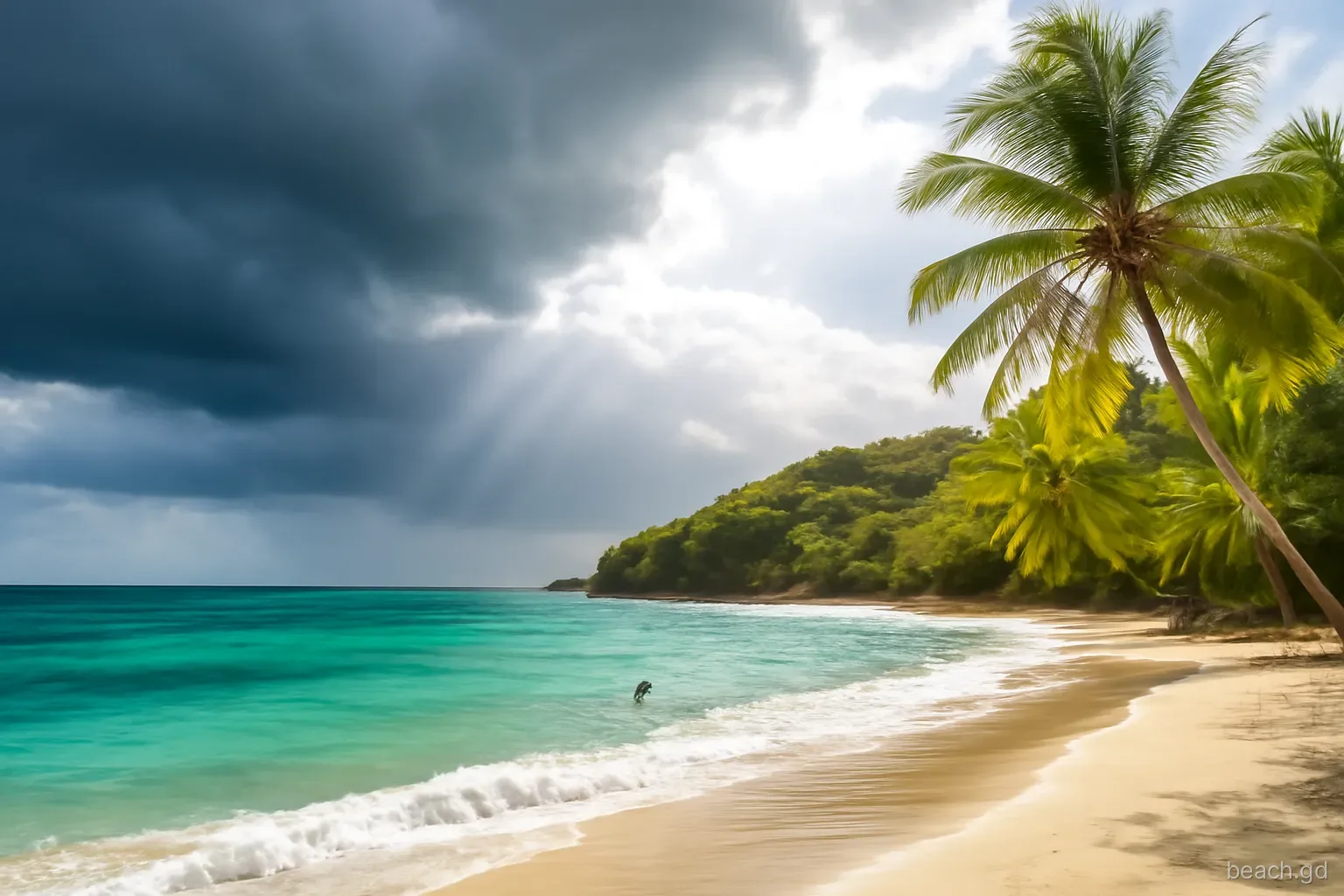
The south coast of Grenada looks calm in almost every photograph, and most days it is. But the coves between Point Salines and St David do not all face the same way, and that matters. Magazine faces west, Prickly Bay opens to the south, La Sagesse sits on the south-east corner where the Atlantic begins to make itself felt. Each responds differently to the wind and swell of each season.
Knowing the pattern lets you pick the right beach for the day instead of finding waves where you expected a millpond. This guide walks through the year and explains what changes, why, and which coves tend to be at their best in each period. Weather varies from year to year, so use it as a pattern to read alongside the day's forecast, not a guarantee.
The forces that shape the coves
Three things drive conditions on the south coast. The first is the north-east trade wind, which blows for most of the year and is strongest from about December to April. The island's mountains shelter the south-west, so west-facing beaches stay calm, while bays open to the east and south-east catch more wind and chop.
The second is swell from distant storms. In the northern winter, powerful low-pressure systems in the North Atlantic send long-period swells south. They mostly hit the north and east of the island, but some energy wraps around to the west-facing beaches. In summer and autumn, tropical waves and storms passing to the north or east can push swell from the south and south-east into bays such as Prickly Bay.
The third is the seasonal rhythm of rain and seaweed. Heavy showers in the rainy season send runoff into bays and briefly cloud the water, and floating sargassum seaweed, carried across the Atlantic in some years, lands mostly on east-facing shores.
December to April: breezy, dry and clear
What to expect. The dry season brings steady, often brisk trade winds, sunny days and generally the clearest water of the year. Rain falls in short showers rather than long downpours.
West-facing coves. Magazine, Pink Gin, Dr Groom's and Morne Rouge are sheltered from the wind and usually calm, but this is the period when winter ground swells occasionally reach them, producing a day or two of shore break.
South-facing bays. Lance aux Epines and Prickly Bay are usually calm, though the wind can ruffle the water in the afternoon.
South-east coast. La Sagesse and the St David bays feel the trade wind most. Expect chop and stronger waves on some days.
Best bets. Morne Rouge and Lance aux Epines for flat water; Magazine on swell-free days for long swims and sunsets.
May and early June: the calm shoulder
As the dry season ends, the trade winds often ease, the sea settles and the air grows hotter and more humid. For many residents this is the calmest, most pleasant time to swim on the south coast. Winter ground swells have largely finished, summer tropical activity has not yet begun, and the water is warming up.
Visibility is often excellent on still mornings, which makes this a good time to snorkel around the rocks at Magazine, the edges of Morne Rouge or off Hog Island. The south-east bays, including La Sagesse, are frequently at their gentlest.
This is also, in some years, when sargassum starts to arrive from the Atlantic. Beaches facing east and south-east are the most likely to be affected; the west-facing coves usually stay clear. If you plan a trip to La Sagesse or Petit Bacaye, ask locally or check recent reports first.
Late June to November: rain, warm water and tropical systems
Rain. The rainy season brings more frequent showers, some heavy, usually followed by sunshine. Water near drains and river mouths can turn brown for a few hours after a downpour.
Warmest sea. Sea temperatures peak around September and October, when the water feels almost bath-like.
Hurricane season. The Atlantic hurricane season runs from June to November, peaking from August to October. Grenada lies towards the southern edge of the main hurricane belt, but it has been hit, most recently Carriacou and Petite Martinique by Hurricane Beryl in July 2024.
Southerly swell. Tropical systems passing nearby can send swell from the south and south-east, rolling into Prickly Bay and stirring up south-facing coves while the west-facing beaches stay calmer.
Sargassum. In heavy years, seaweed continues to arrive through the summer on east-facing shores.
Best bets. West-facing Magazine, Dr Groom's and Morne Rouge are the most dependable for swimming on most days in this period.
Water temperature and clarity across the year
The sea off the south coast never gets cold. Surface temperatures stay in the high twenties Celsius throughout the year, dipping slightly around February and March and peaking around September and October. Most people swim comfortably without a wetsuit in any month, though a thin rash vest helps on long snorkels and protects against the sun.
Clarity follows the rain and wind more than the temperature. The dry months, especially the calmer spells of April and May, usually give the best visibility, with sand and rocks clearly visible from the surface. In the rainy season, runoff from hillsides and drains can cloud bays for a day after heavy showers, particularly at the heads of the inlets around Woburn and Clarke's Court, where rivers and gullies drain into the sea.
Strong wind days in the dry season can also stir up sediment on more exposed beaches, so the clearest water on a breezy day is usually found in the most sheltered coves.
Reading the sea on the day
Seasonal patterns help you choose, but the sea in front of you is what counts. Before swimming at any south coast cove:
- Watch the water for five minutes. Waves come in sets, and a calm spell can hide bigger ones.
- Look for a shore break. Waves dumping directly on the sand knock people over in shallow water.
- Notice where locals swim, and where they do not. Residents who swim at a beach every day know its moods better than any forecast.
- Check for murky brown water after rain and swim away from drains and gullies.
- Look along the tideline for piles of seaweed, which indicate sargassum, and for any jellyfish washed up. Decaying sargassum smells of rotten eggs and is best avoided.
- Check official forecasts from Grenada's national weather service during the hurricane season, and follow any advisories from the National Disaster Management Agency.
Which cove for which season
Winter swell days. Morne Rouge and Lance aux Epines usually stay calmest; skip open Magazine if a shore break is running, and keep children out of the surf zone anywhere.
Breezy dry-season afternoons. The west-facing coves, sheltered from the trade wind, are more comfortable than La Sagesse.
Still May mornings. Almost anywhere, and a good moment for La Sagesse and Hog Island, where calm water and clear visibility make the snorkelling at its most rewarding.
Summer southerly swell. Choose west-facing Magazine, Dr Groom's or Morne Rouge over Prickly Bay.
Sargassum years. Stick to the west-facing coves and check recent reports before heading to the south-east.
After heavy rain. Give bays near river mouths and drains a day to clear, and favour beaches without large gullies.
Mistakes people make with the seasons
Visitors often assume the Caribbean is the same every day of the year. A few common errors:
- Assuming calm water in winter. Ground swells can arrive without local wind, under blue skies.
- Writing off the rainy season. Most days still have long sunny spells, and the sea is at its warmest.
- Ignoring hurricane-season advisories. Conditions can change quickly when a system approaches.
- Expecting sargassum everywhere. It is mostly an east-coast issue; the west-facing coves are usually clear.
- Judging a beach on one visit. The same cove can be glassy one week and choppy the next.
- Forgetting the sun in the breezy months. The trade wind keeps you cool in the dry season while the sun burns just as hard as in summer.
Frequently asked questions
What is the best month for calm water on Grenada's south coast?
May and early June are often the calmest, with lighter trade winds, no winter ground swell and few tropical systems yet. The west-facing coves such as Morne Rouge and Magazine are calm on most days throughout the year.
Does sargassum affect south coast beaches in Grenada?
Mainly on east and south-east-facing shores, such as parts of St David. The west-facing coves around Point Salines and Morne Rouge are usually clear. Arrivals vary greatly from year to year, so check recent local reports.
What is a ground swell?
A ground swell is a long-period wave generated by a distant storm, often in the North Atlantic in winter. It can arrive on a calm, sunny day and produce a heavy shore break on beaches that are normally flat. It usually lasts a day or two.
Can you swim in Grenada during hurricane season?
Yes, on most days. The season runs from June to November and most days are fine, with warm water. When a tropical system is approaching or nearby, follow official advisories and stay out of the sea until conditions settle.
Why is Prickly Bay rolly in summer?
Prickly Bay opens to the south. Tropical waves and storms passing in summer and autumn can send swell from the south and south-east into the bay, which anchored boats feel as a roll and which can stir up the water near the beach.