
Hog Island sits just off Grenada's south coast, between Mount Hartman Bay and Woburn Bay, close enough to the mainland to reach by footbridge yet different enough to feel like an escape. It is a low, scrubby, largely undeveloped island with a sheltered beach on its western side, a bamboo beach bar, a few picnic tables and very little else.
For years it has been a favourite outing for residents and the sailing community, especially on Sunday afternoons, when a barbecue and music turn the quiet beach into a small, friendly gathering. During the week it can be almost empty. This guide covers how to get there, what you will find and how to make the visit safe and comfortable, since the island has no services to fall back on.
Two ways to get there
By water taxi. The most comfortable option. Boats can be arranged from the Woburn and Mount Hartman areas, for example through restaurants, marinas or hotels around the bays, and the crossing is short, part of it through more open water. Agree the fare per person or per boat, and fix a return time before you go.
By footbridge. A footbridge links Hog Island to the mainland near Mount Hartman. Vehicles are not allowed across it. Reaching the bridge involves a walk along rough tracks, which can be steep and stony in places, so wear proper shoes and carry water. Ask locally about the current route before setting out, because tracks and access can change with development work in the area.
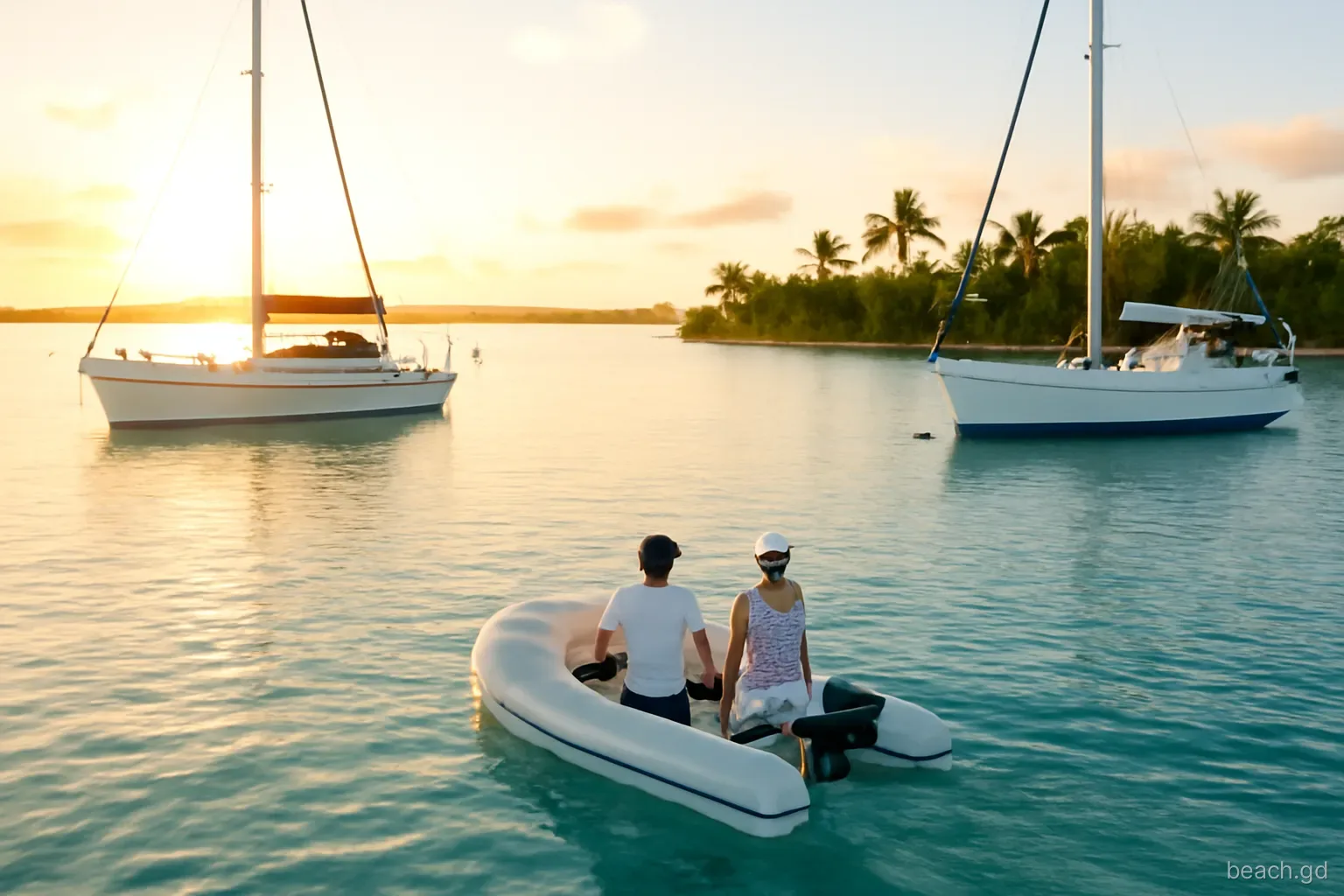
By your own boat or dinghy. Hog Island is a popular anchorage, and many sailors simply dinghy ashore. Land well away from swimmers.
Which to choose. With children, bags and a cool box, the water taxi is far easier. The walking route suits fit adults with light loads, and is best done in a group rather than alone.
The beach and the water
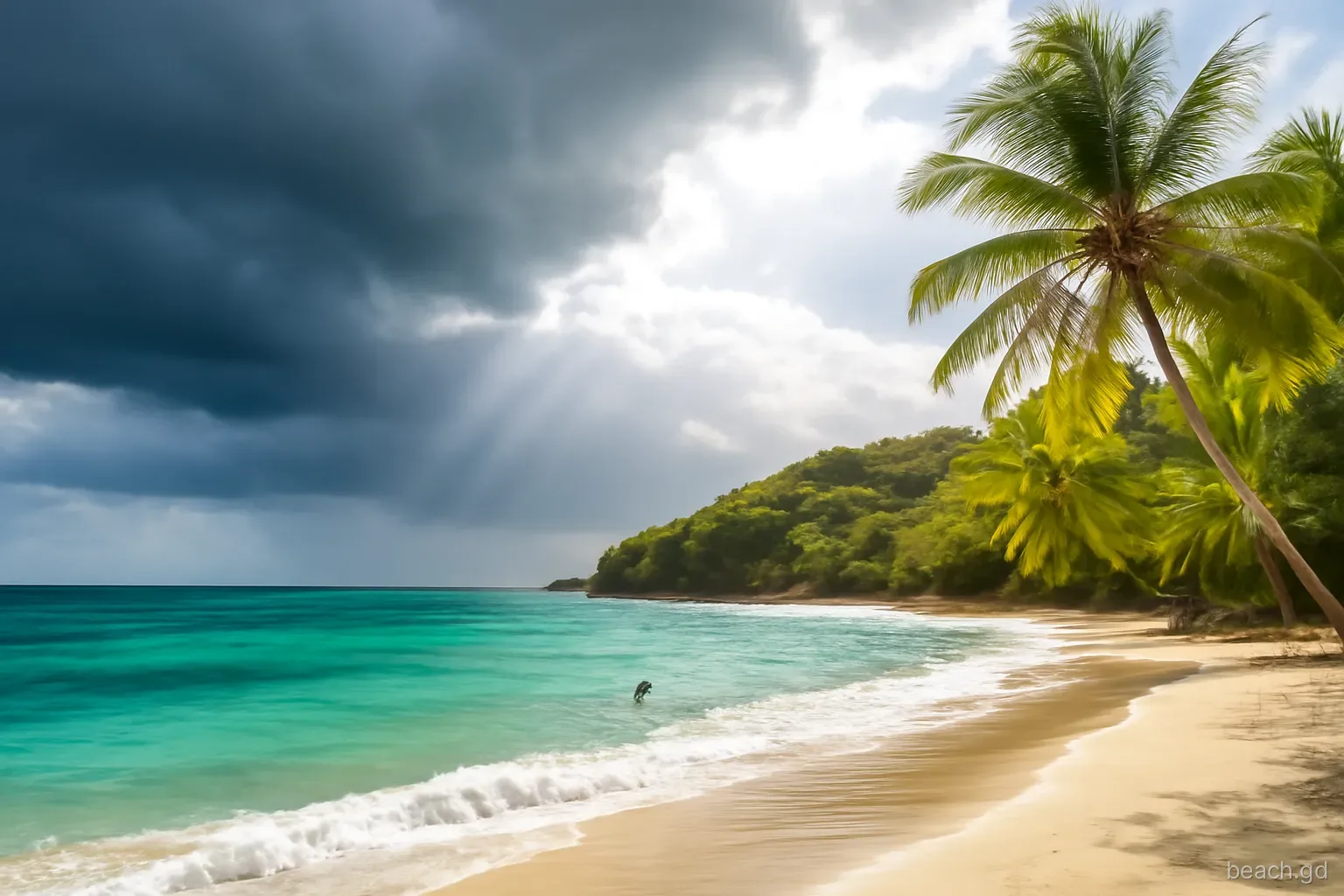
The beach faces the sheltered water inside the bays rather than the open sea, so it is usually calm. The sand is pale and narrow, backed by scrubby trees that give welcome shade, and the water is clear and green-blue over sand and seagrass close to shore.
The snorkelling is the island's other draw. A short swim from the beach the bottom drops away, and the edge attracts reef fish, and sometimes larger visitors. It is easy snorkelling for confident swimmers on a calm day, but stay aware of boats moving in and out of the anchorage and keep within sight of the beach.
The waters around Hog Island lie in or beside the Woburn and Clarke's Court Bay marine protected area, part of Grenada's network of protected sites, so treat them as protected. Do not touch coral, take shells or live animals, or stand on the reef, and use reef-safe sunscreen.
Roger's Barefoot Beach Bar and the Sunday scene
The island's only business has long been Roger's Barefoot Beach Bar, a simple bamboo shack on the sand. Its owner has been bringing drinks and ice over to the island for decades, and the bar is the reason many people visit on a Sunday, when a barbecue, cold drinks and live or recorded music draw sailors, residents and some visitors.
Sunday afternoon is by far the busiest time. Dinghies line the beach, families gather at the picnic tables and the mood is relaxed and sociable. Accounts of weekday opening vary, and some describe the bar as open mainly on Sundays and at busy times, so do not assume you will find food or drinks on a weekday visit.
Bring cash in EC dollars, keep expectations simple and treat it as a beach bar on an island with no mains services: what is available depends on what has been carried over that day.
What to pack for Hog Island
There are no shops, toilets, chair rentals or lifeguards on the island. A practical packing list:
- Plenty of drinking water, more than you think you need, especially if you walk in.
- Food, unless you are going on a Sunday and are happy to rely on the barbecue.
- Shade: a beach umbrella or sun shelter, as tree shade fills up on busy days.
- Reef-safe sunscreen, a hat and a light long-sleeved top.
- Mask, snorkel and fins, plus water shoes for rocky or grassy patches.
- Insect repellent for late afternoon, when sandflies come out among the trees.
- Rubbish bags. Everything you bring should leave with you.
- A charged phone in a waterproof pouch, with the water taxi operator's details saved.
- Cash in small notes for the bar and the water taxi.
Safety on a remote island
No medical help on hand. There is no lifeguard or first-aid post, and reaching medical care on the mainland takes time. Swim within your ability, and bring a basic first-aid kit with something for cuts and urchin spines.
Go in company. There have been reports over the years of isolated incidents involving lone visitors, particularly on the walking route. Walk with others and avoid the tracks around dusk.
Watch the boats. Hog Island is an anchorage. Dinghies come and go near the beach, so swim within sight of the shore and wear a bright cap if you snorkel any distance.
Sea urchins and stinging creatures. Urchins live on rocky patches. Avoid touching anything on the bottom.
Plan the return. Confirm the water taxi pick-up time and keep an eye on the weather; afternoon squalls can make the crossing choppy. In an emergency call 911.
When to go
Hog Island is a year-round outing, but the experience changes with the day and the season. Sunday afternoons are lively from around midday until sunset, with the barbecue and music at their peak in the mid-afternoon. Weekday mornings offer the opposite: an almost deserted beach, calm water and the best light for snorkelling, but no guarantee of a working bar.
The dry season, roughly January to May, brings steady trade winds, clear skies and generally good water clarity, though the breeze can make the short open-water section of a water taxi crossing a little bumpy. From June the rainy season brings more frequent showers, usually short, and the hurricane season runs from June to November. During this period the bays around Hog Island fill with yachts sheltering in the south, and the Sunday gathering can be at its busiest.
Whatever the month, check the forecast on the morning of your trip. Thunderstorms and squalls can build in the afternoon, and an exposed beach with no shelter is not where you want to be when lightning arrives.
Mistakes people make
Hog Island is simple to enjoy if you prepare. The most common mistakes are avoidable:
- Going on a weekday expecting the Sunday atmosphere and a working bar.
- Walking in at midday without enough water or proper footwear.
- Paying a water taxi one way without agreeing the return time and fare.
- Snorkelling alone, far out, without telling anyone.
- Leaving rubbish behind because there are no bins; it is all carried out by hand.
- Arriving late in the afternoon and walking back along the tracks in fading light.
- Bringing glass bottles, which break on the sand and are hard to carry out safely.
- Assuming nothing changes. Development plans for the island and the surrounding coast have been discussed for years, and access or facilities may differ from older descriptions.
Frequently asked questions
How do you get to Hog Island in Grenada?
Either by water taxi, arranged from the Woburn or Mount Hartman area, or on foot via a footbridge near Mount Hartman reached by rough tracks. Vehicles cannot cross the bridge. With children or heavy bags, the water taxi is far easier.
Is there anything to eat on Hog Island?
Roger's Barefoot Beach Bar serves drinks and, especially on Sundays, a barbecue. Opening on other days varies, and there are no shops. Bring your own food and plenty of water unless you are going on a Sunday and are happy to rely on the bar.
Is Hog Island good for snorkelling?
Yes, it is one of the easier snorkelling spots on the south coast. The bottom drops off a short swim from the beach, attracting reef fish. Stay aware of boat traffic, keep the beach in sight and do not touch the reef, which lies in a protected area.
Are there toilets on Hog Island?
No. There are no public toilets, running water, chair rentals or lifeguards. Plan your visit accordingly, especially with young children, and take every piece of rubbish back with you.
When is the best time to visit Hog Island?
Sunday afternoons for the barbecue and social atmosphere, or weekday mornings for peace and quiet. In either case, go in calm weather, arrange your return transport in advance and avoid walking the tracks around dusk.