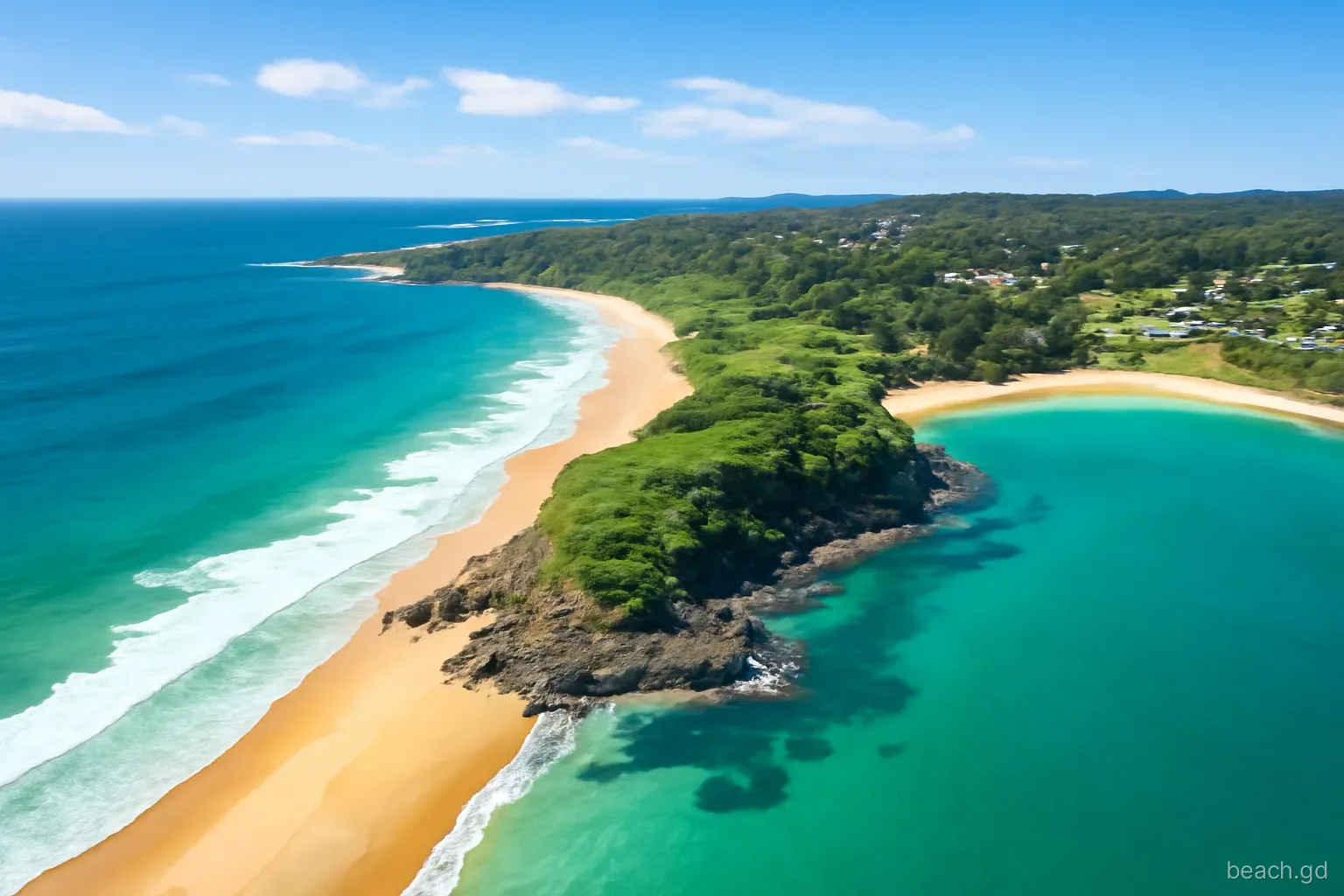
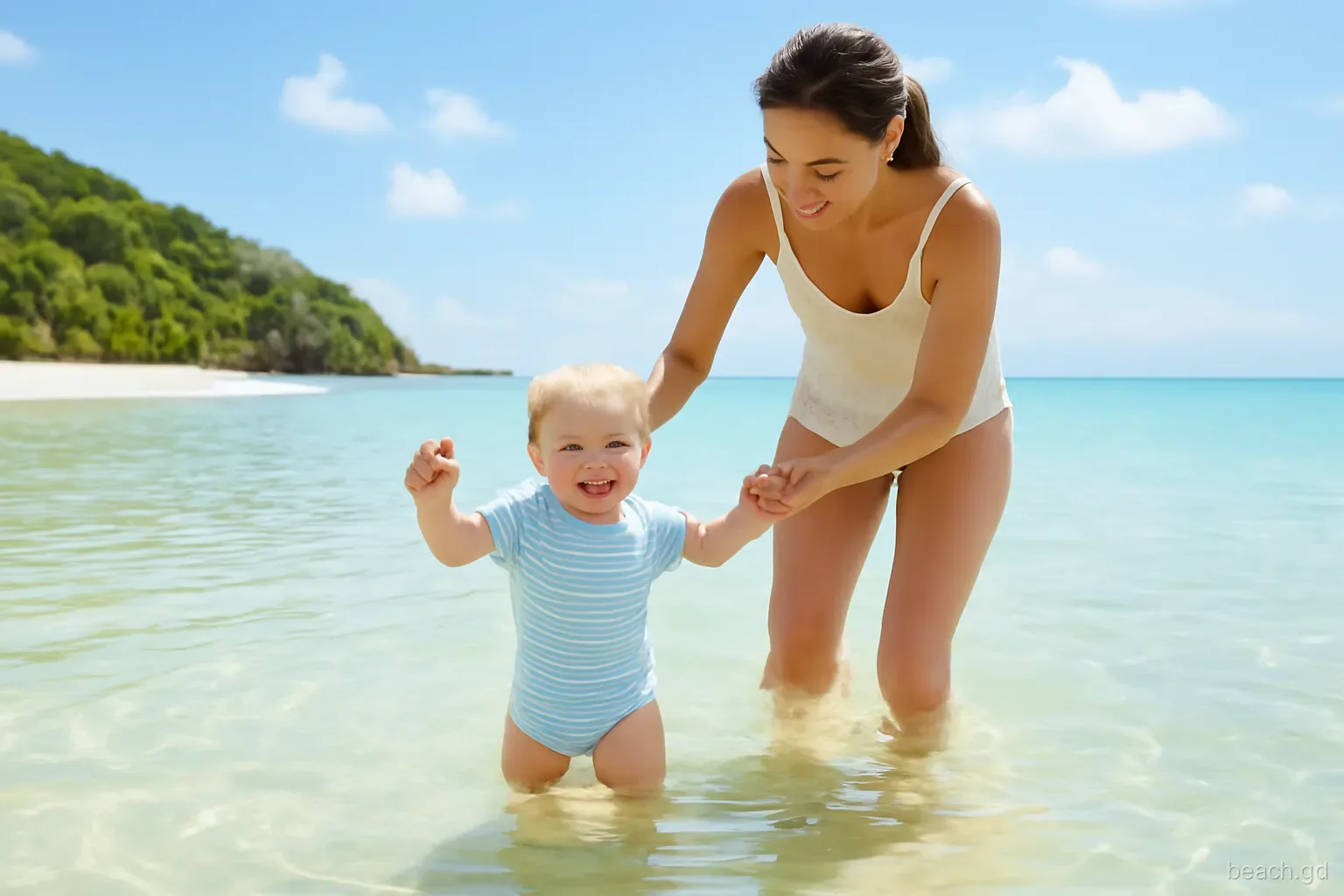
Morne Rouge Bay sits one headland south of Grand Anse, and most Grenadians call it BBC Beach. It is a tight crescent of white sand roughly half a mile long, held between two green headlands, and the shelter they give is the whole point of the place: on a normal day the water is so flat and shallow that toddlers can sit in it and adults can float without being nudged by a single wave.
It is also smaller, quieter and more residential than its famous neighbour, with a couple of beach bars rather than a hotel strip. This review covers what the sand and water are actually like, how to get there, where to eat, and the few things that catch visitors out.
Sand, water and the shape of the bay
The sand is fine and pale, and the beach shelves very gently, so you can wade a long way before the water reaches your chest. The bottom is mostly sand near shore, with rocks and some seagrass towards the headlands. Because both ends of the bay curve outwards, swell from almost any direction loses most of its energy before it reaches the beach. When Grand Anse has a small chop, Morne Rouge is frequently still glassy.
The water is clear and usually a shade of pale turquoise over the sand, darker over the grass beds. Seashells wash up intact more often than on busier beaches, which children love; take photographs rather than bags of shells home.
On rare days during the winter ground-swell season, roughly November to March, waves do wrap into the bay. If you see sets breaking on the sand, conditions are unusual and it is better to stay in the shallows.
Getting there and parking
By car or taxi. From the Grand Anse area, follow the Morne Rouge road south past Mount Cinnamon and the Kawana Bay development, then turn onto Quarantine Point Road, which runs down to the bay. A taxi from the Grand Anse hotels takes only a few minutes; agree the fare first.
The public access. A set of steps leads down to the sand beside the beach bars at the road end. Use it rather than cutting through resort grounds.
On foot. It is possible to walk from the southern end of Grand Anse in roughly 15 to 20 minutes, but the road over the hill is narrow, steep and twisting, with little or no pavement and construction traffic near Kawana Bay. Walk facing the traffic and avoid it at night.
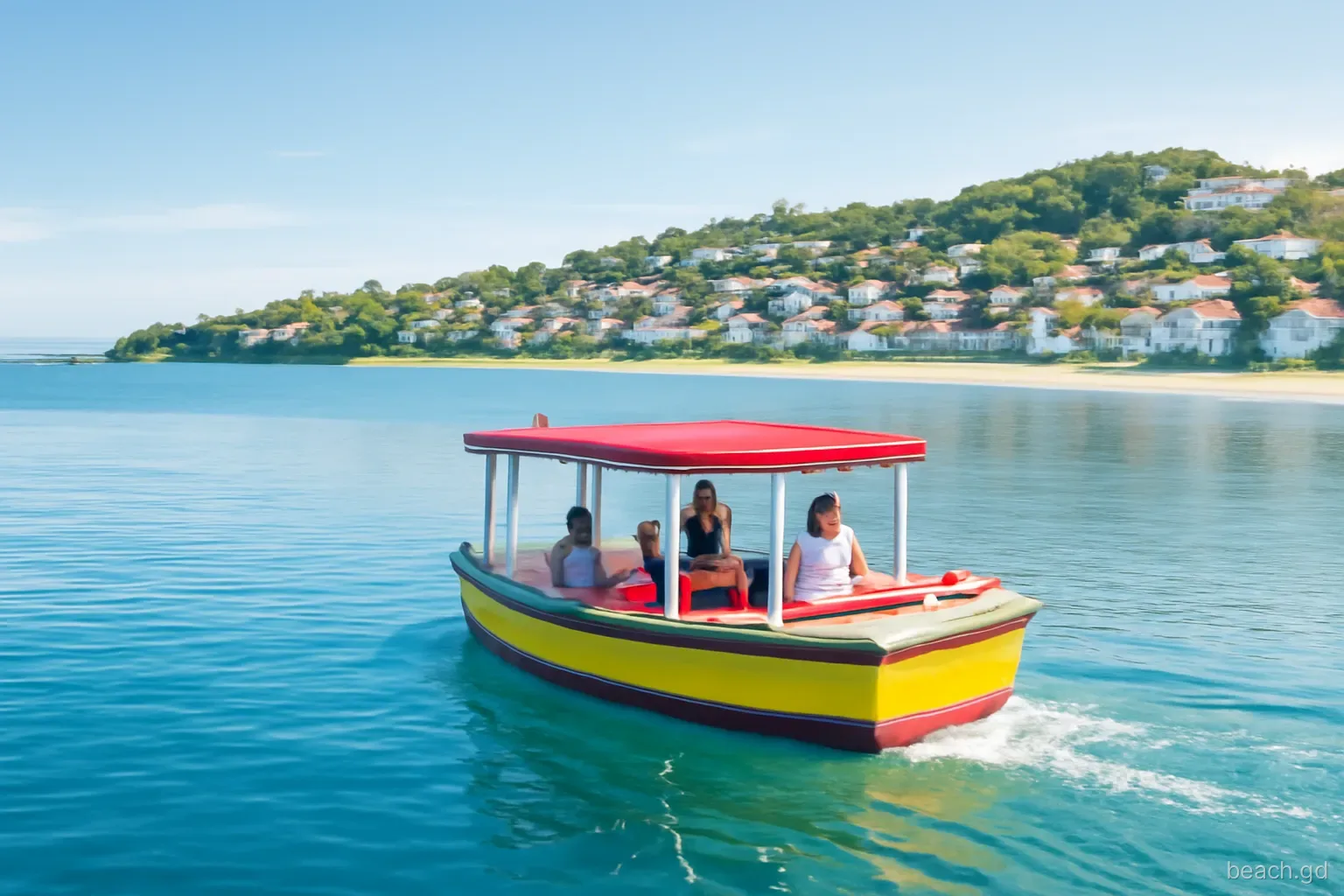
By water taxi. Water taxis from the Carenage in St George's serve Morne Rouge as well as Grand Anse. Settle the fare and the return time before you leave.
Parking. Space near the steps is limited and fills up on weekend afternoons. Park legally on the roadside without blocking driveways or the resort entrances.
Food, drink and facilities
Morne Rouge has a handful of places to eat directly on or just above the sand. Names and opening days change, so check before you plan a meal around one:
- Beach bars at the access point. Open-air bars near the steps serve drinks, snacks and simple meals such as fish tacos or grilled fish, and are the practical place to use a toilet as a customer.
- Resort restaurants. Kalinago Beach Resort sits directly on the beach and GEM Holiday Beach Resort is set just behind it; their restaurants are open to non-guests at their discretion.
- Chairs and umbrellas. A small number of loungers are usually available to rent from the bars. On busy days they go by late morning.
- Shade. Trees at the back of the beach give patchy shade, best in the morning. There is far less of it than at Grand Anse.
- No lifeguards. The calm water makes the bay feel safe, but there is no lifeguard service. Supervise children closely.
- Dogs. Residents walk dogs here; keep yours on a lead and clean up after it.
Who Morne Rouge suits, and who it does not
Families with babies and toddlers are the obvious winners. The combination of shallow, flat water and a short beach where you can see everyone at once is hard to beat anywhere on the island. Weak swimmers, older visitors and anyone recovering from an injury will also appreciate how easy it is to get in and out of the sea.
Couples looking for a quiet afternoon swim and an early dinner within earshot of the water do well here too, especially on weekdays. Residents use the bay for evening swims after work, and the atmosphere is relaxed rather than touristy.
It is less suited to anyone wanting a long beach walk, a big choice of restaurants or a full menu of water sports: Grand Anse does all three better. Snorkellers will find a little to look at around the rocky edges, but the reefs further along the coast and the protected sites north of St George's are far more rewarding.
The best time to go
For the calmest water and the most space, go on a weekday morning between about 8am and 11am. The sun is still behind the hills for the first part of that window, the trees at the back of the beach cast usable shade, and you may share the bay with only a handful of residents and resort guests. Cruise passengers who do find Morne Rouge usually arrive later in the morning and leave by mid-afternoon.
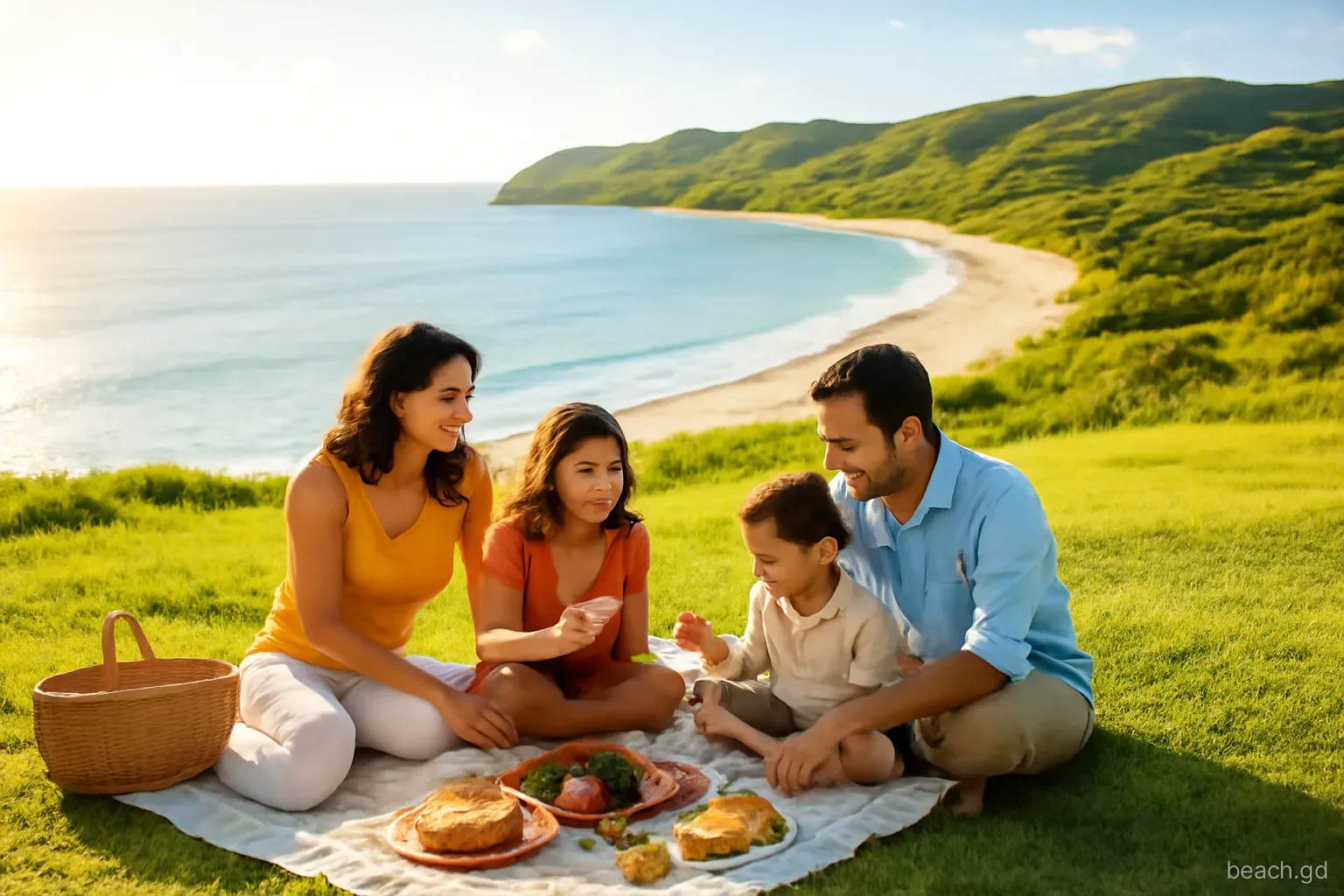
Late afternoon is the second sweet spot. The bay faces roughly west, so the sun drops towards the sea in front of you, the light turns gold on the headlands and the water, warmed all day, is at its most comfortable. Residents arrive after work for a swim, and the beach bars become sociable without being loud.
Avoid planning a quiet swim for Sunday afternoon or a public holiday unless you enjoy a crowd; those are the times Grenadian families claim the beach, often with music and big pots of food.
Being a good neighbour in a residential bay
Morne Rouge is surrounded by homes, apartments and small resorts, and the people who live there use the beach daily. A few habits keep it pleasant for everyone:
- Keep music to a personal level. Portable speakers carry a long way across a small, enclosed bay.
- Cover up when you walk up the road to shops or a bus; swimwear is for the sand.
- Take all rubbish away, including bottle caps and cigarette ends, which end up in the shallow water children play in.
- Do not remove shells, sand or coral; taking beach material is restricted under Grenada's coastal protection rules.
- Park so residents can get in and out of their gates, and do not block the narrow road at the bottom.
- Respect the resort furniture: loungers on resort property are for guests, while rented chairs come from the bars.
Pitfalls and things to check
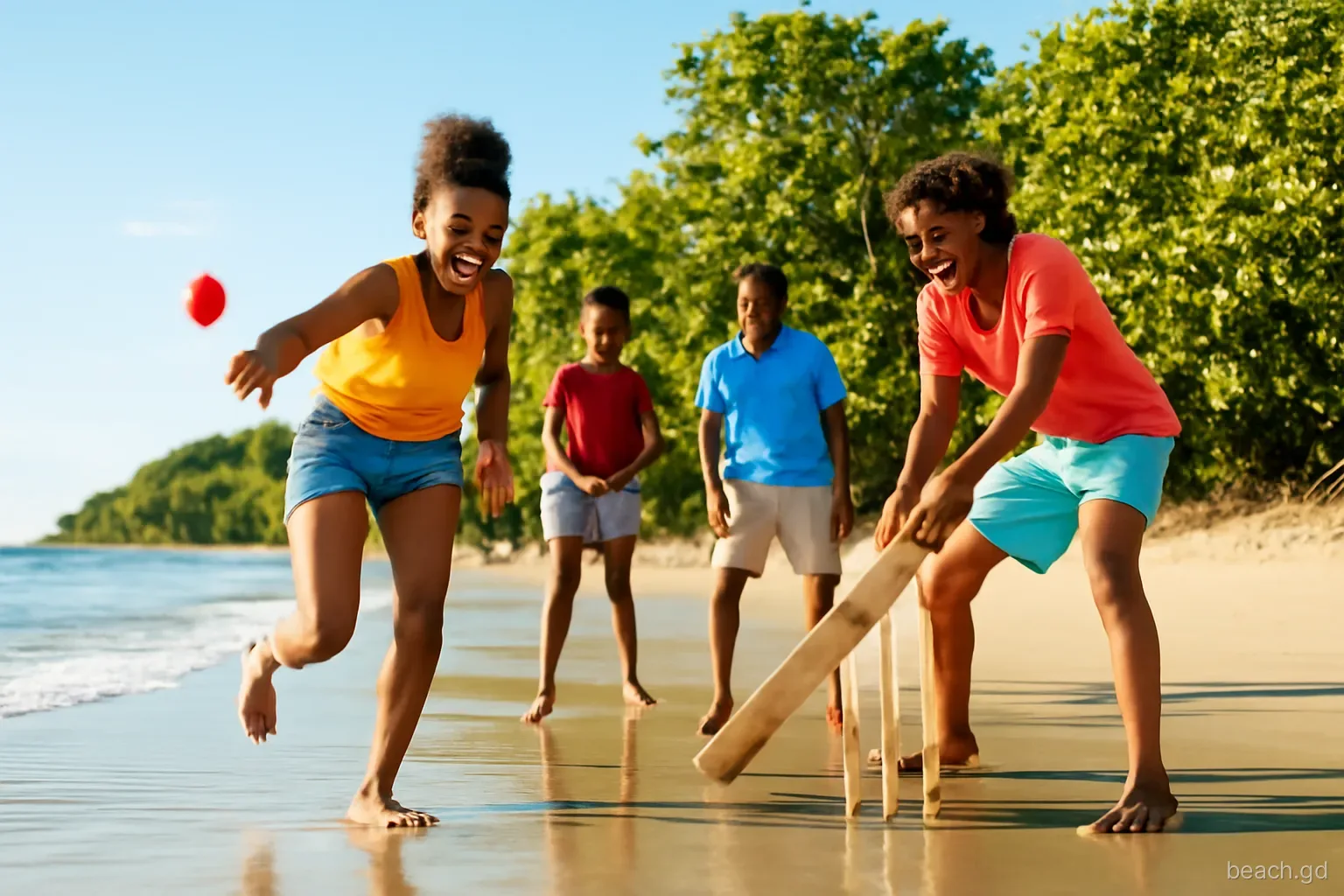
Weekend afternoons are a different beach. On Sundays and public holidays, local families and groups arrive with coolers and music. It is friendly and lively, but not the quiet bay of a weekday morning.
Boats anchor in the bay. Day-charter catamarans and private yachts sometimes anchor off the beach. Stay within the swimming area close to shore and do not swim out to the boats.
Sea urchins near the rocks. Black spiny urchins live on the rocky ends of the bay. Wear water shoes if you explore there.
The walk back up. The road from the beach is steep. With small children and beach gear, a taxi back is worth the cost.
Valuables in cars. As at any beach, do not leave bags visible in a parked car.
Frequently asked questions
Why is Morne Rouge called BBC Beach?
BBC Beach is the nickname most Grenadians use for Morne Rouge Bay. Explanations for the initials vary and none is official, but every taxi driver and bus conductor in the south of the island will know where you mean if you use either name.
Is Morne Rouge good for small children?
Yes. It is one of the calmest and shallowest beaches on Grenada, protected by headlands at both ends, so waves are usually tiny. There are no lifeguards, so adults still need to stay within arm's reach of toddlers and young swimmers.
How far is Morne Rouge from Grand Anse?
The two bays are separated only by the Quarantine Point headland. By road it is a few minutes in a car or taxi, or roughly 15 to 20 minutes on foot over a steep, narrow road with little pavement.
Is Morne Rouge less crowded than Grand Anse?
On most weekdays it is noticeably quieter, and cruise-day crowds are smaller because fewer passengers find it. Weekend and holiday afternoons bring local families, which makes it busier and more sociable for a few hours.
Can you snorkel at Morne Rouge?
There is modest snorkelling around the rocks at each end of the bay, with small reef fish and seagrass. Watch out for sea urchins on the rocks. For coral and bigger fish, a boat trip to the reefs or marine protected areas is much better.