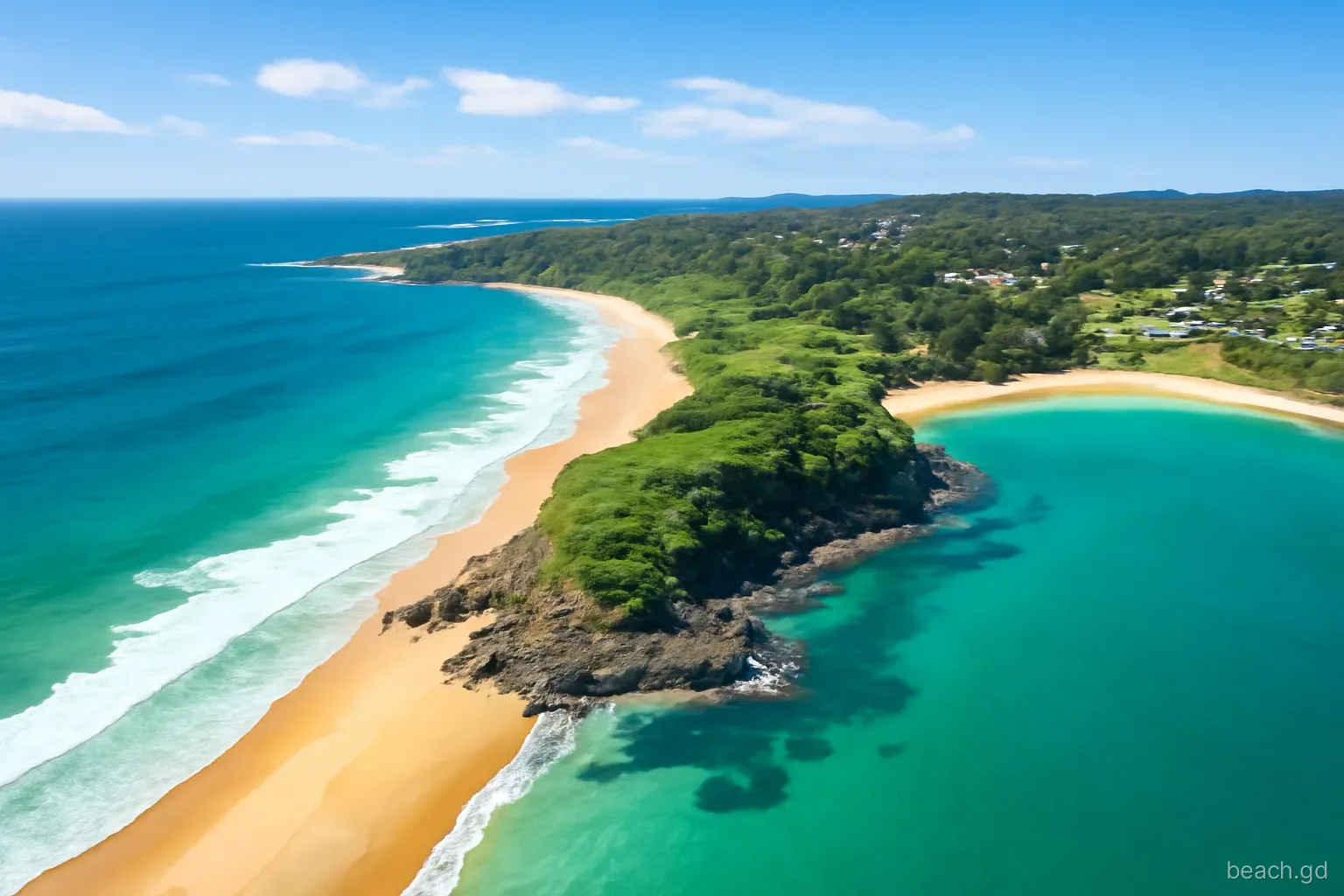
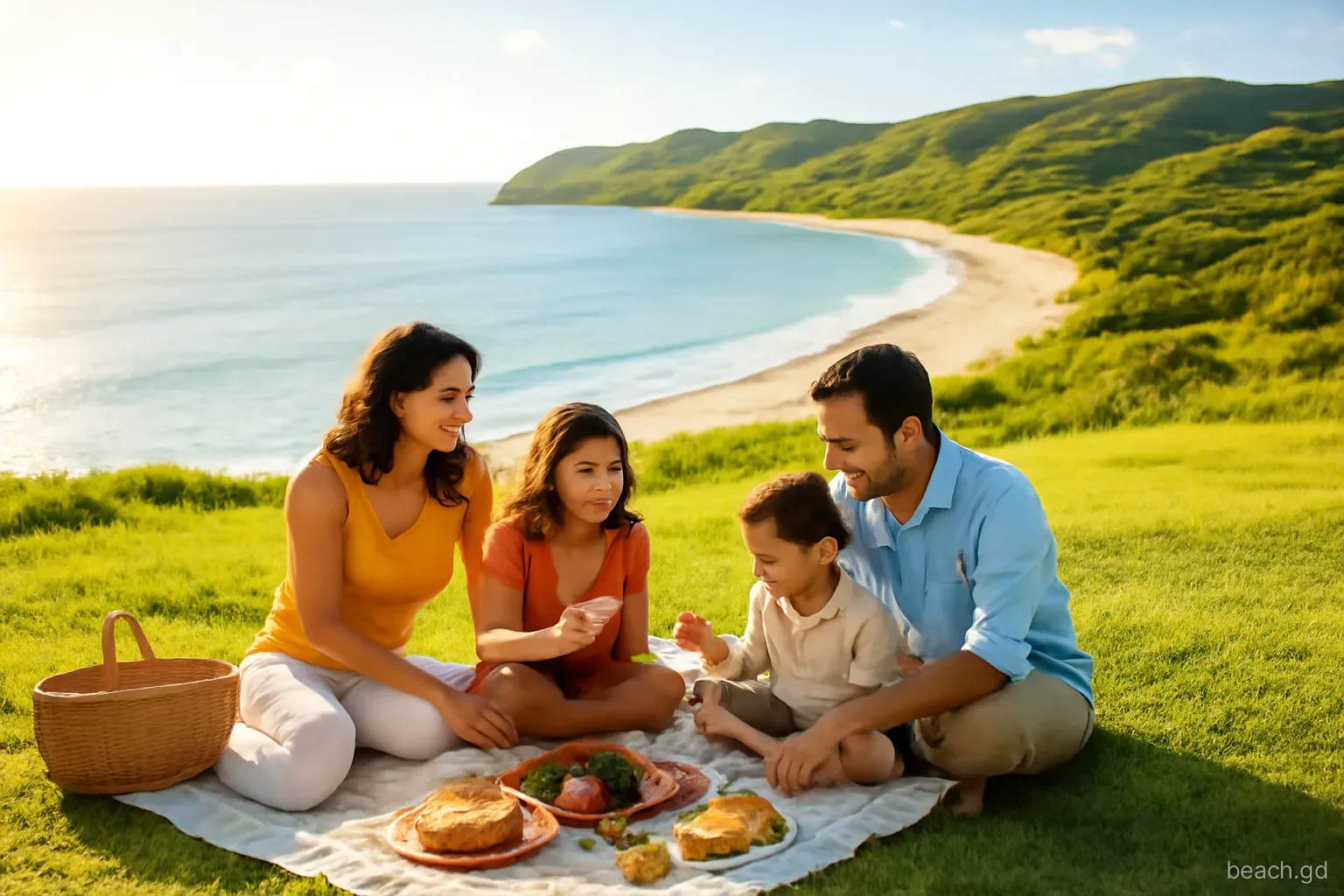
At the southern end of Grand Anse the sand gives way to a low, grassy peninsula that pushes out into the sea and separates the long beach from the horseshoe of Morne Rouge Bay. This is Quarantine Point. It has no beach bar, no loungers and no stalls, which is precisely why residents value it: a breezy open space with water on three sides and one of the best views back across Grand Anse to St George's and the mountains behind.
It also carries a slice of history that most beachgoers walk straight past. This page explains what the point is, how it got its name, what you can do there and how to visit it sensibly.
Why it is called Quarantine Point
In 1892 the colonial authorities built a quarantine station on the headland to isolate people arriving with, or suspected of carrying, communicable diseases. Smallpox, yellow fever and other infections that travelled with ships were a serious concern for island communities in the nineteenth century, and a windswept point separated from the town by water and hills was a logical place to keep the sick away from the population.
The station remained in use as an isolation centre into the middle of the twentieth century. During the years of the People's Revolutionary Government, from 1979 to 1983, the site was used as a military camp. By the late 1980s only the foundations of the original buildings were left, and today traces of old masonry among the grass are most of what remains.
In later years there were plans, involving a local service club, to turn the site into a recreation park. Its role since has been informal but well loved: a free, open space for picnics, walks and watching the sea.
Look for the remains as you walk: low lines of old stone and brick foundations among the grass hint at the layout of the former station. There are no information panels to guide you, so treat the site with care, avoid climbing on what is left of the walls and leave any fragments where you find them.
What you see from the point
Grand Anse end to end. Looking north, the full two-mile curve of Grand Anse stretches towards St George's, with the hotels set back among the trees. It is one of the few places where you can take in the whole beach at once.
St George's and the mountains. Beyond the beach, the capital climbs its hillsides around the harbour, and on clear days the central mountains rise behind it.
Morne Rouge Bay. To the south, the sheltered crescent of Morne Rouge sits directly below, its pale shallows obvious from above.
The open Caribbean. To the west there is nothing but sea, which makes the point a fine place to watch the sun go down. Yachts and day-charter catamarans often pass close by, and on clear evenings the horizon is sharp enough to look for a green flash.
Wildlife. Frigatebirds and pelicans patrol the water off the point, and small fish are visible over the rocks on calm days.
Getting there
By road. Quarantine Point Road runs off the Morne Rouge road, past the turn for the Morne Rouge beach bars. A taxi from Grand Anse takes a few minutes; ask for Quarantine Point or for BBC Beach and walk the last stretch.
On foot from Grand Anse. From the southern end of Grand Anse, people walk round the coast towards the point. Conditions underfoot depend on the sea: at times there is a strip of sand and rock to follow, at others the waves reach the rocks. Turn back if the rocks are wet and waves are washing over them.
From Morne Rouge. If you are already on the beach at Morne Rouge, the point is a short walk from the northern end of the bay.
Parking. Space is informal and limited. Park on firm ground without blocking the road or private gateways.
Timing. Late afternoon is the most popular time, for the softer light and the sunset; early morning is quietest.
Making a picnic work
Quarantine Point has no facilities of any kind, so a picnic means bringing everything. A sensible kit:
- A blanket or mat; the grass can be coarse and dry in the dry season, from roughly February to May, and damp after rain in the wet months.
- Plenty of drinking water and a cool box, because there is no shop or vendor on the point itself.
- Shade. There are a few trees, but much of the headland is open to sun and wind.
- Insect repellent for dusk, when sandflies and mosquitoes come out.
- Rubbish bags. Take everything away with you; there are no reliable bins, and litter blows straight into the sea.
- A torch if you stay for sunset, because the path back to the road is unlit and darkness falls quickly.
Snorkelling and swimming around the point
The rocky shoreline around Quarantine Point holds more marine life than the open sand of the neighbouring beaches, and on very calm days snorkellers swim around the rocks from the Morne Rouge side. If you try this, enter from the sand at Morne Rouge rather than scrambling down rocks, stay close to shore, and swim with a companion.
The point is more exposed than either beach beside it. Water moves faster around a headland, and any swell, even a small one, surges against the rocks. Black sea urchins are common on rocky bottoms around Grenada. Fins and a brightly coloured swim cap or float make you easier to see for passing boats.
If the sea is anything but flat, keep to the sheltered water of Morne Rouge and enjoy the point from the grass above.
Fitting the point into a beach day
Quarantine Point works best as part of a longer outing rather than as a destination on its own. A pattern many residents follow is a morning swim at Morne Rouge while the bay is calm and shaded, lunch at one of the beach bars at the access point, then a stroll up to the headland in the late afternoon to watch the light change over Grand Anse.
Visitors staying on Grand Anse can reverse it: spend the day on the long beach, then take a short taxi ride to the point for sunset and finish with dinner back on the strip. Photographers should note that the classic view of the whole sweep of Grand Anse with St George's behind is lit best in the late afternoon, when the sun is behind you.
For families, the open grass is a welcome change from sand. Children can run around while adults watch the boats, but keep a close eye on them near the rocky edges, which are not fenced.
What to watch out for
The point is a relaxed place, but open headlands have their own risks:
- Rocky edges. Some drops to the shore are steep and the rocks are slippery when wet. Keep children back from the edges.
- Unseen holes and old foundations in the grass. Watch your footing, especially in fading light.
- Wind and sun. The breeze hides how fast you burn; wear a hat and reapply sunscreen.
- Waves on the coastal walk from Grand Anse. Do not attempt it in a swell.
- Valuables in parked cars. As at any quiet spot, leave nothing visible.
- Development nearby. Construction around the southern end of Grand Anse can change access and parking; follow any official notices.
- Being alone after dark. The headland is quiet and unlit; visit in company and leave while there is still some light.
Frequently asked questions
Where is Quarantine Point in Grenada?
Quarantine Point is the headland at the southern end of Grand Anse Beach in St George parish, separating Grand Anse from Morne Rouge Bay, also called BBC Beach. It is a few minutes by car from the Grand Anse hotels.
Why is it called Quarantine Point?
A quarantine station was built on the headland in 1892 to isolate people with communicable diseases such as smallpox and yellow fever. It operated into the mid-twentieth century and was later used as a military camp during the revolutionary period of 1979 to 1983.
Is there a beach at Quarantine Point?
The point itself is a grassy, rocky headland rather than a beach. The nearest sand is Morne Rouge Bay directly to the south and the southern end of Grand Anse to the north, both a short walk away.
Is Quarantine Point good for watching the sunset?
Yes. It faces west over the open Caribbean Sea with views back along Grand Anse, which makes it a popular sunset spot with residents. Bring a torch, as the path to the road is unlit after dark.
Are there facilities at Quarantine Point?
No. There are no toilets, shops, vendors or reliable bins. Bring water, food and shade, and take all your rubbish away. The nearest bars and toilets for customers are at Morne Rouge.