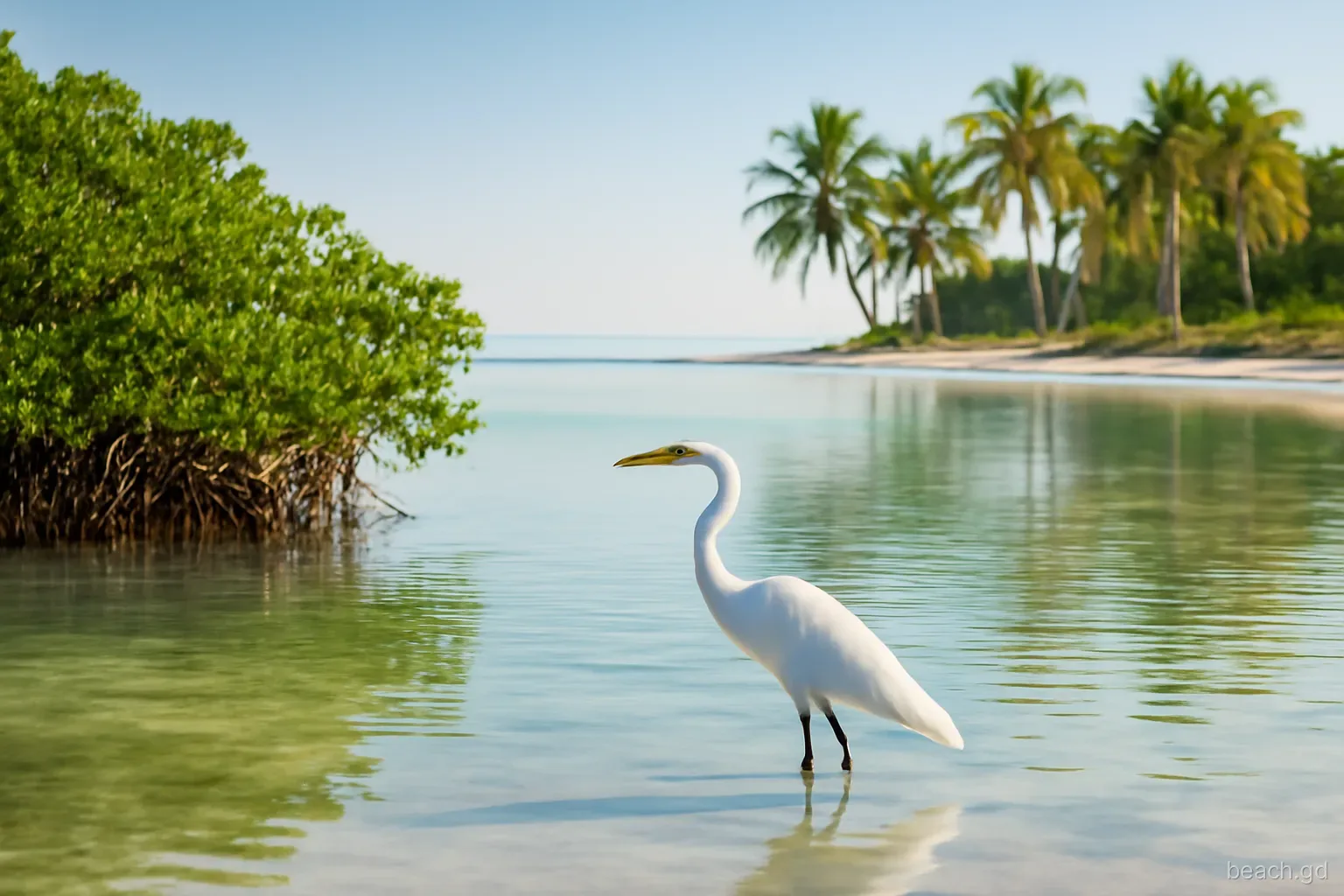
La Sagesse lies on the south-east coast in St David, about half an hour's drive from the Grand Anse hotels, and it has long been the place people go when they want a beach day that feels like the countryside rather than the resort belt. A crescent of sand roughly half a mile long, lined with palms and backed by woodland and a salt pond, it is a world away from the bustle of the south-west.
The bay has changed in recent years. The Six Senses La Sagesse resort opened on the estate in April 2024, the first property of that brand in the Caribbean, and its arrival has altered the atmosphere and some of the practicalities of a visit. This guide covers the beach, the water, the wildlife and what to check before you go.
The beach and the water
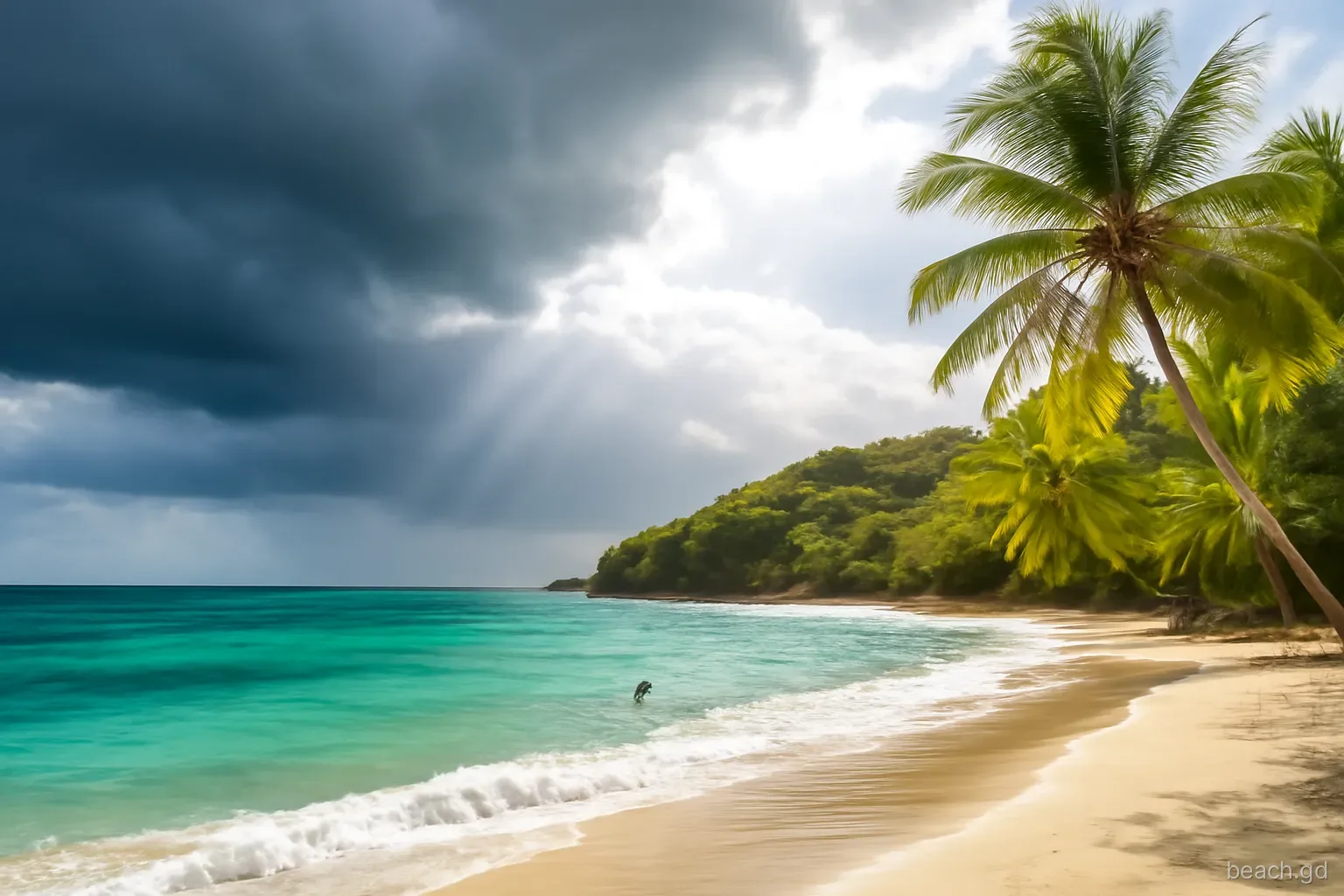
The sand at La Sagesse is darker than the pale beaches of the south-west, grey to golden depending on the light, and the beach curves around the bay between wooded headlands. Coconut palms at the back provide better natural shade than you find on most Grenadian beaches, so you can spend a day here without an umbrella if you settle early.
Being on the south-east side of the island, La Sagesse sits much closer to the influence of the Atlantic trade winds than the Caribbean beaches do. The shape of the bay and the headlands take much of the sting out of the swell, and on many days the water is pleasant for swimming, but conditions vary more than at Morne Rouge or Grand Anse. Some days bring a steady chop and stronger surges at the waterline.
Read the sea before you go in: look at where waves are breaking, watch any locals swimming, and stay well inside the bay rather than near the rocks of the headlands, where water moves faster.
The salt pond and the birds
A different habitat. Behind the beach lies a salt pond fringed with mangroves and dry woodland, one of the more accessible wetland habitats in southern Grenada.
What you may see. Herons and egrets stalk the shallows, and migrant shorebirds pass through, especially during the northern autumn and winter months. Kingfishers and smaller woodland birds use the surrounding trees.
When to look. Early morning is best, when birds are feeding and the light is soft. Midday heat sends many of them into cover.
How to watch. Walk slowly and quietly along the edge, keep to established paths and avoid trampling the mangrove fringe. Binoculars make a large difference.
Respect the habitat. Mangroves and salt ponds protect the coast and shelter young fish. Do not cut branches, leave litter or disturb nesting birds. Dogs should be kept on a lead near the pond.
What the Six Senses resort means for visitors
Six Senses La Sagesse opened in April 2024 with dozens of pool suites and villas set into the landscape around the bay. For a beach that had long been known for a small inn, a nature centre and a feeling of being far from development, it is a significant change, and it is reasonable to expect a more managed environment around the resort areas than before.
As everywhere in Grenada, the beach itself is public, and the bay can still be enjoyed by people who are not staying at the resort. What may have changed are the practical details: the route from the road to the sand, where to park, and which places to eat and drink are open to non-guests. The La Sagesse Nature Centre, with its beachside restaurant and gardens, has long been the base for day visitors; check that it is operating, and on what days, before you plan a meal around it.
If you want the resort's facilities, its restaurants or spa may accept outside guests by reservation. Policies change, so contact the resort directly rather than turning up expecting entry.
Getting there from the south-west
La Sagesse is an easy outing by car or taxi and a longer one by bus. A straightforward plan:
- From the Grand Anse or Lance aux Epines area, take the main road east through St George parish into St David. Allow around 30 to 40 minutes, more at commuting times.
- Follow local directions for La Sagesse. The beach has traditionally been about a five-minute walk from the main road.
- If you are using a taxi, agree a return time and the fare for the round trip, since taxis are not normally waiting at La Sagesse.
- If you are travelling by route bus, take a bus heading through St David from the Melville Street terminal in St George's and ask the conductor to drop you at the La Sagesse turn-off. Buses are frequent on the main road during the day but thin out in the evening.
- Arrive in the morning for the best birdwatching, the most shade and the calmest water on many days.
- Leave yourself time to return in daylight; the countryside roads in St David are narrow and unlit in places.
What to bring
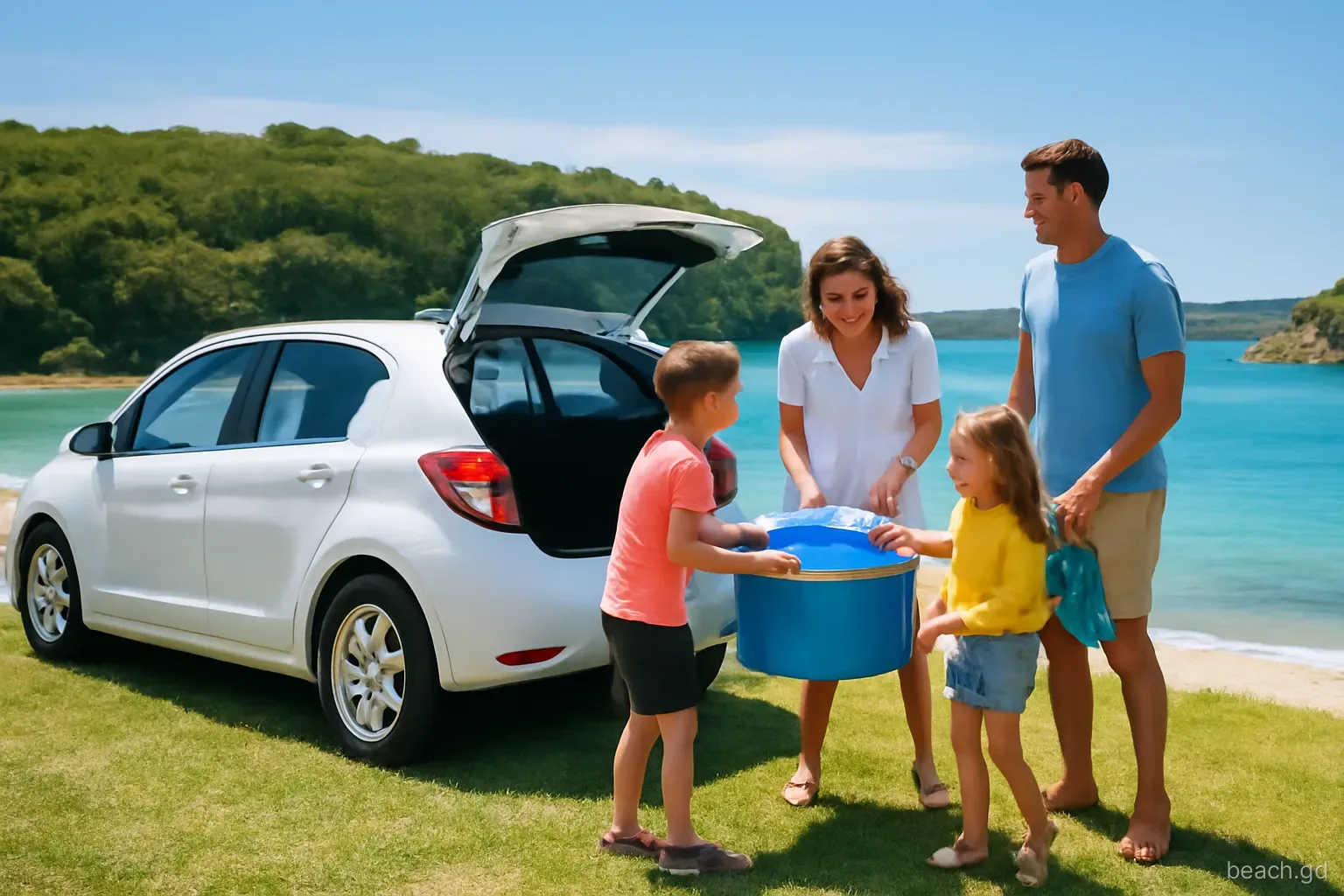
Facilities at La Sagesse are limited and may change, so pack as if you will find nothing:
- Plenty of water and food, unless you have confirmed that the beach restaurant is open.
- Insect repellent; mosquitoes and sandflies are more noticeable near the salt pond and mangroves, especially at dawn and dusk.
- Binoculars and a light long-sleeved shirt for birdwatching.
- Water shoes for rocky patches at the edges of the bay.
- Cash in EC dollars for small purchases in St David villages on the way.
- A rubbish bag, as bins may be few or full.
- A hat and reef-safe sunscreen; even with palm shade, the walk along the open sand and time in the water expose you to strong sun.
- A dry bag for phones and keys if you plan to swim while someone watches your things.
Making a day of it in St David
La Sagesse pairs well with the rest of St David, the parish that most visitors only drive through. The coastline east of St George parish is a series of deep bays and peninsulas, from Westerhall Point to the fishing beach at Petit Bacaye, where colourful boats are pulled up on grey sand and the Atlantic swell makes swimming more serious than on the Caribbean side.
Inland, the parish is green, agricultural and quiet. Spice gardens, small rum shops and village churches line the roads, and stopping in a village for a roti or a cold drink is part of the pleasure of the trip. The Laura Herb and Spice Garden in St David has long been a stop for people interested in the island's spices; check opening days before you go.
A good rhythm is to arrive at La Sagesse early, swim and walk around the salt pond in the morning, eat lunch at the beach if the restaurant is open or in a village on the way back, and return to the south-west in time for an evening swim closer to your accommodation.
Pitfalls and things to check
Changeable sea. The south-east coast is more exposed than the Caribbean side. If waves are breaking hard or the water is surging up the beach, swim another day.
No lifeguards. This is a quiet beach. Do not swim alone, and keep children within reach.
Sargassum. Seaweed arriving from the Atlantic tends to affect east-facing shores more than the Caribbean side. Some months it can pile up on south-east beaches; check recent reports.
Manchineel. Like many Caribbean beaches, La Sagesse may have manchineel trees at the back of the sand. Do not shelter beneath unfamiliar trees in rain or touch their small green fruit.
Changes on the estate. Access paths, parking and opening hours may differ from older descriptions. Ask locally or check before setting off.
Frequently asked questions
Is La Sagesse beach public?
Yes. Beaches in Grenada are open to the public, including La Sagesse, even with the Six Senses resort on the estate. Resort facilities are for guests or people with reservations, and access routes and parking may have changed, so check the current arrangements before going.
How long does it take to get to La Sagesse from Grand Anse?
Usually around 30 to 40 minutes by car or taxi, depending on traffic, heading east through St George parish into St David. By route bus it takes longer, and you will need to walk from the turn-off on the main road.
Is La Sagesse good for swimming?
On many days, yes. The bay is partly sheltered, but it sits on the south-east coast where the Atlantic influence is stronger, so the water can be choppier than at Grand Anse. Stay inside the bay, away from the headlands, and avoid swimming alone.
When did Six Senses La Sagesse open?
Six Senses La Sagesse opened in April 2024. It was the brand's first resort in the Caribbean, with pool suites and villas set around the bay in St David parish.
Can you go birdwatching at La Sagesse?
Yes. The salt pond and mangroves behind the beach attract herons, egrets and migrant shorebirds, especially from autumn to spring. Go early in the morning, walk quietly on existing paths and bring binoculars and insect repellent.