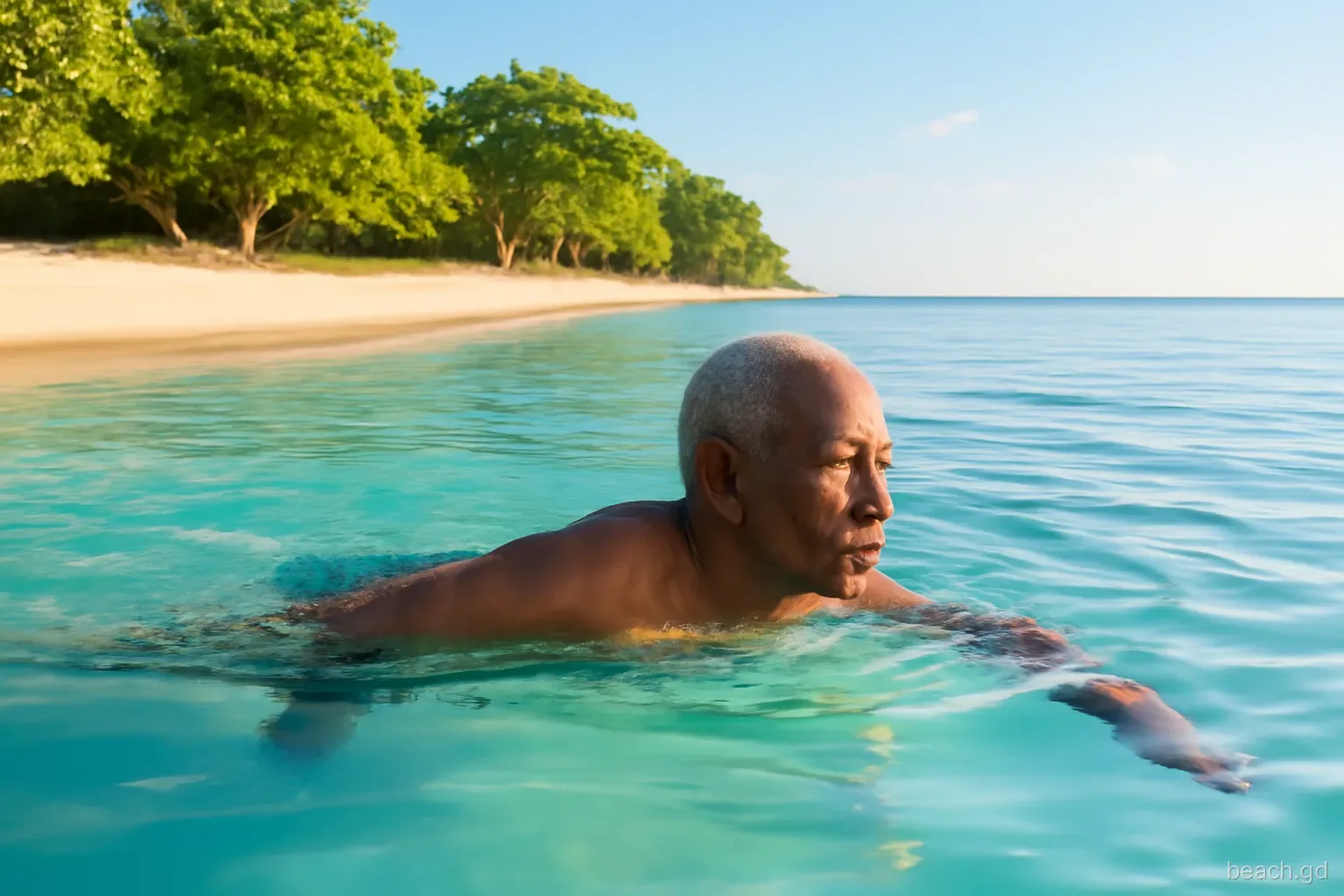
Grand Anse is the same two miles of sand at 6am and at 4pm, but it is not the same beach. The light, the water surface, the number of people, the shade under the sea grapes and even the boat traffic change through the day in a pattern regular enough to plan around. Most visitors simply turn up late morning, which happens to be the hottest, brightest and, on cruise days, busiest window of all.
This page walks through a typical day on Grand Anse from first light to dusk: when the water is at its clearest, when shade disappears, when the beach fills and empties, and where to stand for the sunset. Times are approximate. Grenada sits about 12 degrees north of the equator, so day length varies less than in Europe or North America, but sunrise and sunset still shift by roughly 45 minutes between December and June.
First light to 8am: the residents' beach
Sunrise comes between about 5:40am in June and 6:30am in January, and because Grand Anse faces west, the sun climbs from behind the hills and the beach sits in soft, indirect light for the first hour. This is when the beach belongs to people who live nearby: early walkers striding the hard sand at the waterline, a few regulars swimming slow lengths parallel to the shore, and the occasional group exercising on the sand near the northern end.
The water is usually at its calmest now. The land breeze of the night has not yet been replaced by the daytime trade wind, so the surface is often glassy and visibility over the sandy bottom is at its best. For a long swim, or for children who are nervous of even small waves, this is the window to aim for.
Practical points: few bars or vendors are open yet, so bring water. Leave nothing on the sand while swimming, because an empty beach is not automatically a safe one for unattended bags.
Mid-morning, 8am to 11am: the best all-round window
Shade is still generous. The sea grapes and almond trees along the back of the beach throw long shadows towards the water until about 10am. Arrive by 9am and you can usually choose a shaded patch without renting anything.
Vendors and rentals open up. Chair and umbrella rentals set out their loungers, water-sports operators start launching, and craft and spice vendors open their stalls near the northern end. If you want a lounger on a busy day, this is the time to agree a price.
The breeze arrives. The trade wind usually picks up through the morning. On the sheltered Caribbean side that means a light chop rather than waves, but it can cloud the water slightly near the shore.
Cruise passengers land. On days when ships are in St George's, the first taxis and water taxis start arriving from about 9am. The stretch nearest the main access points fills first.
Why it works. Comfortable temperatures, decent shade and everything open: if you only have one session on Grand Anse, make it this one.
Late morning to mid-afternoon: glare, heat and the crowd peak
From roughly 11am to 3pm the sun is high and almost directly overhead for much of the year. The pale sand reflects light upwards, so you burn under an umbrella faster than you might expect, and shade under the trees shrinks to small pools close to the trunks. Dark-skinned or not, everyone needs a hat and sunscreen in this window, and young children are better off out of the sun altogether for an hour or two.
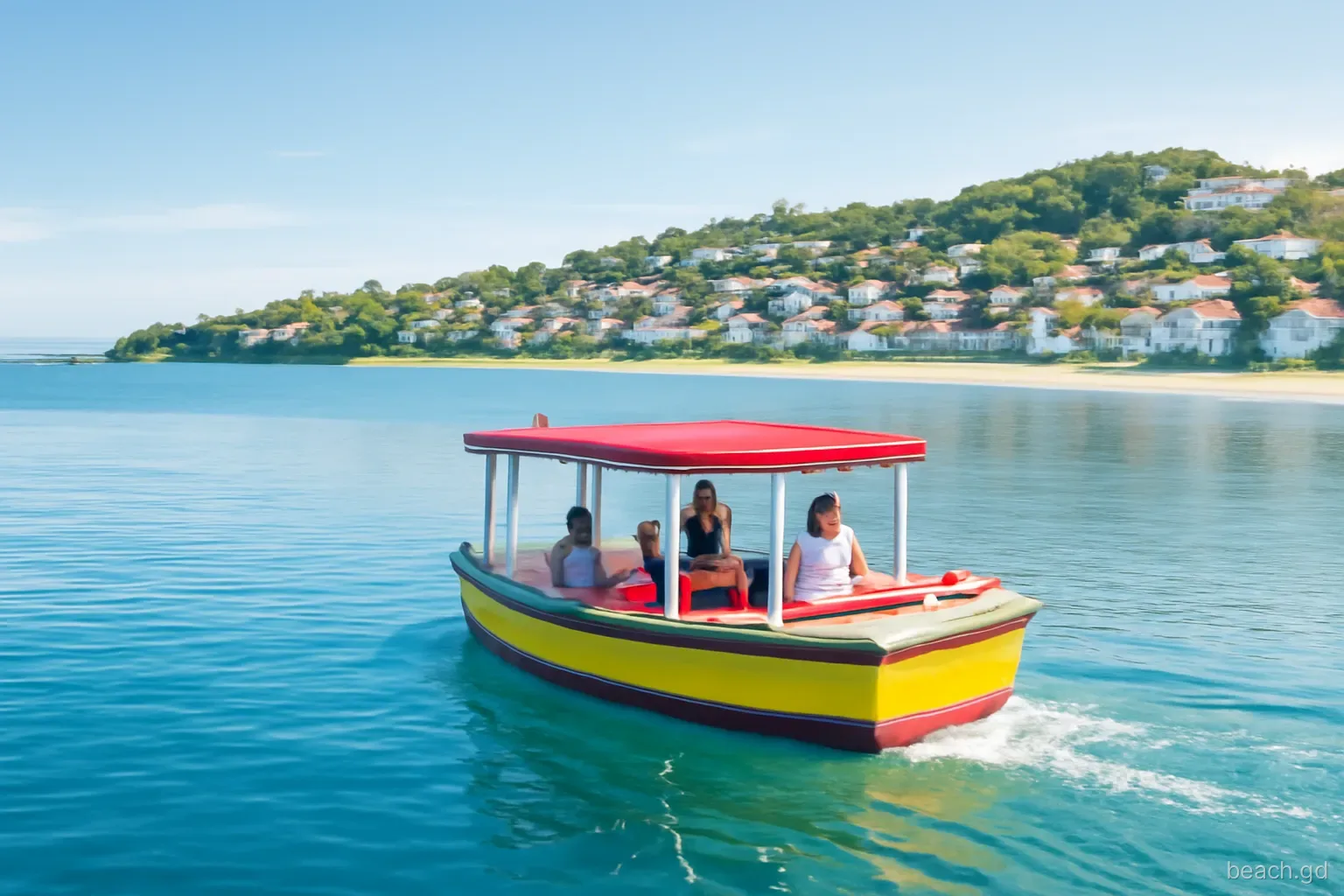
This is also when Grand Anse is busiest. On a heavy cruise day the central and northern stretches can feel crowded between about 11am and 2pm, with jet skis, banana boats and water taxis working close to shore. Swim inside any buoyed areas and keep well away from the points where boats nose onto the sand.
A sensible plan is to treat this as lunch time: eat in the shade of a beachfront restaurant or retreat to your accommodation, then come back once the sun starts to drop. If you must be on the sand, walk south towards Quarantine Point, where the crowd thins out noticeably.
Mid-afternoon to 5pm: the second-best window
From about 3pm the light softens and the beach empties as cruise passengers return to their ships, which generally sail in the late afternoon or early evening. The shade returns, this time from the hills and trees as the sun moves towards the sea, and the water, warmed all day, is at its most comfortable for a long float.
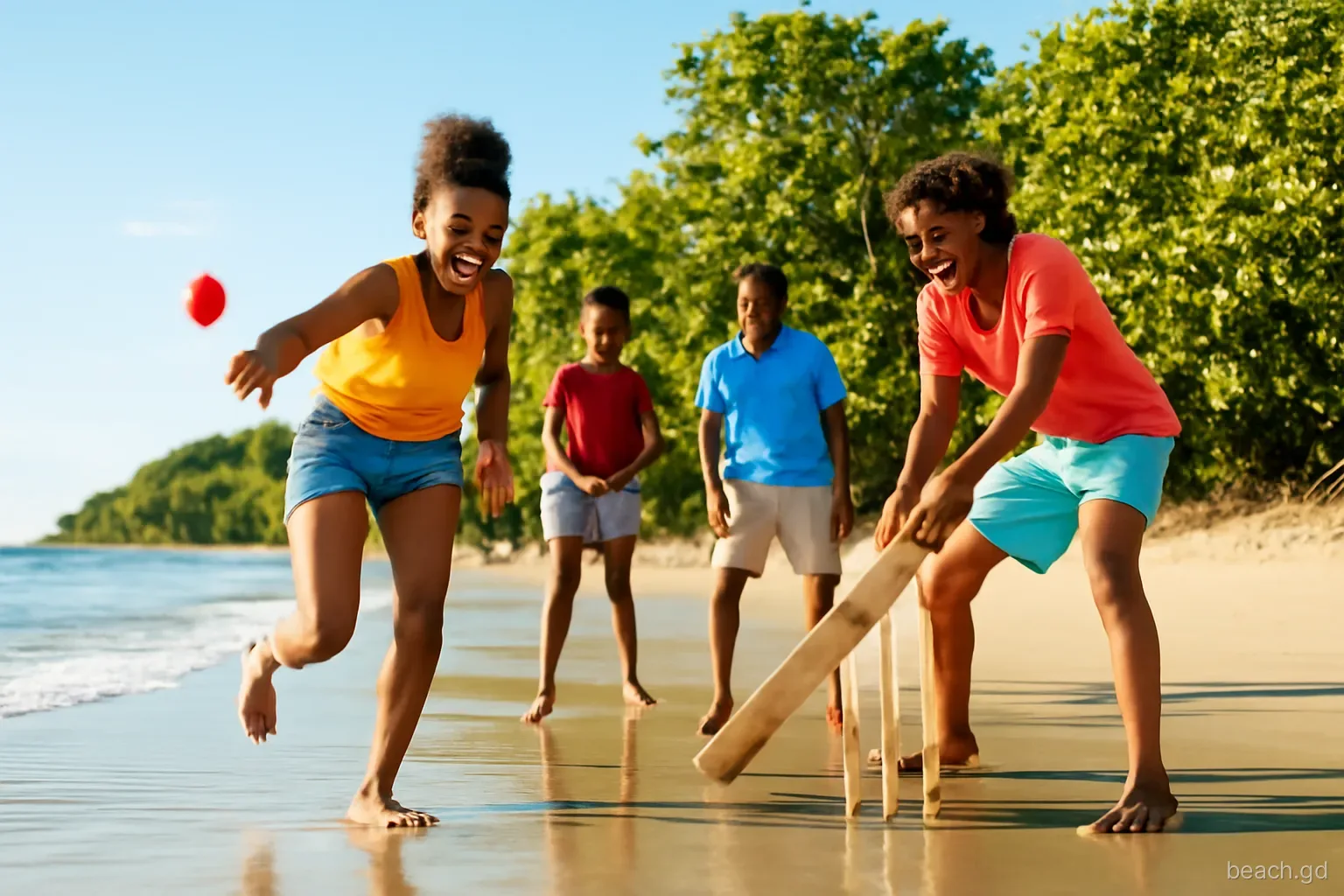
Weekday afternoons bring schoolchildren and workers stopping for a quick swim on the way home, and the northern end in particular takes on a local, sociable feel. On Saturdays and Sundays families stay later, cricket games appear on the firm sand, and music drifts from the beach bars. If you prefer a quiet beach, the hotel-fronted middle stretch is calmer at this time; if you want to see Grand Anse as Grenadians use it, head north.
Water clarity can be slightly lower than in the early morning after a day of wind and swimmers, but conditions are still easy on most days of the year.
The sunset hour: where to stand and what to expect
Grand Anse faces west across the Caribbean Sea, so the sun sets over open water. Sunset falls between roughly 5:40pm around December and 6:35pm around June. To make the most of it:
- Arrive at least 40 minutes before sunset. The best colour often comes in the ten minutes after the sun has gone, so do not pack up the moment it disappears.
- Stand towards the southern half of the beach for a clear horizon; from the northern end, the view takes in St George's and the hills, which glow orange in the late light.
- Watch for the green flash on very clear evenings, a brief green tint on the last sliver of sun. It needs an unobstructed sea horizon and no haze.
- Expect sandflies on still evenings, especially near vegetation at the back of the beach. Insect repellent on ankles helps.
- Darkness comes quickly in the tropics, usually within half an hour of sunset. Plan your route back, and avoid swimming after dark when boat drivers cannot see you.
How weekends, holidays and seasons shift the pattern
The daily rhythm above holds on most weekdays, but Grenadian life bends it. On Sunday afternoons and public holidays the beach fills from about 1pm with families who come after church or lunch, and the northern end around the park and market becomes the social heart of the bay until dusk. Easter Monday, Emancipation Day in August and the days around Carnival, known as Spicemas, in August are among the busiest beach days of the year.
The cruise season, roughly November to April, adds the midday surge described above on ship days and leaves the beach almost empty of visitors on days with no ships. Between May and October, outside the main cruise season, mid-morning and midday are far calmer, though afternoon showers become more frequent from June and occasionally clear the beach for half an hour before the sun returns.
Rain in the wet season usually comes as short, heavy bursts. Sheltering under a bar awning and waiting twenty minutes is generally enough; packing up at the first drop often means missing a clear, freshly washed afternoon.
Timing mistakes that spoil a Grand Anse day
Arriving at 11am on a cruise day. You meet the peak crowd and the harshest sun at the same moment. Check which ships are due in St George's before choosing your day.
Counting on afternoon shade at the waterline. There is very little near the water after mid-morning. Rent an umbrella early or settle under the trees.
Ignoring the season. Between roughly November and March, northern ground swells occasionally reach the west coast and make mornings choppier than usual. Look at the water before committing to a long swim.
Leaving after the sun dips. The afterglow is often the best part of the evening.
Walking back in the dark on the road. Pavements along the Grand Anse road are patchy. Use a taxi or a lit route after dusk, especially with children.
Frequently asked questions
What is the best time of day to swim at Grand Anse?
Early morning, from first light until about 9am, usually has the calmest, clearest water and the fewest people. Mid-afternoon after 3pm is the next best, with warm water, softer light and fewer cruise passengers once ships prepare to sail.
What time is sunset at Grand Anse?
Sunset falls between roughly 5:40pm in late autumn and early winter and about 6:35pm around June. Grand Anse faces west, so the sun goes down over open sea. Arrive 40 minutes early and stay for the afterglow.
When is Grand Anse most crowded?
Between about 11am and 2pm on days when cruise ships are in St George's, mostly between November and April, and on weekend afternoons and public holidays when local families come down, especially to the northern end.
Is there shade on Grand Anse in the afternoon?
Shade from sea grape and almond trees is good early in the morning and returns in the late afternoon, but near the water it is scarce from late morning onwards. Bring a hat or rent an umbrella if you plan to stay through midday.
Can you swim at Grand Anse at night?
It is not a good idea. Water taxis, fishing boats and jet skis use the bay, and their drivers cannot see swimmers in the dark. There is no lifeguard cover at night, and help is slower to arrive if anything goes wrong.