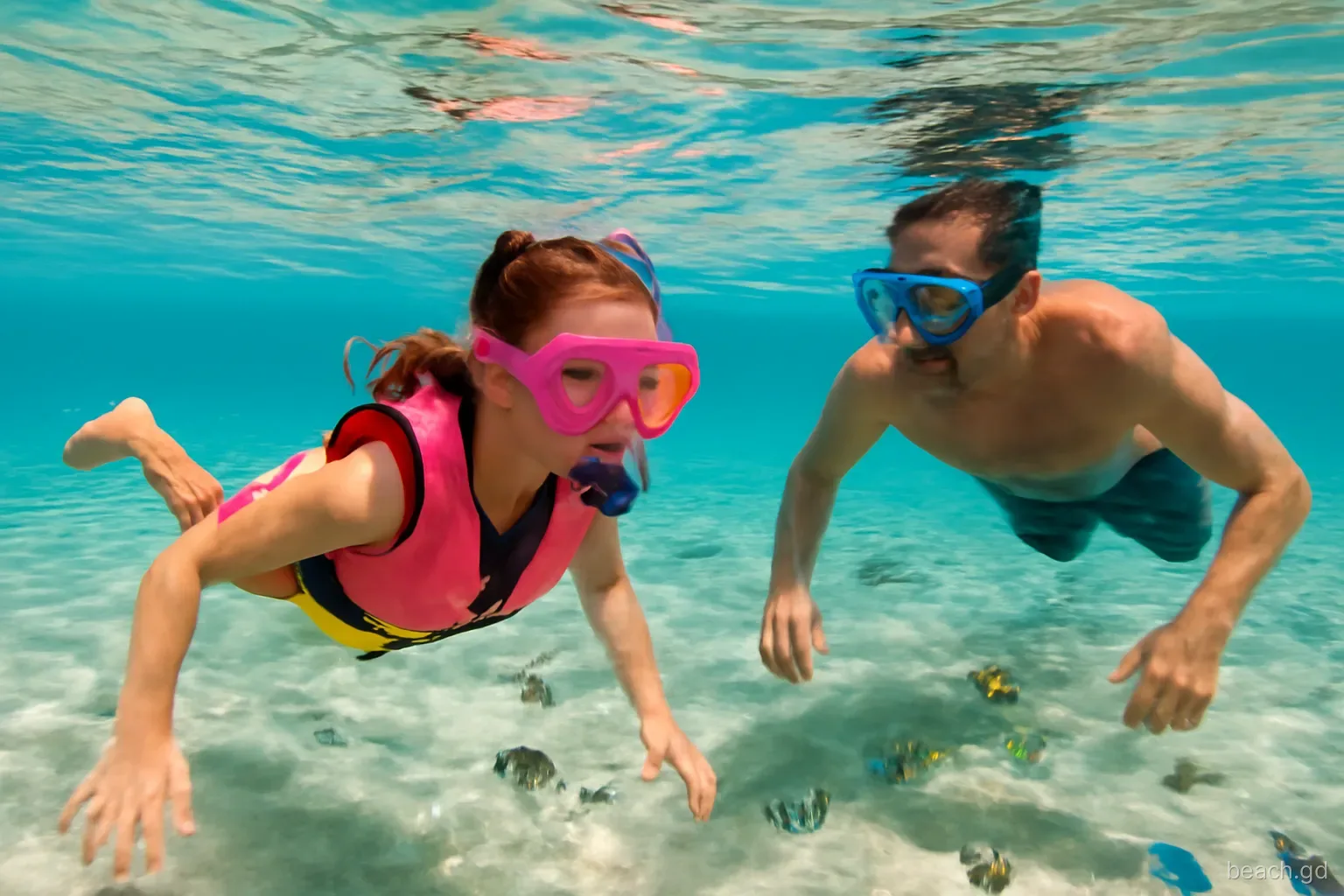
For many children, the moment they put their face in the water and see a fish looking back is the moment a beach holiday becomes something they remember for years. Grenada is a very good place for that moment. The leeward water is warm, calm and clear on most days, reef fish live in shallow water close to shore, and a short boat ride takes you over sculptures and coral gardens shallow enough to see from the surface.
A first snorkel can also go wrong quickly: a leaking mask, a mouthful of salt water, a wave at the wrong time, and a child who refuses to try again. A little preparation makes the difference. This is how to set children up for success, and where to take them.
Gear that makes or breaks it
A mask that fits. This matters more than anything else. Choose a child-sized mask with a soft silicone skirt. To test, place it on the face without the strap and breathe in gently through the nose; it should stay on by suction. Hair caught under the skirt causes leaks, so tuck it away.
A simple snorkel. A child-sized snorkel with a comfortable mouthpiece and, ideally, a dry or semi-dry top that limits splashes. Full-face snorkel masks are popular but have prompted safety concerns about carbon dioxide build-up and poor fit; a conventional mask and snorkel is the safer choice for children.
Buoyancy. A snorkel vest or children's buoyancy aid lets a child float and rest without effort, which removes most of the fear. Even good swimmers benefit on their first few outings.
Fins, maybe. Short, soft fins help confident swimmers, but for a very first snorkel in shallow water many children do better without them. Use water shoes if entering over rocks.
Defogging. A drop of baby shampoo or commercial defog rubbed inside the lens and rinsed lightly stops the fogging that makes children give up.
Practise before the reef
Ten minutes of practice turns a nervous first snorkel into an easy one. Do it in a pool or standing in calm, waist-deep water off the beach:
- Let the child wear the mask out of the water and breathe through the snorkel on land until it feels normal.
- Standing in shallow water, have them put just the mask in and look down at the sand while holding their breath.
- Next, mask and snorkel, face in, breathing slowly through the mouth while you hold their hand.
- Teach the clearing trick: if water gets in the snorkel, blow out hard, like blowing out candles.
- Teach the stop signal: lift the head, stand up if possible or hold on to the adult, and take the mask off only once they are steady.
- Practise floating face-down with the vest on, with an adult holding a hand or the back of the vest.
- Agree simple hand signals: thumbs up for good, a flat hand waved for problem.
Easy shore spots on the mainland
The best first snorkels start from a sandy beach with calm water and fish close by. On Grenada's south-west coast, Morne Rouge is the favourite: the bay is sheltered, and the rocks at its edges attract reef fish in shallow water, so children can swim from the sand to the rocks in a few minutes and turn back whenever they want. The rocky ends of Grand Anse offer something similar, though with more boat traffic to watch for.
The south-coast coves around Lance aux Epines and Magazine Beach near the airport also have rocks and fish close to the shore, but conditions vary more with the wind, so choose a calm morning. On the west coast, some leeward beaches north of St George's have small reefs and rocky points within easy reach of the sand; local dive shops can point you to the ones in good condition at the time of your visit.
Whichever beach you choose, enter over sand, stay near the shore, keep within the area where boats do not run, and go in the morning before the breeze picks up. The first outing should be short, twenty minutes is plenty, and end while the child still wants more.
Boat trips and protected areas
Once a child is comfortable, a guided boat snorkel opens up the best sites. Options to consider:
- The Molinière-Beauséjour Marine Protected Area, north of St George's, home of the underwater sculpture park created by Jason deCaires Taylor and later additions. Several sculptures lie in shallow water, visible to snorkellers from the surface.
- Glass-bottom boat trips, which suit younger children who are not ready to snorkel or who want to see the sculptures without getting in.
- In Carriacou, Sandy Island within the Sandy Island Oyster Bed Marine Protected Area, where calm, shallow water and patches of reef sit close to the beach.
- Marine protected areas may charge a small user fee, which supports their management and is often included in tour prices.
- Choose operators who brief children properly, carry child-sized life jackets and vests, keep groups small and stay in the water with snorkellers.
Reef rules to teach, and mistakes to avoid
Children learn reef manners quickly if they are taught on day one. Never touch or stand on coral, which is alive and easily damaged, and some of it stings. Do not chase fish or turtles, feed fish, or pick things up from the bottom. Keep fins off the reef by staying horizontal at the surface. Use reef-friendly mineral sunscreen, or better still, a rash vest, so less sunscreen washes off into the water.
The mistakes parents make are predictable. Starting on a choppy day, so the first experience is a mouthful of salt water. Using an adult's mask that leaks constantly. Swimming too far, so a tired child has a long way back. Letting children snorkel alone, even in shallow water, where they can drift away with their faces down. Pushing a reluctant child who would be happier trying again tomorrow.
Children also get cold quicker than adults, even in warm Caribbean water, and burn quickly on their backs. Short sessions, a rash vest and a snack and a warm towel between swims keep them going far longer. A child who starts shivering, has blue lips or goes quiet should come out, dry off and warm up in the sun before trying again.
Helping a nervous child
Start in the bath or pool. Children who are uneasy about the sea often relax once they have used the mask in familiar water. A few minutes in a hotel pool the day before can transform the first sea snorkel.
Hold hands, literally. Swimming hand in hand, or with the child holding the back of the adult's vest, gives security without stopping them from looking down. Many children let go of their own accord once they see the fish.
Give them a mission. Ask them to find a blue fish, a yellow fish and a fish with stripes, or to count sea urchins on the rocks from a safe distance. A goal takes attention away from the strangeness of breathing through a tube.
Keep it shallow. Being able to stand up at any time is reassuring. Waist-deep water over sand next to rocks gives plenty to see and an instant escape.
Stop on a high. End the session after a good moment, not after a mouthful of water. The memory of the last minute is what determines whether they want to go again tomorrow.
Frequently asked questions
What age can children snorkel in Grenada?
Many children manage from around six or seven, once they swim confidently and are comfortable with their face in the water. Some younger children enjoy it with a buoyancy vest and an adult holding them. Readiness matters more than age, so let them practise and go at their pace.
Where is the easiest place for kids to snorkel in Grenada?
Morne Rouge, also known as BBC Beach, is one of the easiest: a calm, sheltered bay with reef fish around the rocks close to the sand. In Carriacou, Sandy Island is excellent in calm weather. Always choose calm mornings and stay close to shore.
Can children see the underwater sculpture park?
Yes. Several sculptures in the Molinière-Beauséjour Marine Protected Area lie in water shallow enough for snorkellers to see from the surface, and glass-bottom boat tours suit younger children. Go with a licensed operator who provides child-sized gear and stays in the water.
Are full-face snorkel masks safe for kids?
Full-face masks have raised safety concerns, including carbon dioxide build-up and poor fit on small faces, and some operators do not allow them. A properly fitting conventional mask with a separate snorkel is the safer, more widely recommended choice for children.
Do children need fins to snorkel?
Not for a first snorkel in calm, shallow water. Many children are more comfortable without them at first. Once they are confident, short, soft fins help them keep up on boat trips and in deeper water. Make sure fins fit snugly to avoid blisters.