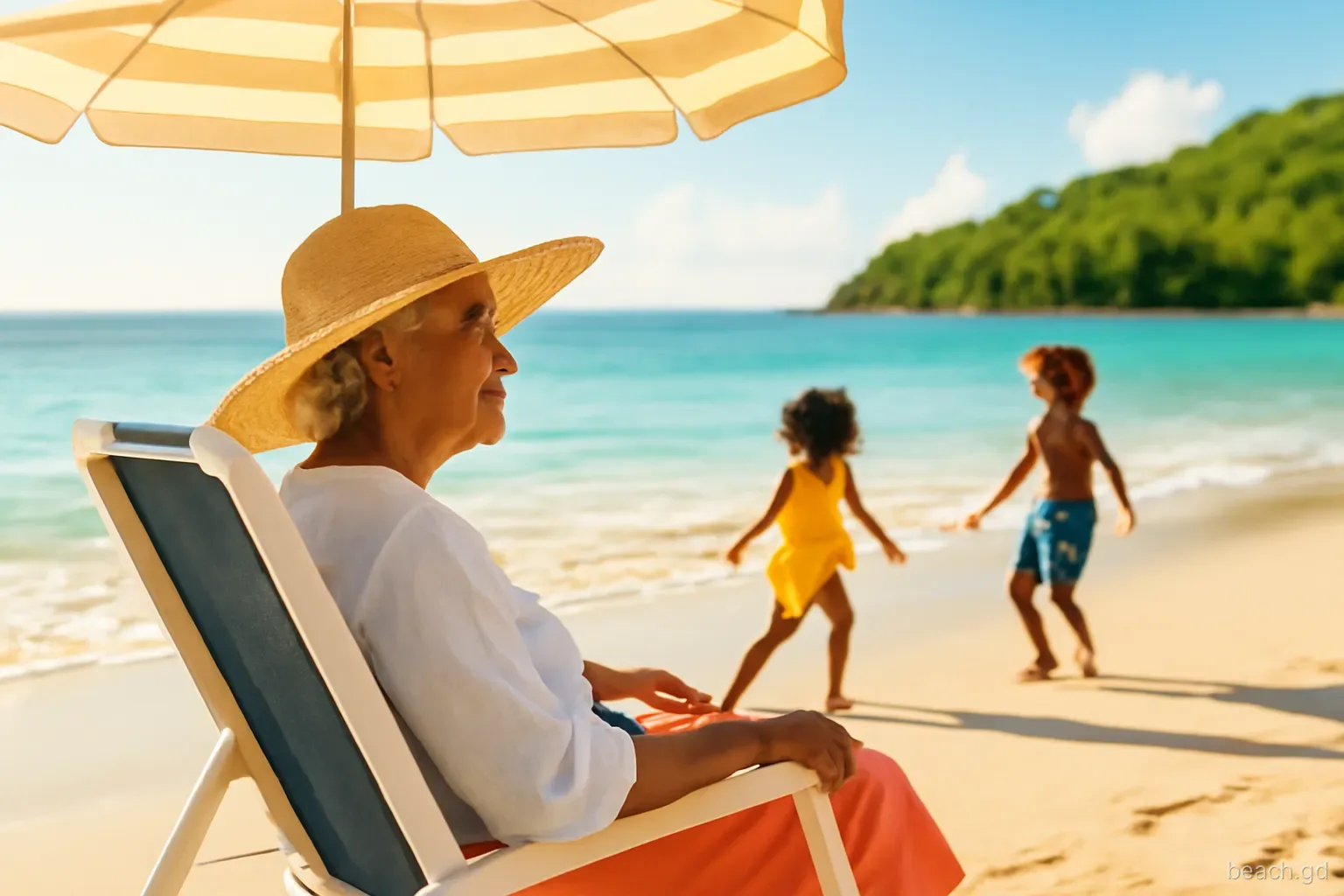
Three-generation holidays are common in Grenada, especially among diaspora families coming home with children and parents together. They raise a question that beach reviews rarely answer: which beaches can a grandmother with a stick, a grandfather who tires easily or a parent pushing a buggy actually reach and enjoy?
Grenada's beaches are mostly natural, with soft sand, no boardwalks and few dedicated accessibility features. Beach wheelchairs are rare. But some beaches are far easier than others, and with a bit of planning around parking, shade, seating and the slope into the water, a beach day can work for everyone from the baby to the great-grandparents. The sections below are built around what to look for and what to ask, since access at individual beach bars and hotels changes over time and is worth confirming before you go.
What makes a beach easy
The first factor is the distance from where the car stops to where you sit. Some beaches have parking a few steps from the sand; others need a walk down a track, a flight of steps or a scramble over rocks. For someone with limited mobility, the last fifty metres matter more than anything else about the beach.
The second is the sand itself. Soft, deep sand is hard work with a walking stick and almost impossible with a standard buggy or wheelchair. Firm, damp sand near the waterline is easier, and short paths or concrete walkways leading to beach bars and hotels can cut the distance across soft sand.
The third is what is waiting at the end: shade, a proper chair rather than a towel on the ground, a toilet within reach and water that enters gradually, without a steep step or rocks. Beaches with bars and restaurants on the sand score well on all three, because they offer chairs, tables, shade and toilets in one place.
Beaches that tend to work for all ages
Grand Anse. The strongest all-round choice. Hotels, bars and restaurants along the beach mean many access points from the main road, shaded seating and toilets for customers. Some places are reached across short stretches of sand from the road; choose a bar or restaurant with a terrace close to the water so grandparents can sit comfortably in shade while watching the children.
Morne Rouge. A short walk from the road to the sand at many points, calm, gently shelving water and a few bars for seating. The beach is small, so everyone stays within sight. Parking is limited at busy times, so drop off passengers first.
Hotel beaches. If accessibility is the top priority, consider staying at or buying a day pass for a resort on a calm beach. Many resorts have paved paths, ramps, loungers and accessible toilets, though standards vary; ask specific questions before booking.
Paradise Beach, Carriacou. Flat, calm and close to the road at points, though facilities and shade have been reduced since Hurricane Beryl. Check current arrangements.
Bathway. Parking is close to the sand and the reef pool is calm, but it involves a long drive and has simpler facilities. Better for active grandparents than for those who struggle with heat.
Beaches to think twice about
Some of Grenada's most beautiful beaches are hard work for anyone with limited mobility or a buggy:
- Coves reached by steep or rough paths, such as Anse La Roche in Carriacou and several small bays on the south and east coasts.
- Atlantic beaches with surf and steep, shifting sand, where getting in and out of the water is difficult even for fit adults.
- Beaches with rocky entries, where there is no easy sandy route into the sea.
- Remote beaches without shade, seating or toilets, where a long day is tiring for older relatives and the nearest help is far away.
- Beaches reached by boat only, where boarding and landing from small water taxis can involve wading and climbing over the side.
- Any beach at midday in the hot season for elderly relatives who are sensitive to heat.
Planning a smooth day for three generations
A few practical steps make a big difference:
- Choose the beach for the least mobile person and add excursions for the more active.
- Drop older relatives and gear at the closest point to the sand before parking the car.
- Book or reserve shaded seating at a beach bar or hotel, or bring a lightweight folding chair with a back for anyone who cannot sit on the ground.
- Use a beach cart or a buggy with large wheels; standard narrow-wheeled buggies sink in soft sand. A baby carrier is often easier than a buggy on the beach itself.
- Plan the day around the cooler hours: morning and late afternoon, with lunch and rest in between.
- Bring water, hats, medicines and a folding stool for the shoreline, so grandparents can sit at the water's edge with the children.
- Agree a simple plan for someone who needs to leave early, such as a taxi booked in advance.
Getting into the water, and other details people forget
For older swimmers, the hard part is often the transition: standing up from a low lounger, crossing hot sand and wading through the shallows where waves push at unsteady legs. Choose a calm, gently sloping beach, go in where there is firm sand rather than rocks, and have a family member offer an arm. Water shoes give better grip than bare feet. Calm mornings are best, before the breeze adds small waves.
Heat and dehydration hit older people and babies first. Medicines such as some diuretics and blood-pressure drugs increase the risk. Keep everyone drinking water, use shade generously and watch for signs of exhaustion, such as dizziness, confusion or unusual tiredness.
Finally, consider transport. Route buses are cheap but involve high steps, tight seats and little room for buggies or walking aids. Taxis or a rental car with air conditioning make the whole day easier for multigenerational groups. Agree taxi fares before setting off, and keep the number of a trusted driver for the return. Grenadians are generally quick to help older visitors and families with small children, from carrying a bag to finding a chair, so do not hesitate to ask. A short, relaxed beach visit that everyone enjoys beats a long, ambitious one that exhausts the oldest and youngest.
Setting up a base for the day
For a mixed-age group, the most comfortable beach day often revolves around a fixed base rather than a patch of towels. On Grand Anse and Morne Rouge, beach vendors and bars rent loungers and umbrellas, and a restaurant table on the sand under a canopy can become a family headquarters for the whole morning, with grandparents seated in shade, toilets close by and food and drinks arriving without anyone having to walk far.
Agree the arrangement and the price up front, in EC or US dollars, and ask whether renting chairs requires buying food or drink, which is common. Prices change with the season and the beach, so treat any figure you have heard as a rough guide and confirm on the spot. Arrive early, especially at weekends and on cruise days, when the best shaded spots go first.
If you bring your own setup, a large umbrella anchored deep in the sand, two or three folding chairs with backs and a cool box on wheels cover most needs. Put the base close to the water rather than at the back of the beach, so the oldest and youngest members of the family can see each other without anyone crossing hot sand.
Frequently asked questions
Are there wheelchair-accessible beaches in Grenada?
Fully accessible beaches with boardwalks and beach wheelchairs are rare. Some resorts on calm beaches have ramps, paved paths and accessible facilities, and parts of Grand Anse and Morne Rouge are close to the road. Ask hotels and beach bars specific questions about access before visiting.
Which Grenada beach is easiest for elderly relatives?
Grand Anse and Morne Rouge are generally the easiest, with calm water, short walks from the road at many points and bars offering shaded seating and toilets. Visit in the morning or late afternoon to avoid the strongest heat, and drop passengers off close to the sand.
Can you take a buggy on Grenada beaches?
Standard buggies struggle in soft sand. A buggy with large, wide wheels or a beach cart works better, and many families find a baby carrier easier on the beach itself. Leave the buggy at a beach bar or the car and carry the baby across the sand.
Do Grenada beaches have public toilets?
Public toilets are not guaranteed. On popular beaches, bars, restaurants and hotels have toilets for customers, and Bathway has had a public facility building. On quieter beaches there may be none, so plan stops around where you eat and drink.
Is a day pass at a resort worth it for a multigenerational group?
It can be. A day pass often includes loungers, shade, toilets, food and easy paths, which suits older relatives and young children together. Availability and inclusions vary between resorts and seasons, so ask what is included and whether access is step-free before booking.